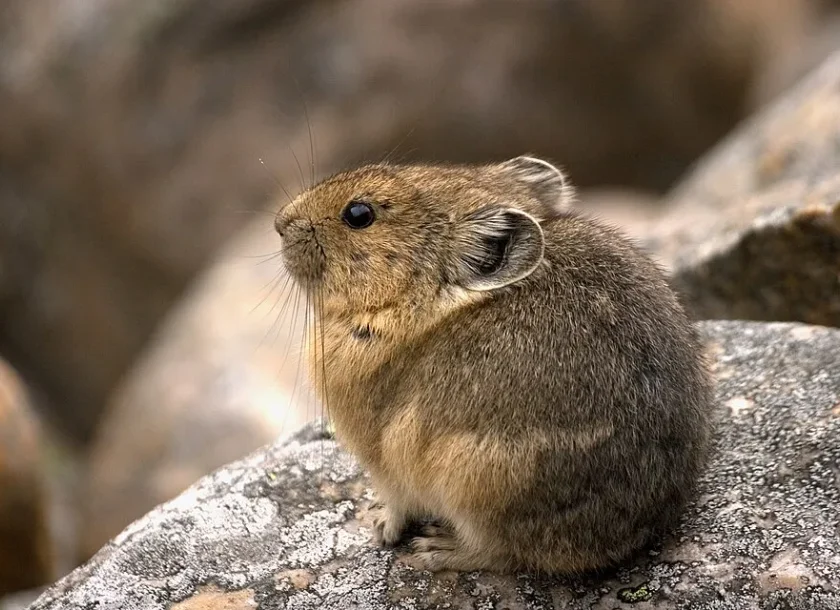
Imagine walking across a quiet grassland where almost nothing seems to be moving. Beneath your feet, however, an entire hidden world may be busy with activity.
Moles search for earthworms through narrow tunnels, prairie dogs communicate between burrow entrances, and naked mole-rats live in complex underground colonies. Even some birds, reptiles, and spiders depend on underground shelters.
Animals that live underground include moles, naked mole-rats, prairie dogs, meerkats, aardvarks, wombats, badgers, armadillos, kangaroo rats, gopher tortoises, burrowing owls, and trapdoor spiders.
Some spend nearly their entire lives below the surface. Others emerge regularly to hunt, forage, socialize, or bask in sunlight.
Here are 12 remarkable underground animals, including where they live, what they eat, how they dig, and why their burrows are important.
12 Animals That Live Underground: Quick Comparison
| Animal | Scientific Name | Natural Habitat | Underground Lifestyle |
|---|---|---|---|
| European Mole | Talpa europaea | European grasslands and woodlands | Spends most of its life underground |
| Naked Mole-rat | Heterocephalus glaber | East African drylands | Lives in underground colonies |
| Black-tailed Prairie Dog | Cynomys ludovicianus | North American grasslands | Lives in social burrow systems |
| Meerkat | Suricata suricatta | Southern African drylands | Sleeps and shelters in burrows |
| Aardvark | Orycteropus afer | African savannas and grasslands | Digs burrows for shelter |
| Common Wombat | Vombatus ursinus | Southeastern Australian habitats | Digs large underground homes |
| American Badger | Taxidea taxus | North American open habitats | Digs for prey and shelter |
| Nine-banded Armadillo | Dasypus novemcinctus (traditional classification) | American woodlands and grasslands | Excavates shelter burrows |
| Desert Kangaroo Rat | Dipodomys deserti | North American deserts | Shelters in underground burrows |
| Gopher Tortoise | Gopherus polyphemus | Southeastern U.S. sandy uplands | Excavates deep burrows |
| Burrowing Owl | Athene cunicularia | Open grasslands and deserts | Nests and shelters underground |
| Audouin’s Trapdoor Spider | Ummidia audouini | Southeastern U.S. terrestrial habitats | Hunts from a silk-lined burrow |
These species do not all spend the same amount of time underground. Some are highly specialized subterranean animals, while others primarily use burrows as safe places to rest or raise their young.
1. European Mole
ALT: European mole showing its dark fur, pointed snout, and powerful digging front feet.
Photo: Kristianmatilainen | Source: Wikimedia Commons | License: CC BY-SA 3.0 | Changes: None if original used.
Scientific name: Talpa europaea
Habitat: Grasslands, gardens, agricultural fields, and woodlands across much of Europe.
Diet: Earthworms, insects, and other soil invertebrates.
The European mole is one of the best-known animals that spend most of their lives underground.
Its body is perfectly suited for moving through soil. Powerful forelimbs, broad front feet, and strong claws allow it to excavate tunnels while searching for food.
Unlike many animals that dig with alternating movements, moles use their forelimbs in a motion similar to swimming through soil.
Their dense, velvety fur can bend in different directions, helping them move both forward and backward through narrow tunnels.
European moles have very small eyes and rely heavily on touch, smell, and other senses.
They create interconnected tunnels, feeding passages, and nesting chambers.
The familiar piles of soil called molehills are formed when excavated earth is pushed toward the surface.
How to recognize it: Look for a small, cylindrical mammal with dark velvety fur, a pointed snout, tiny eyes, and unusually broad front feet.
Interesting fact: European moles are largely solitary, and their underground territories can include extensive tunnel networks.
2. Naked Mole-rat

ALT: Naked mole-rats showing their nearly hairless bodies and prominent digging teeth.
Photo: Edward Russell | Source: Wikimedia Commons | License: CC BY 2.0 | Changes: None if original used. Photograph shows captive animals.
Scientific name: Heterocephalus glaber
Habitat: Dry grasslands and semi-arid regions of East Africa.
Diet: Underground roots and tubers.
The naked mole-rat is one of the most unusual underground mammals.
Despite its name, it is a rodent rather than a true mole.
Its nearly hairless body, prominent front teeth, and small eyes reflect its highly specialized underground lifestyle.
Naked mole-rats live in extensive tunnel systems, where they search for underground plant parts.
They can use their large incisors to excavate soil while keeping loose material out of their mouths.
Even more remarkable is their social organization.
Naked mole-rats are eusocial mammals. A colony typically contains one dominant breeding female, often called the queen, while most other members help maintain the colony and care for young.
Their underground lifestyle helps protect them from extreme surface temperatures and many predators.
How to recognize it: Look for a small, pinkish or pale-skinned rodent with almost no fur and large forward-projecting teeth.
Interesting fact: Naked mole-rats are famous for their unusual longevity and physiological adaptations to low-oxygen environments.
3. Black-tailed Prairie Dog

ALT: Black-tailed prairie dog showing its compact body and short, black-tipped tail.
Photo: Christian Ursilva | Source: Wikimedia Commons | License: CC BY-SA 4.0 | Changes: None if original used.
Scientific name: Cynomys ludovicianus
Habitat: Open grasslands and prairies in central North America.
Diet: Grasses, herbs, and other vegetation.
Black-tailed prairie dogs are social rodents that build elaborate underground burrow systems.
Groups of prairie dogs live in colonies commonly called towns.
These colonies may contain numerous interconnected social groups and burrows, with entrances scattered across open grasslands.
The tunnels provide shelter from weather and predators, as well as protected areas for raising young.
Prairie dogs frequently emerge above ground to feed, groom one another, and watch for danger.
They use distinctive alarm calls to warn nearby colony members about potential predators.
Their burrowing activities can also change the surrounding grassland habitat.
By excavating soil and maintaining open areas, prairie dogs influence vegetation and create opportunities for other animals.
How to recognize it: Look for a stocky, sandy-brown rodent with short legs, small ears, and a black-tipped tail.
Interesting fact: Prairie dog colonies can support numerous other species, including burrowing owls and black-footed ferrets.
4. Meerkat
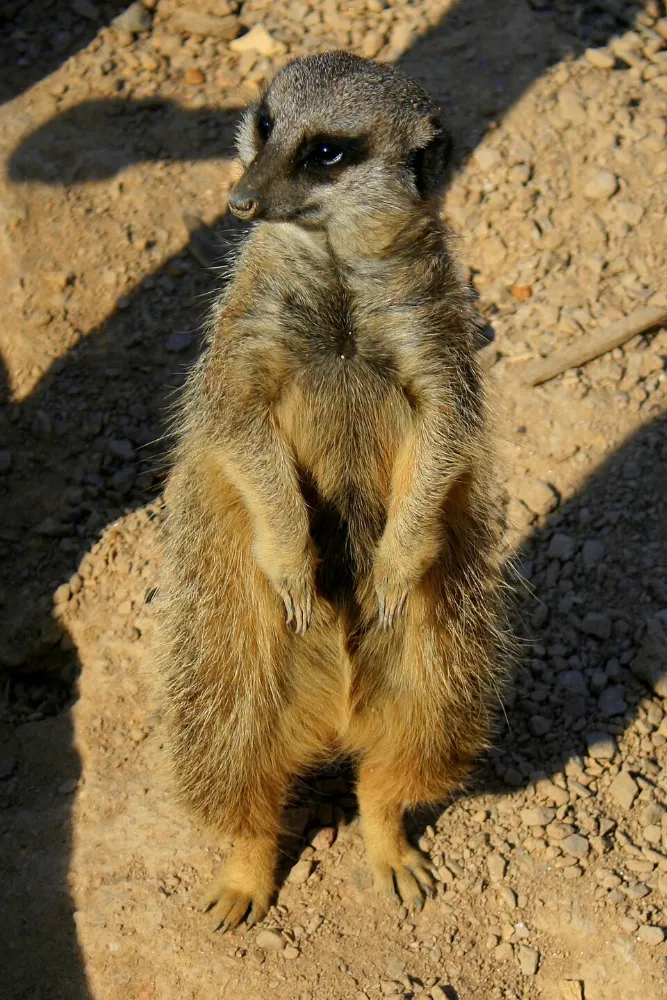
ALT: Meerkat photographed at London Zoo showing its dark eye patches and sandy-brown fur.
Photo: Rror | Source: Wikimedia Commons | License: CC BY-SA 3.0 | Changes: None if original used. Photograph taken at London Zoo.
Scientific name: Suricata suricatta
Habitat: Dry grasslands, deserts, and scrublands of southern Africa.
Diet: Insects, spiders, scorpions, and other small animals.
Meerkats are small members of the mongoose family, famous for standing upright and watching their surroundings.
However, much of their survival depends on what happens underground.
Meerkats live in social groups that use extensive burrow systems for shelter, sleeping, and raising young.
Their strong front claws help them dig through sandy soil while searching for food or maintaining burrows.
During the day, group members often forage together.
One or more meerkats may act as sentinels, watching for predators while others search for food.
When danger approaches, the animals can retreat quickly into nearby burrow entrances.
Underground shelters also provide relief from extreme heat and cold.
How to recognize it: Look for a slender, sandy-colored mammal with dark patches around the eyes, a pointed face, and a long tail.
Interesting fact: Meerkat groups may use several burrow systems within their territory rather than staying permanently in a single underground home.
5. Aardvark

ALT: Aardvark photographed at SanWild in South Africa showing its long snout and powerful digging claws.
Photo: Louise Joubert | Source: Wikimedia Commons | License: CC BY-SA 3.0 | Changes: The Wikimedia file was adjusted by a contributor; no further changes if this version is used unchanged.
Scientific name: Orycteropus afer
Habitat: Savannas, grasslands, and other suitable habitats across sub-Saharan Africa.
Diet: Primarily ants and termites.
The aardvark is a large, powerful digging mammal with a distinctive long snout.
It spends much of its active time searching for ants and termites.
Its strong limbs and claws allow it to dig into insect nests and excavate large underground burrows.
Aardvarks use their long, sticky tongues to collect insects from tunnels and chambers.
They are generally nocturnal, spending much of the day resting in protected underground shelters.
Their burrows can be surprisingly important to other wildlife.
When an aardvark abandons a burrow, it may later be used by mammals, reptiles, and other animals seeking shelter.
In this way, aardvarks help create habitat for species that may not be capable of excavating such large underground spaces themselves.
How to recognize it: Look for a heavy-bodied mammal with a long tubular snout, large upright ears, a thick tail, and powerful claws.
Interesting fact: Although aardvarks resemble certain other long-snouted mammals, they belong to their own distinctive evolutionary lineage.
6. Common Wombat

ALT: Young common wombat looking out of its mother’s pouch at Duisburg Zoo.
Photo: TimSagorski | Source: Wikimedia Commons | License: CC BY-SA 4.0 | Changes: None if original used. Photograph shows captive wombats.
Scientific name: Vombatus ursinus
Habitat: Forests, woodland edges, and grassy habitats in southeastern Australia, including Tasmania.
Diet: Grasses, sedges, and other vegetation.
The common wombat is a sturdy Australian marsupial with a remarkable talent for digging.
Its compact body, short muscular legs, and strong claws allow it to excavate substantial underground burrows.
These shelters provide protection from weather and help wombats avoid extreme surface temperatures.
Common wombats are generally more active during cooler periods, often foraging at night.
They may spend much of the day resting in their burrows, especially during hot weather.
A wombat’s broad body and powerful hindquarters also help it move through underground passages.
Female wombats have a backward-facing pouch, an adaptation that helps prevent soil from entering while digging.
How to recognize it: Look for a stocky, low-to-the-ground marsupial with short legs, rounded ears, a broad head, and dense brown or gray fur.
Interesting fact: Wombats are famous for producing unusually cube-shaped droppings, which can help mark locations within their territories.
7. American Badger
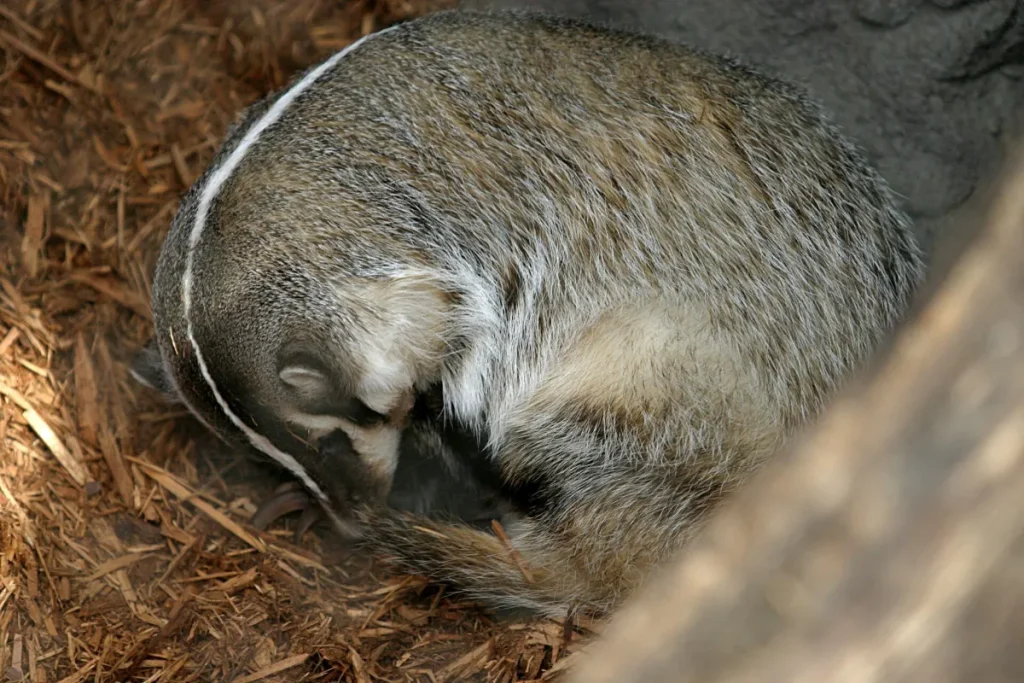
ALT: American badger with a low body and distinctive black-and-white facial markings.
Photo: Cburnett | Source: Wikimedia Commons | License: CC BY-SA 3.0 | Changes: None if original used. Photograph taken at Omaha’s Henry Doorly Zoo.
Scientific name: Taxidea taxus
Habitat: Grasslands, prairies, deserts, and open habitats across North America.
Diet: Ground squirrels, pocket gophers, mice, and other small animals.
The American badger is a powerful digging predator.
Its broad body, muscular shoulders, and long front claws are especially suited for breaking through soil.
Unlike animals that dig mainly to build permanent homes, American badgers frequently excavate while hunting.
They can rapidly enlarge the burrows of rodents and other underground prey.
Badgers also dig shelters for resting and raising young.
Their short, sturdy legs provide stability while excavating, and their strong neck and shoulders help move large amounts of soil.
American badgers are generally solitary animals and are often most active during nighttime or twilight hours.
How to recognize it: Look for a low, broad-bodied mammal with a wedge-shaped face, bold white facial stripe, and strong front claws.
Interesting fact: Badger digging can create temporary shelters that other small animals may later use.
8. Nine-banded Armadillo
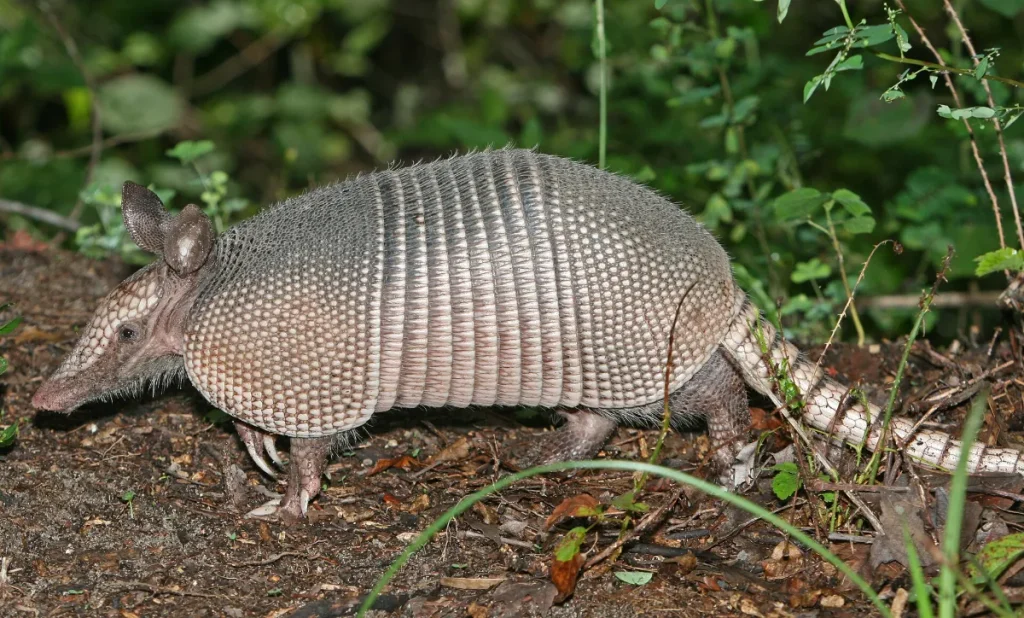
ALT: Nine-banded armadillo photographed in the Green Swamp area of central Florida.
Photo: Tomfriedel / BirdPhotos.com | Source: Wikimedia Commons | License: CC BY 3.0 | Changes: Wikimedia version cropped slightly from the original; no further changes if used unchanged.
Scientific name: Traditionally Dasypus novemcinctus; some recent taxonomic treatments recognize northern populations as Dasypus mexicanus.
Habitat: Forests, grasslands, scrublands, and other suitable habitats in the Americas.
Diet: Ants, beetles, termites, and other invertebrates.
The nine-banded armadillo is famous for its protective armor, but it is also an excellent digger.
Its body is covered with bony plates that provide protection, while strong claws help it search for food and excavate underground shelters.
Armadillos frequently dig shallow holes while investigating the soil for insects.
They also construct larger burrows where they can rest and escape unfavorable conditions.
These burrows are often found near vegetation, fallen logs, or other protected locations.
Although the animal has relatively poor eyesight, it uses its strong sense of smell to locate food.
How to recognize it: Look for a medium-sized mammal with a rounded armored body, pointed snout, short legs, and a long armored tail.
Interesting fact: Armadillos may dig numerous feeding holes while searching for insects, but these small excavations should not be confused with their larger resting burrows.
9. Desert Kangaroo Rat

ALT: Desert kangaroo rat showing its large hind feet and long tail in a desert habitat.
Photo: Danny Mccamish | Source: Wikimedia Commons | License: CC BY 4.0 | Changes: None if original used.
Scientific name: Dipodomys deserti
Habitat: Sandy deserts of southwestern North America.
Diet: Primarily seeds.
The desert kangaroo rat is a small rodent with long hind legs that allow it to move across open desert ground using powerful jumps.
Despite its name, it is not closely related to kangaroos.
Its underground burrows provide protection from predators and the intense heat of the desert surface.
Kangaroo rats are primarily nocturnal, emerging after dark to search for seeds.
They possess specialized kidneys that help conserve water, an important advantage in dry environments.
Many kangaroo rats obtain much of the moisture they need from food and metabolic processes rather than regularly drinking free-standing water.
They also possess external cheek pouches used for carrying seeds.
Collected food may be stored underground for later consumption.
This behavior connects them with other animals that store food for winter, although desert kangaroo rats store food for reasons that are not limited to winter.
How to recognize it: Look for a small rodent with very large hind feet, a long tail, large eyes, and small front legs.
Interesting fact: Kangaroo rats can escape predators with remarkably fast, unpredictable jumping movements.
10. Gopher Tortoise

ALT: Gopher tortoise standing at the entrance to its burrow in a Florida nature preserve.
Photo: Librarylady813 | Source: Wikimedia Commons | License: CC BY-SA 4.0 | Changes: None if original used.
Scientific name: Gopherus polyphemus
Habitat: Sandy uplands, pine forests, scrublands, and grasslands in the southeastern United States.
Diet: Grasses, leaves, flowers, and other plant material.
The gopher tortoise is one of North America’s most important burrowing reptiles.
Its strong, shovel-like front legs enable it to excavate large underground tunnels in sandy soil.
These burrows provide stable shelter from extreme heat, cold, fires, and predators.
Gopher tortoise burrows can extend many feet underground and may remain important habitat features for years.
The tortoise is considered a keystone species because its burrows provide shelter to hundreds of other animal species across its range.
These may include insects, snakes, frogs, and small mammals.
Some animals regularly depend on gopher tortoise burrows even though they are unable to excavate similar shelters themselves.
How to recognize it: Look for a land-dwelling tortoise with a broad shell, strong scaly front legs, and a relatively flattened head.
Interesting fact: Gopher tortoise burrows are sometimes described as natural underground refuges for entire wildlife communities.
Never disturb a wild gopher tortoise or block its burrow entrance.
11. Burrowing Owl
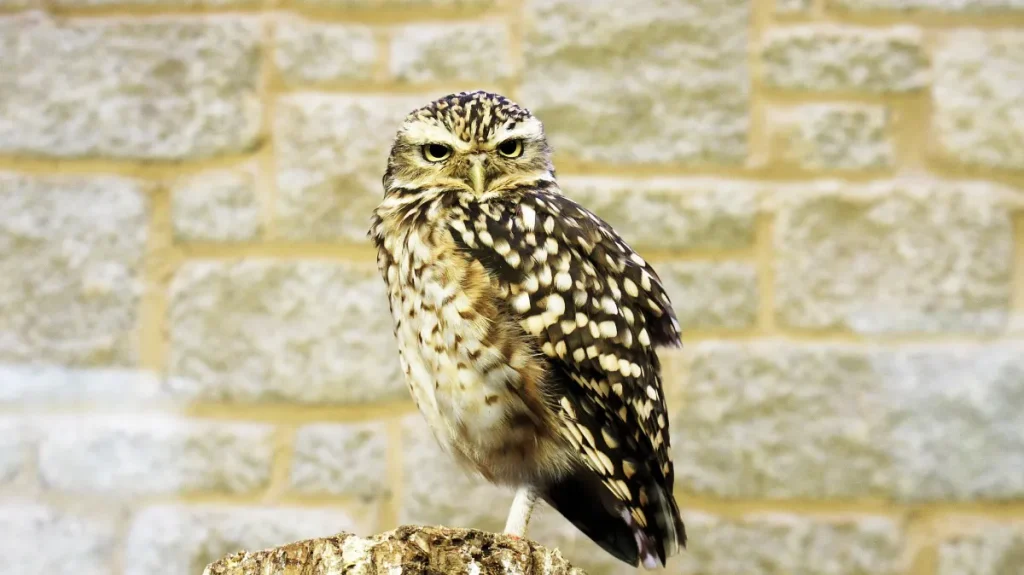
ALT: Burrowing owl showing its long legs, round head, bright eyes, and spotted brown feathers.
Photo: Adam Jones (Domdomegg) | Source: Wikimedia Commons | License: CC BY 4.0 | Changes: None if original used. Photograph taken at Birdworld, England.
Scientific name: Athene cunicularia
Habitat: Open grasslands, prairies, agricultural areas, and deserts in the Americas.
Diet: Insects, small rodents, reptiles, and other small animals.
Most people imagine owls nesting in trees, but the Burrowing Owl has a very different lifestyle.
These small owls nest and shelter in underground burrows.
In many parts of their range, they use existing tunnels excavated by mammals such as prairie dogs, ground squirrels, and other burrowing animals.
Some Burrowing Owls can also excavate or modify burrows themselves, depending on location and soil conditions.
Their relatively long legs allow them to move efficiently across open ground.
Unlike many other owl species, Burrowing Owls are frequently active during daylight hours, although they also hunt during twilight and at night.
They often stand near burrow entrances, watching for insects or other prey.
How to recognize it: Look for a small, long-legged owl with a rounded head, bright yellow eyes, pale eyebrows, and spotted brown plumage.
Interesting fact: Burrowing Owls demonstrate why conserving burrowing mammals can benefit birds and other wildlife.
12. Audouin’s Trapdoor Spider

ALT: Audouin’s trapdoor spider showing its dark body and powerful front legs.
Photo: Leila Dasher | Source: Wikimedia Commons | License: CC BY 4.0 | Changes: None if original used.
Scientific name: Ummidia audouini
Habitat: Suitable terrestrial environments in the southeastern United States.
Diet: Insects and other small invertebrates.
Not all underground animals are mammals, reptiles, or birds.
Trapdoor spiders are specialized predators that spend much of their lives inside silk-lined burrows.
Audouin’s trapdoor spider is a North American example of this remarkable group.
Many trapdoor spiders construct an entrance covered by a hinged lid made from silk and surrounding soil or plant material.
This concealed entrance allows the spider to remain hidden while detecting movement nearby.
When suitable prey approaches, the spider can emerge rapidly, capture it, and retreat into its burrow.
Its strong legs and mouthparts help it excavate and maintain the underground shelter.
Female trapdoor spiders may remain closely associated with their burrows for extended periods.
How to recognize it: Look for a dark, robust spider with strong legs and a body adapted to life near the ground.
Interesting fact: A carefully camouflaged trapdoor may be extremely difficult to distinguish from the surrounding soil.
Avoid disturbing or opening wild spider burrows, and do not handle unidentified spiders.
Why Do Animals Live Underground?
Underground living offers several important advantages.
Although the surface may experience intense sunlight, freezing winds, heavy rainfall, and the constant threat of predators, conditions beneath the soil can be more stable.
Different species use underground spaces for different purposes.
1. Protection From Predators
Burrows provide places where animals can hide when threatened.
Prairie dogs can retreat into tunnels when predators approach.
Meerkats use burrows as emergency shelters.
Kangaroo rats can disappear underground to avoid many surface predators.
2. Temperature Regulation
Soil insulates underground spaces from rapid changes in surface temperature.
During hot weather, burrows are often cooler than exposed ground.
During cold weather, underground shelters can offer protection from freezing winds and sudden temperature changes.
This is especially important for desert animals and some grassland species.
3. Raising Young
Underground chambers provide relatively protected places for nesting and reproduction.
Prairie dogs raise their young in burrows.
Meerkats care for young inside sheltered dens.
Gopher tortoises use suitable ground near their burrows for nesting, while Burrowing Owls lay eggs inside underground nesting chambers.
4. Finding Food
Some animals dig mainly because their prey lives beneath the surface.
European moles search for earthworms and other soil invertebrates.
American badgers excavate rodent burrows while hunting.
Aardvarks dig into termite and ant colonies.
5. Food Storage
Certain underground animals also use protected spaces to store food.
Kangaroo rats collect seeds and may cache them underground.
Other burrowing rodents use storage areas or chambers depending on the species and environment.
True Underground Animals vs. Burrow Users
Not all animals that live in burrows are fully adapted to permanent underground life.
Biologists distinguish between animals that spend most of their lives beneath the surface and those that use burrows mainly for shelter.
| Animal | Underground Dependency | Typical Surface Activity |
|---|---|---|
| European Mole | Very high | Rare |
| Naked Mole-rat | Very high | Extremely rare |
| Prairie Dog | High | Regular daytime activity |
| Meerkat | High for shelter | Extensive daytime foraging |
| Aardvark | High for shelter | Mostly nocturnal feeding |
| Common Wombat | High for shelter | Mostly nocturnal or crepuscular |
| American Badger | Moderate to high | Hunting and traveling |
| Burrowing Owl | High for nesting | Frequent surface activity |
| Gopher Tortoise | High for shelter | Regular aboveground foraging |
A mole spends most of its time underground because its body is highly specialized for subterranean life.
A meerkat, by contrast, depends on burrows but spends much of its active day aboveground.
Both can reasonably be described as animals that live underground, although their lifestyles differ considerably.
How Do Burrowing Animals Dig?
Different animals have evolved specialized structures for excavating soil.
Powerful Front Claws
Moles, badgers, wombats, armadillos, and gopher tortoises have strong front limbs suited for digging.
Some use broad, shovel-like feet to move soil efficiently.
Specialized Teeth
Naked mole-rats use prominent incisors to help excavate tunnels.
Their lips can close behind the front teeth, reducing the amount of soil entering the mouth while digging.
Compact Bodies
Animals such as moles and wombats have bodies suited to moving through confined spaces.
This helps them navigate tunnels and protected chambers.
Burrowing With Silk
Trapdoor spiders use a completely different strategy.
They excavate small burrows and line them with silk, which helps support the walls and creates a suitable environment for waiting for prey.
What Do Underground Animal Homes Look Like?
Underground animal shelters vary enormously in complexity.
| Underground Home | Typical Animal | Main Features |
|---|---|---|
| Feeding tunnel network | European Mole | Narrow passages and nesting areas |
| Social colony tunnels | Naked Mole-rat | Interconnected chambers and tunnels |
| Prairie dog town | Prairie Dog | Multiple burrows and social territories |
| Sleeping burrow | Meerkat | Group shelter with multiple entrances |
| Large excavated den | Aardvark | Strongly excavated underground shelter |
| Wombat burrow | Common Wombat | Broad tunnels and resting chambers |
| Sandy tortoise burrow | Gopher Tortoise | Deep, sloping tunnel |
| Nesting burrow | Burrowing Owl | Protected underground nesting space |
| Silk-lined trapdoor | Trapdoor Spider | Concealed entrance and ambush chamber |
Some animals construct their own homes, while others take advantage of existing structures.
To discover additional examples, explore our guide to animals that build their own homes.
Underground Burrows vs. Natural Caves
Although underground burrows and caves are both found below the Earth’s surface, they are not the same type of habitat.
Burrows are usually excavated by animals in soil, sand, or other relatively workable materials.
Natural caves are underground spaces formed mainly through geological processes, such as the dissolution of limestone or other forms of erosion.
A prairie dog town is an animal-built system of underground tunnels.
A limestone cave inhabited by bats is a naturally formed geological environment.
These habitats can differ in size, temperature, light availability, and the animals that use them.
Discover more about wildlife adapted to naturally occurring underground habitats in our guide to 12 animals that live in caves.
Why Are Burrowing Animals Important to Ecosystems?
Burrowing animals can dramatically change their surrounding environments.
Species that create or modify habitat for other organisms are sometimes called ecosystem engineers.
Improving Soil Structure
Excavation brings underground soil to the surface and changes the physical structure of the ground.
Some burrowing activity can increase soil mixing and influence how water enters or moves through soil.
The ecological effects vary depending on the species, local conditions, and intensity of burrowing.
Creating Wildlife Shelters
Unused or abandoned burrows may provide shelter for other animals.
Gopher tortoise burrows are especially important in southeastern U.S. ecosystems.
Prairie dog burrows can support Burrowing Owls and other grassland wildlife.
Influencing Vegetation
Burrowing, grazing, and soil movement can affect plant communities.
Prairie dogs, for example, influence grassland vegetation through feeding and excavation.
Connecting Food Webs
Burrowing animals are important parts of terrestrial food webs.
Some consume underground insects and plant material.
Others are prey for foxes, snakes, birds of prey, and carnivorous mammals.
Their activities help connect underground and aboveground ecosystems.
How to Identify Animal Burrows
Finding a hole in your yard, field, or woodland does not always tell you which animal made it.
Different species may create similar entrances, and one animal may occupy an abandoned burrow made by another.
However, several clues can help narrow down the possibilities.
| What You Notice | Possible Explanation |
|---|---|
| Small soil mounds with few visible open entrances | Mole activity |
| Multiple open holes in grassland with prairie dogs nearby | Prairie dog colony |
| Broad, sloping entrance in sandy upland habitat | Gopher tortoise burrow |
| Freshly disturbed soil near a mammal-sized opening | Badger, armadillo, or another digger |
| Small owl standing near a ground opening | Burrowing Owl nesting or shelter site |
| Tiny, carefully concealed silk-lined opening | Burrowing spider or another invertebrate |
Burrow size alone is not sufficient for reliable identification.
Location, soil type, nearby tracks, feeding signs, and direct observations are also important.
If you encounter a burrow, avoid placing your hands inside it or blocking the entrance.
Some underground homes are occupied by protected wildlife.
Frequently Asked Questions
What animals live underground?
Animals that live underground include moles, naked mole-rats, prairie dogs, meerkats, wombats, badgers, armadillos, kangaroo rats, gopher tortoises, Burrowing Owls, and trapdoor spiders.
Some live almost entirely underground, while others use burrows mainly for shelter.
Which animal spends most of its life underground?
European moles and naked mole-rats are examples of mammals that spend nearly their entire lives underground.
Their bodies and behavior are highly specialized for subterranean environments.
What animals live in underground tunnels?
Moles, naked mole-rats, prairie dogs, meerkats, and several other burrowing mammals use underground tunnels.
Some create complex systems with multiple chambers and entrances.
What animals dig holes in the ground?
Moles, badgers, armadillos, wombats, gopher tortoises, prairie dogs, and many other animals dig holes.
The purpose may be shelter, nesting, hunting, or searching for food.
What animals live underground in North America?
North American underground animals include prairie dogs, American badgers, kangaroo rats, pocket gophers, armadillos, gopher tortoises, and Burrowing Owls.
Different species occupy different habitats across the continent.
What animals live underground in deserts?
Desert kangaroo rats, certain lizards, burrowing spiders, and numerous small rodents use underground shelters.
Some desert tortoises also rely heavily on burrows to escape extreme temperatures.
Do all burrowing animals sleep underground?
No. Some spend almost their entire lives underground, while others sleep in burrows but forage aboveground.
Burrowing Owls, for example, may nest underground but regularly hunt in open habitats.
Can birds live underground?
Yes. Burrowing Owls nest and shelter in underground burrows.
Other bird species, including some kingfishers and puffins, also use burrows for nesting.
Why do animals live underground in hot places?
Underground temperatures often change less rapidly than surface temperatures.
Burrows can provide cooler conditions during hot weather and help reduce exposure to predators.
Do underground animals help the environment?
Many do. Burrowing animals can mix soil, influence vegetation, and create shelters for other species.
Gopher tortoises and prairie dogs are especially important examples of animals whose underground structures support wider wildlife communities.
Final Thoughts
The world beneath our feet is far more active than it first appears.
From European moles navigating narrow tunnels to naked mole-rats maintaining complex colonies, underground animals have developed remarkable ways to survive.
Some rely on powerful claws, others use specialized teeth, and a few depend on burrows excavated by entirely different species.
Their underground homes provide shelter, protection, and breeding spaces while also supporting surrounding ecosystems.
The next time you notice a small hole in the ground or a mound of freshly excavated soil, consider the fascinating wildlife that may be living beneath the surface.
Related Articles
- 12 Animals That Live in Caves (With Pictures)
- 10 Animals That Build Dams, Nests, and Other Remarkable Homes
- 10 Animals That Store Food for Winter (With Pictures)
- 15 Animals That Live in Wetlands (With Pictures)
- Mink vs. Weasel
References and Further Reading
- Smithsonian’s National Zoo – Naked Mole-rat
- Cornell Lab of Ornithology – Burrowing Owl
- Cornell Lab – Burrowing Owl Life History
- U.S. Fish and Wildlife Service – Gopher Tortoise
- Australian Museum – Bare-nosed Wombat
- Australian Museum – What Animal Made This Hole?
- Smithsonian’s National Zoo – Naked Mole-rat Facts
- U.S. Fish and Wildlife Service – Gopher Tortoise Conservation Strategy