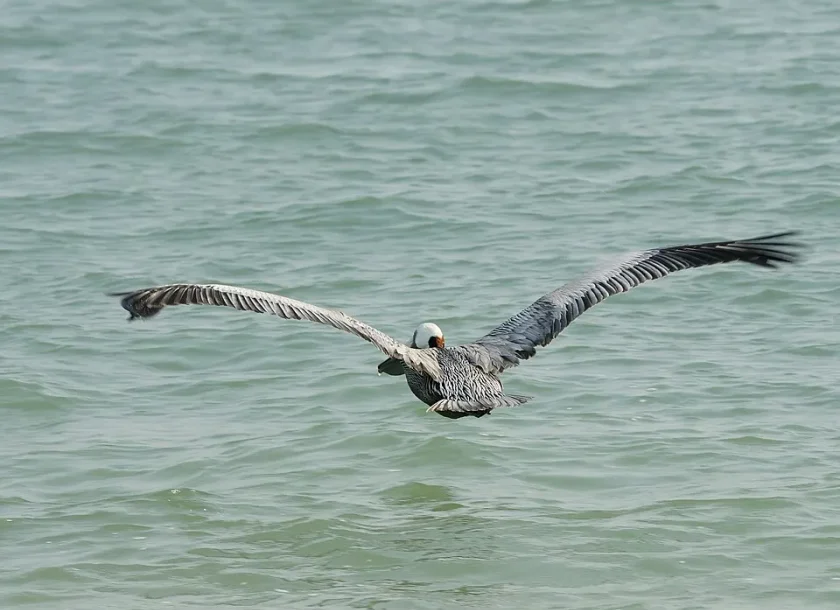
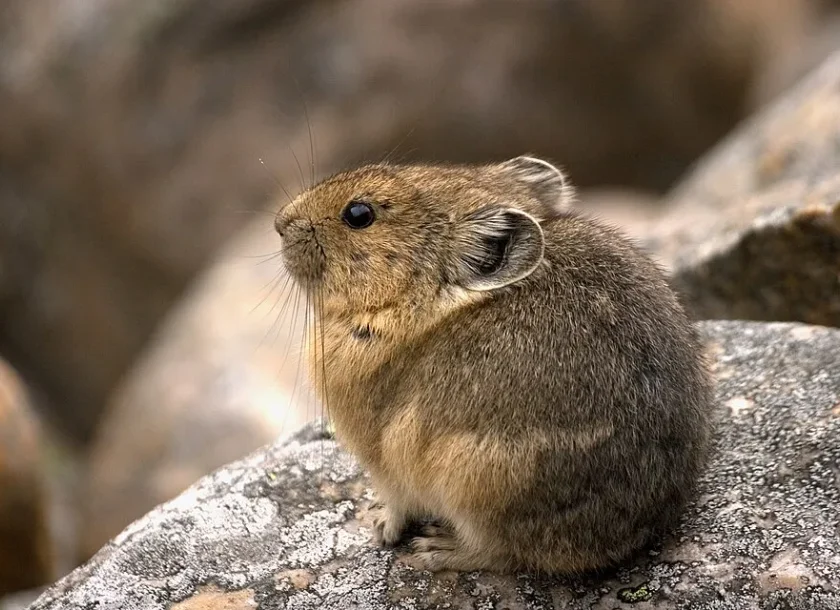
A cave is more than a dark hole in the rock. Beneath the surface, underground streams carry blind fish, cave walls shelter spiders and salamanders, and bats gather before flying into the night. Some of these animals have never seen daylight; others use caves only as a temporary refuge.
Here are 12 real animals that live in or regularly use caves, from the nearly sightless olm to the Mexican free-tailed bat. The key is understanding the difference between a permanent cave specialist and an animal that simply visits a cave.
A cave is not the same thing as an animal burrow. Burrows are generally excavated shelters in soil or other loose material, while caves are natural underground rock spaces or related passages. For animals that dig and use tunnels, see our separate guide to underground animals.
Not all underground animal homes are natural caves. Many species dig their own tunnels and burrows to find food, escape predators, and raise their young. Discover how moles, prairie dogs, wombats, and other species survive below the surface in our guide to 12 animals that live underground.
Cave Specialists vs. Cave Visitors
Not all cave dwellers use the underground world in the same way. Biologists often distinguish between cave-restricted species, animals that can also live outside caves, and temporary visitors that rely on the surface to feed. The terminology varies slightly between scientific sources, but the distinction matters more than the label.
- Permanent cave specialists: Complete their life cycles in underground habitats; some have reduced eyes and little pigment.
- Cave-associated animals: Frequently use caves, yet can also occupy similar sheltered habitats outside them.
- Cave visitors and roosting animals: Use caves for shelter, nesting, or roosting, but regularly return to the surface.
Quick example: The olm lives in underground water, while a Mexican free-tailed bat leaves its cave to hunt insects. Both are cave animals, but their lives are very different.
12 Fascinating Animals That Live in Caves
1. Olm
Scientific name: Proteus anguinus
Cave lifestyle: Permanent cave-water resident
Where found: Europe (Dinaric karst)
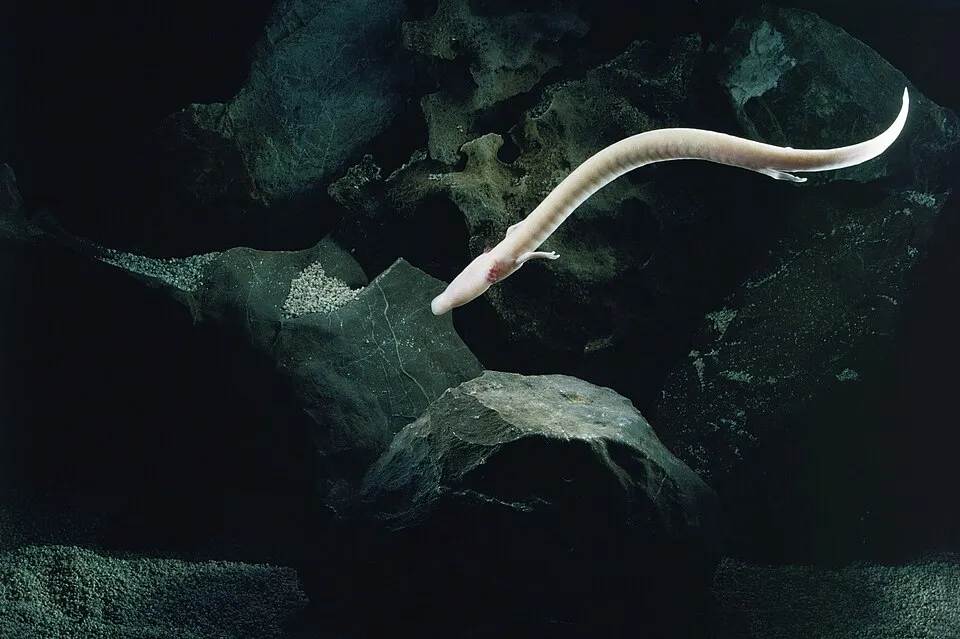
The olm looks like a small pale dragon, but it is a salamander rather than a fish. It inhabits underground waters in the limestone karst of southeastern Europe. Its eyes are strongly reduced, while its pale body and feathery external gills make it one of the most distinctive cave animals.
Living in the dark does not mean living without information. An olm detects its surroundings using other senses, helping it navigate submerged passages and locate small aquatic prey. Unlike animals that simply shelter in a cave by day, the olm is adapted to a permanently subterranean environment.
Its habitat depends on clean groundwater. Pollution entering the limestone landscape above can travel into the same underground water system on which these amphibians rely.
2. Mexican Cavefish
Scientific name: Astyanax mexicanus (cave populations)
Cave lifestyle: Cave-adapted populations
Where found: Mexico
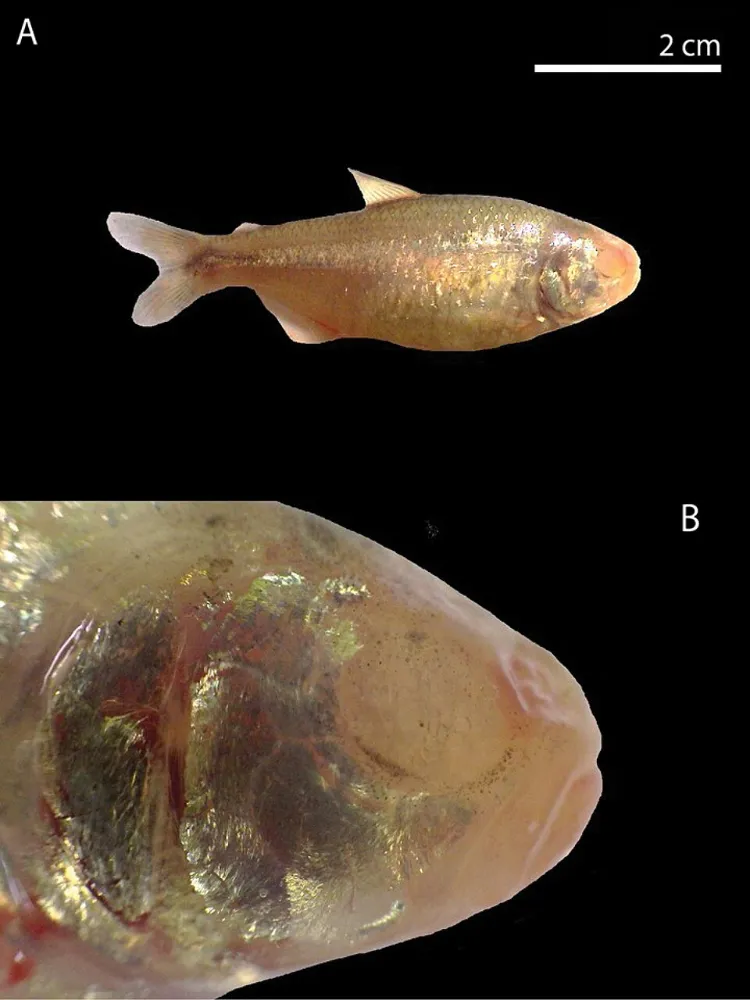
The Mexican tetra is an especially useful example of evolution in action because the species includes both eyed surface populations and cave-dwelling populations with greatly reduced eyes. Not every Mexican tetra is blind: the cave forms are the ones famous for their loss of vision and pale appearance.
Researchers study these fish to understand how inherited traits and developmental processes change when an animal evolves in darkness. The contrast between surface and cave populations also makes a compelling before-and-after visual comparison for readers.
Cavefish survive through other sensory abilities, not by somehow learning to see in complete darkness. Their story shows how populations living in very different environments may develop dramatically different features.
3. Northern Cavefish
Scientific name: Amblyopsis spelaea
Cave lifestyle: Permanent cave-water resident
Where found: Kentucky and Indiana, United States

The northern cavefish lives in underground waterways in parts of Kentucky and Indiana. It is pale, lacks functional eyes, and lives in a world where sunlight does not reach the water. Mammoth Cave National Park has documented its occurrence in the cave system.
In such dark streams, food is limited and movement can be costly. The fish depends on nonvisual senses to detect prey and navigate. Its body reflects a long evolutionary association with underground waters, rather than a temporary preference for a dim shelter.
This is not the same animal as the Mexican cavefish. Both illustrate cave adaptation, but they have separate evolutionary histories and very different ranges.
4. Texas Blind Salamander
Scientific name: Eurycea rathbuni
Cave lifestyle: Permanent subterranean freshwater resident
Where found: Central Texas, United States

The Texas blind salamander inhabits the water-filled spaces of the Edwards Aquifer near San Marcos, Texas. Its translucent skin, tiny eyes beneath the skin, and bright red external gills are adaptations to life in dark groundwater environments.
It is a predator of small aquatic invertebrates. According to the U.S. Fish and Wildlife Service, it can detect pressure waves made by prey, allowing it to hunt without relying on ordinary vision. The species is federally endangered and has an extremely restricted geographic distribution.
Because its habitat is part of an aquifer, the biggest threats are not limited to what happens inside visible caves. Groundwater withdrawal and contamination above ground can affect conditions far below.
5. Kentucky Cave Shrimp
Scientific name: Palaemonias ganteri
Cave lifestyle: Permanent cave-water resident
Where found: Mammoth Cave region, Kentucky, United States

This tiny, nearly transparent freshwater shrimp lives in underground waters associated with Mammoth Cave National Park. Unlike larger shrimps familiar from open rivers or coastal habitats, it has evolved for a habitat with almost no light.
A Kentucky cave shrimp has reduced eyes and little body pigment. It uses sensitive appendages to explore its surroundings and find food. Even in a place that looks empty to a human visitor, small crustaceans can be part of a complex food web.
The species is federally endangered. It is especially vulnerable to changes in the quality of the groundwater flowing through the cave system. Protecting cave animals therefore begins with protecting water on the surface.
6. Mammoth Cave Crayfish
Scientific name: Orconectes pellucidus
Cave lifestyle: Permanent subterranean freshwater resident
Where found: United States
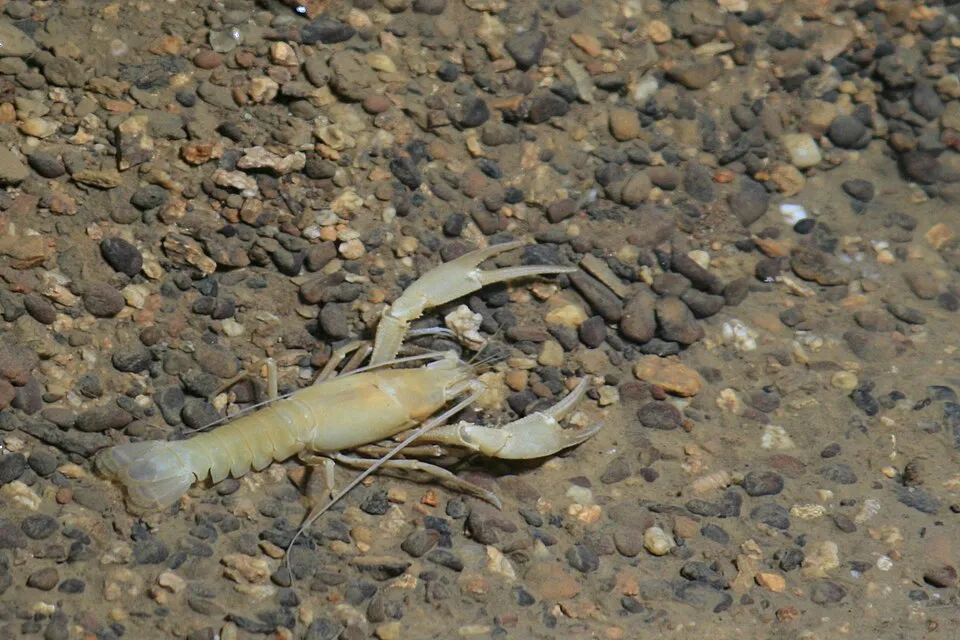
The Mammoth Cave crayfish resembles a small, pale relative of the crayfish seen in ordinary streams. It inhabits underground aquatic habitats and is recognized as a cave-adapted species by U.S. taxonomic and conservation resources.
Crayfish are scavengers and predators in freshwater food webs. In caves, they help move nutrients through environments where new food arrives only irregularly. Their pale coloration is not the result of a recent molt; it is associated with life in low-light underground habitats.
Care is needed when identifying cave crayfish from photographs, since different cave species can look similar. A photo should be labelled with this species name only when its identification is dependable.
7. Surprising Cave Beetle
Scientific name: Pseudanophthalmus inexpectatus
Cave lifestyle: Cave-restricted beetle
Where found: Mammoth Cave region, Kentucky, United States
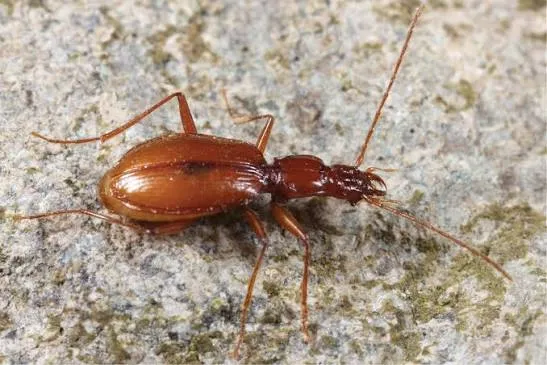
The surprising cave beetle is a tiny, eyeless insect documented in the Mammoth Cave area. It is easy to overlook beside large bats or salamanders, but small beetles are among the most specialized and important inhabitants of cave ecosystems.
Without daylight, beetles do not need bright camouflage patterns. Many cave beetles instead rely on touch and chemical cues while moving over rock, sediment, and organic debris. Different species occupy different parts of a cave food web.
The National Park Service identifies this beetle as one of the rare cave-dwelling invertebrates found within the park’s cave systems. Its story reminds us that cave biodiversity is often measured in tiny species, not dramatic-looking vertebrates.
8. Cave Cricket
Scientific name: Hadenoecus subterraneus
Cave lifestyle: Cave-associated; regularly forages outside
Where found: Eastern United States
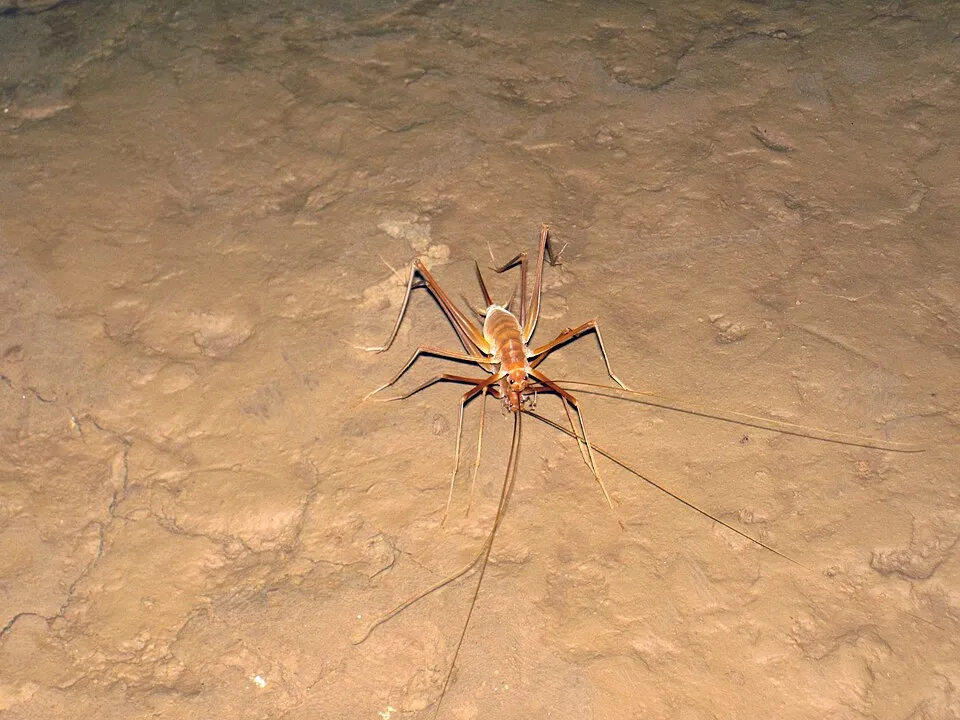
With very long legs and antennae, this cave cricket looks as if it belongs in the shadows. It is often seen near cave entrances and inside passages, but it regularly travels outside to feed. It should not be described as a permanently isolated cave animal.
The cave cricket plays a surprisingly large ecological role. By eating outside and returning underground, it brings nutrients into caves through droppings, eggs, and other organic material. Some cave beetles rely on cricket eggs as food.
This makes the cricket a crucial connection between aboveground ecosystems and the cave interior. A cave can be dark, yet still depend heavily on sunlight-powered food produced outside.
9. European Cave Spider
Scientific name: Meta menardi
Cave lifestyle: Cave-associated; frequently in entrance zones
Where found: Europe and nearby regions

The European cave spider is a large orb-weaving spider often found in caves, wells, tunnels, and similarly dark sheltered places. Unlike completely blind cave animals, it has eyes and is especially associated with areas near cave entrances rather than the deepest isolated passages.
Its web can catch insects moving through damp, dim spaces. The spider’s dark body and long legs are well suited to sheltered crevices, but its lifestyle should not be confused with the highly specialized eyeless organisms deeper underground.
Researchers studying European cave-spider communities identify Meta menardi as a conspicuous species of the twilight zone. It offers an ideal contrast with truly cave-restricted beetles and aquatic animals.
10. Cave Salamander
Scientific name: Eurycea lucifuga
Cave lifestyle: Cave visitor / entrance-zone resident
Where found: Eastern United States
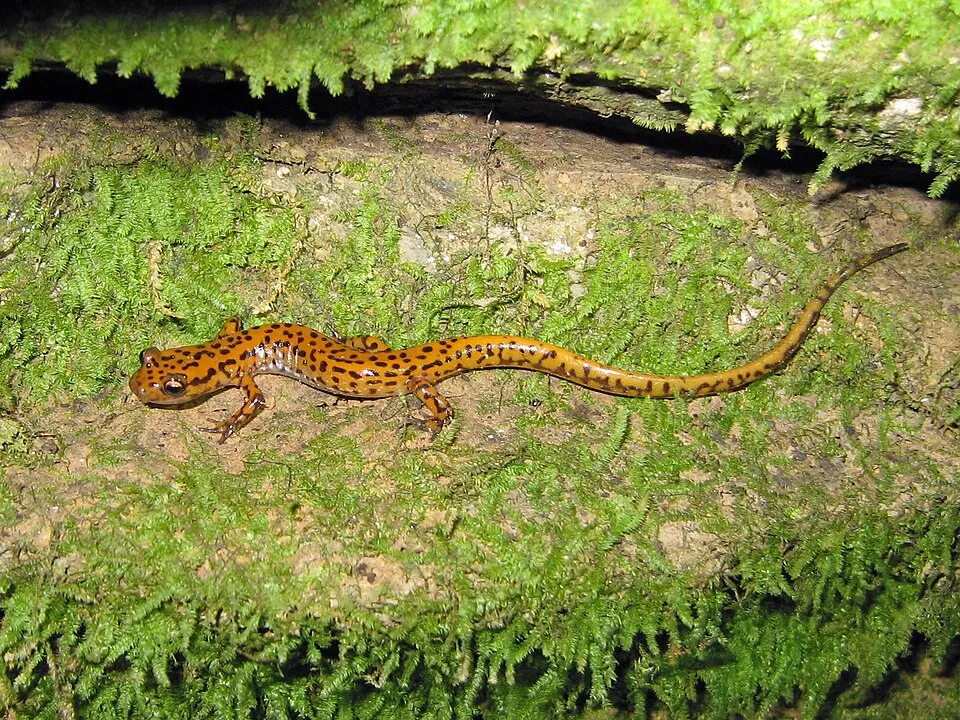
Despite its name, the cave salamander does not live only in total darkness. It often occupies moist rock walls at cave entrances and other cool, humid places. Its orange body with darker spots makes it much easier to recognize than a pale olm.
Cave entrances provide shelter and moisture while remaining connected to surface food webs. These amphibians may also be found outside caves under rocks and logs or near water, particularly when conditions are damp.
This species is worth including because it illustrates a common misunderstanding: an animal can be named for caves without being restricted to underground life. The National Park Service describes it as a cave-using rather than exclusively cave-adapted salamander.
11. Mexican Free-Tailed Bat
Scientific name: Tadarida brasiliensis
Cave lifestyle: Seasonal cave roost; leaves to feed
Where found: North and Central America

Some of the most spectacular cave animals are also among the most visible. Mexican free-tailed bats can gather in immense colonies, including the famous Bracken Cave colony in Texas. During the day they roost in protected spaces, but at dusk they emerge to hunt insects.
The bats depend on caves as places to rest and, for many colonies, raise young. However, they are not permanent cave residents: their food comes from the world outside. Their evening flights show how cave ecosystems connect to surrounding fields, forests, and skies.
Bat Conservation International documents Bracken Cave as a major summer breeding and roosting site. The number of bats changes with the season and year, so an exact head count should not be presented as a permanent figure.
12. Allegheny Woodrat
Scientific name: Neotoma magister
Cave lifestyle: Cave and rocky-shelter visitor
Where found: Eastern United States
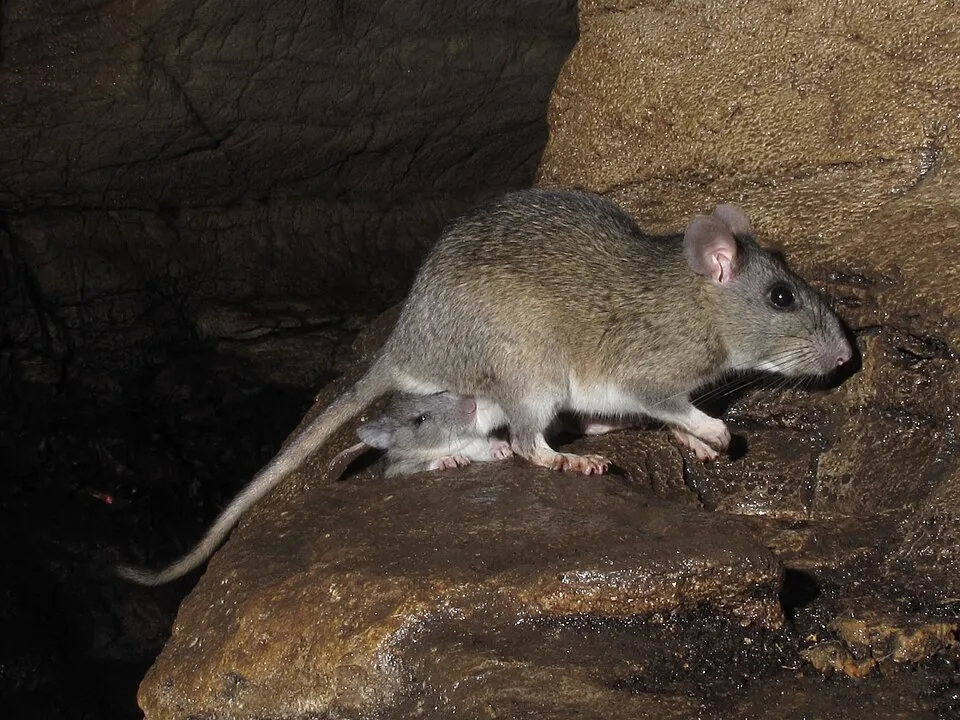
The Allegheny woodrat, sometimes called a packrat, is a rodent that uses rocky ledges, caves, and crevices as shelter. It is not a blind cave specialist. Instead, it moves between protected hiding places and the surface to gather food and nesting material.
Woodrats may create middens of leaves, sticks, nuts, and other objects near cave openings. These gatherings can also bring organic matter into cave ecosystems. Their presence helps illustrate the ecological importance of cave entrances, which often shelter more species than the deepest cave passages.
The National Park Service documents Allegheny woodrats using cave habitats in Mammoth Cave National Park. That does not mean every woodrat in the region lives in a cave; the species occupies a range of rocky natural habitats.
Why Cave Animals Are So Different
In deep caves, sunlight cannot support plants or the familiar food chains seen at the surface. For some species, the long-term absence of light favors reduced pigmentation or eyesight. Other adaptations involve sensitivity to water movement, chemical signals, or touch. A cave visitor such as a bat can retain fully functioning eyes because it continues to live in the outside world as well.
A second challenge is food. Cave crickets and bats bring nutrients inward; water carries organic debris through limestone; predators and scavengers consume smaller cave animals. These connections mean that a healthy cave begins with a healthy surface ecosystem.
Why Protecting Caves Matters
Cave animals are linked by more than darkness. Many depend on clean groundwater, and others depend on nutrients brought inside by bats, crickets, woodrats, or flowing water. Protecting a cave therefore means protecting the surface landscape around it.
If you remember one point from these examples, make it this: living in a cave is not one single lifestyle. An olm, a cave beetle, a cricket, and a bat each use the underground world in a different way.
Frequently Asked Questions
What animals live in caves all their lives?
Some cave-adapted animals, including olms, northern cavefish, Kentucky cave shrimp, and certain cave beetles, complete their life cycles in underground habitats. Aquatic cave specialists are often described as stygobionts or stygobites.
Do all cave animals become blind?
No. Reduced eyesight and pale coloration are common in some animals that evolved for permanent darkness, but bats, cave salamanders, and many cave spiders use caves without losing their eyes.
Why do bats live in caves?
Caves provide stable shelter, protected roosting sites, and in some species, suitable places for raising young or overwintering. Many cave-roosting bats fly outside to feed, so they are not permanently cave-bound.
Where does food in caves come from?
Most cave food webs depend on organic material originating outside: leaves and debris washed in by water, droppings from visiting animals, and nutrients imported by cave crickets or bats. Some subterranean environments also support microbial production from chemical energy.
Are animals found in caves necessarily rare?
No. Some species are widespread and common cave visitors, while others have tiny ranges and are highly vulnerable. Endangered species such as the Kentucky cave shrimp depend on very specific underground water systems.
Related Reading
Curious about the difference between cave life and burrow life? Read: 15 Animals That Live Underground (With Pictures)
Scientific Sources and Further Reading
- National Park Service — Amazing Cave Critters Up-close
- U.S. Geological Survey — Ecology of Mammoth Cave
- National Institutes of Health — Eye Loss in Blind Cavefish
- U.S. Fish & Wildlife Service — Texas Blind Salamander
- National Park Service — Kentucky Cave Shrimp
- National Park Service — Cave Insects and Spiders
- National Park Service — Cave Fish
- National Park Service — Cave Crickets Monitoring
- Bat Conservation International — Mexican Free-Tailed Bat
- Araneae — Meta menardi
- Slovenia Tourist Board — Caves and Olms