A beaver can raise the water level around its home by building a dam. A diving bell spider can make an underwater room by carrying air down from the surface. Both build shelters, but they solve opposite problems. The beaver uses water to protect the entrance to its lodge, while the spider brings air underwater so it can breathe inside its shelter.
Here are 10 animals that build their own homes, from birds that share a roof to caterpillars that carry their shelters wherever they go.
10 Animal-Built Homes at a Glance
| Animal | What it builds | What the structure does |
|---|---|---|
| North American beaver | Dam and lodge | The dam holds back water. The lodge provides a sheltered resting chamber. |
| Black-tailed prairie dog | Underground burrow | Provides shelter, with raised mounds marking some entrances. |
| Sociable weaver | Communal grass nest | Holds separate chambers where birds roost and raise young. |
| Rufous hornero | Oven-shaped mud nest | Encloses a chamber for eggs and chicks. |
| Harvest mouse | Woven grass nest | Holds the litter above ground among living stems. |
| Northern paper wasp | Open paper comb | Keeps developing young in separate cells. |
| African mound-building termite | Soil mound with internal passages | Helps exchange air between the colony and the outside. |
| Diving bell spider | Air-filled silk chamber | Provides a place to breathe underwater. |
| Evergreen bagworm | Portable case of silk and plant pieces | Shelters the caterpillar as it feeds and later pupates. |
| Case-building caddisfly larvae | Portable case of silk, stones, or plant pieces | Protects much of the larva’s body as it moves underwater. |
1. North American Beaver (Castor canadensis)
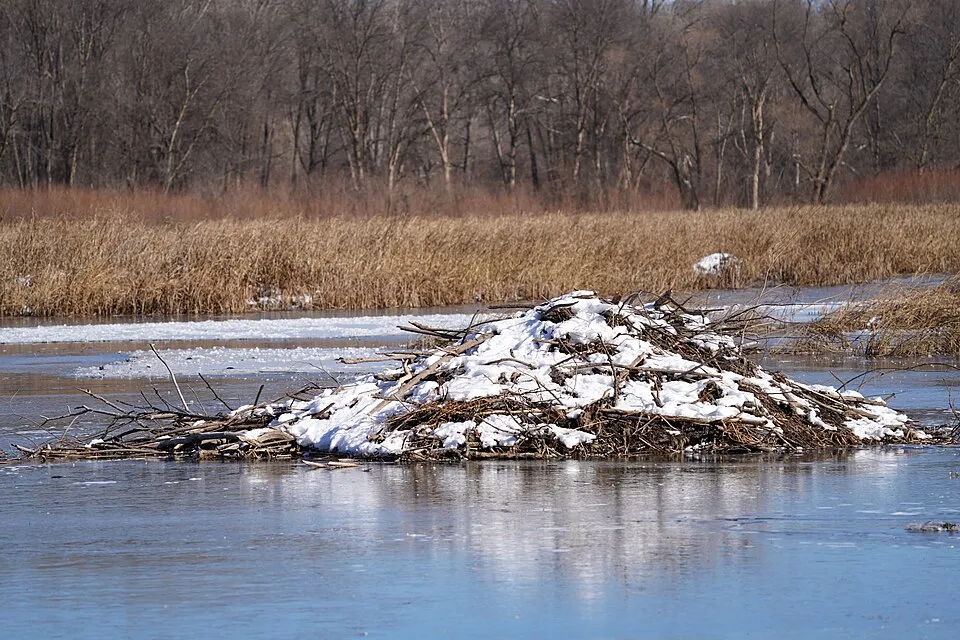
Look for two structures at a beaver pond. A dam stretches across flowing water and holds it back. A lodge may look like a heap of sticks near the bank or out in the pond. The two structures have different jobs.
A beaver can swim into the lodge through an underwater entrance and climb into a resting chamber above the waterline. The pond makes that submerged route possible, while the chamber gives the beaver a dry place to rest.
2. Black-Tailed Prairie Dog (Cynomys ludovicianus)

In open grassland, a pile of bare earth may be the first sign of a prairie dog burrow. As prairie dogs dig, they bring soil to the surface, where it can form a raised rim around the entrance. The living space lies beneath it.
A prairie dog colony is called a town. From above, you see scattered openings. Below, family groups use their own burrow systems. For more examples of life beneath the surface, see Animals That Live Underground.
3. Sociable Weaver (Philetairus socius)
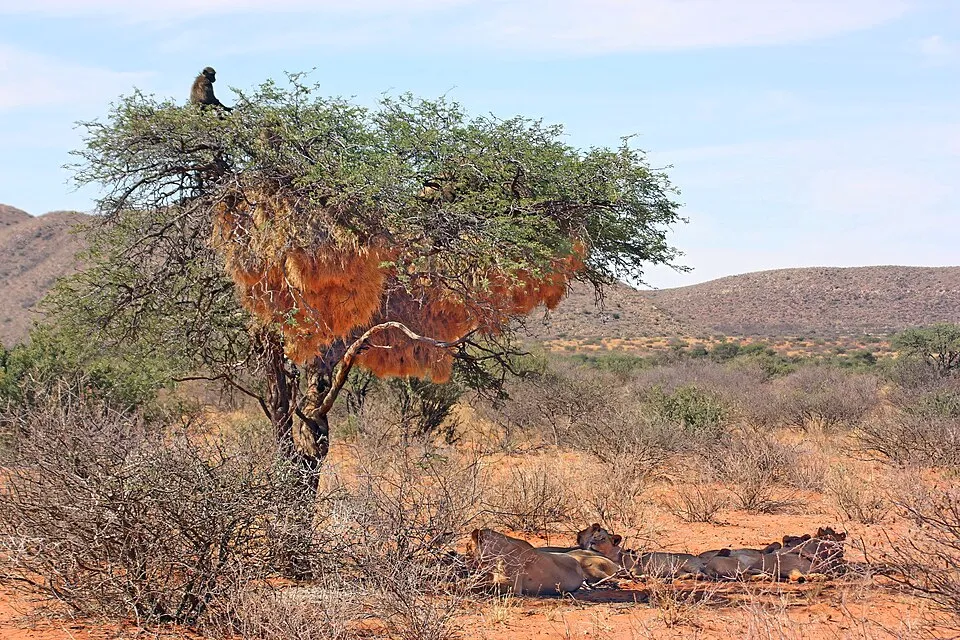
From a distance, a sociable weaver nest can look like a bundle of dry grass caught in a tree. The openings are easier to see from below. Each leads to a chamber within the shared nest, where birds can roost or raise chicks.
Where a chamber sits makes a difference. Researchers in southern Africa found that chambers closer to the center buffered outside temperatures more effectively than chambers near the edge. The nest can offer different conditions under the same roof.
4. Rufous Hornero (Furnarius rufus)
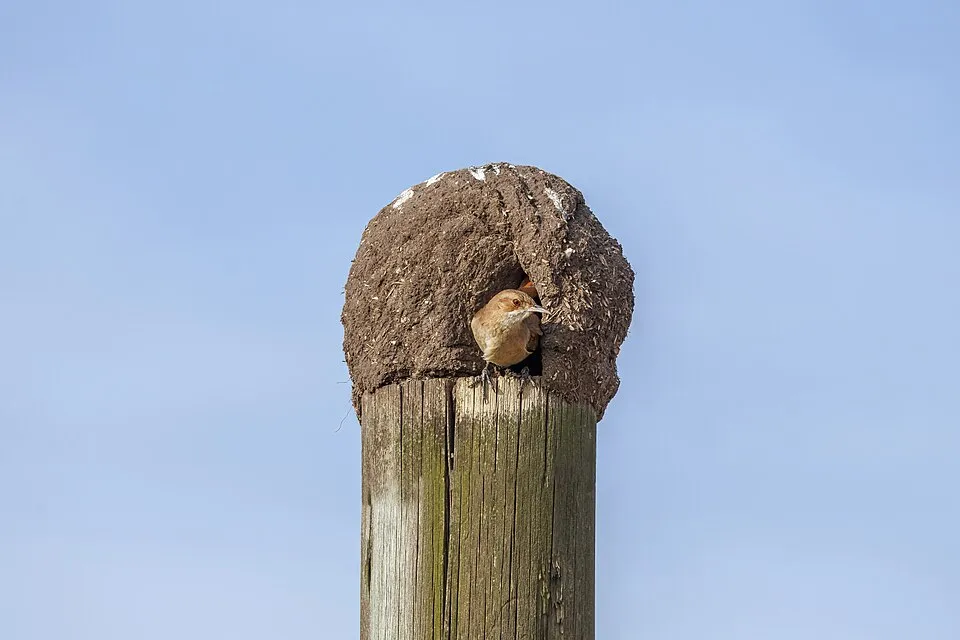
A pair of rufous horneros builds a rounded nest from mud and other material, often on an exposed support such as a tree branch. Its domed shape resembles a clay oven. The entrance opens to one side, and the pair raises its young inside the hardened shell.
Look at two nests and you might find their doors on opposite sides. A study that collected records from more than 12,600 nests across South America found that individual pairs tended to repeat their own left or right preference when building new nests.
5. Harvest Mouse (Micromys minutus)
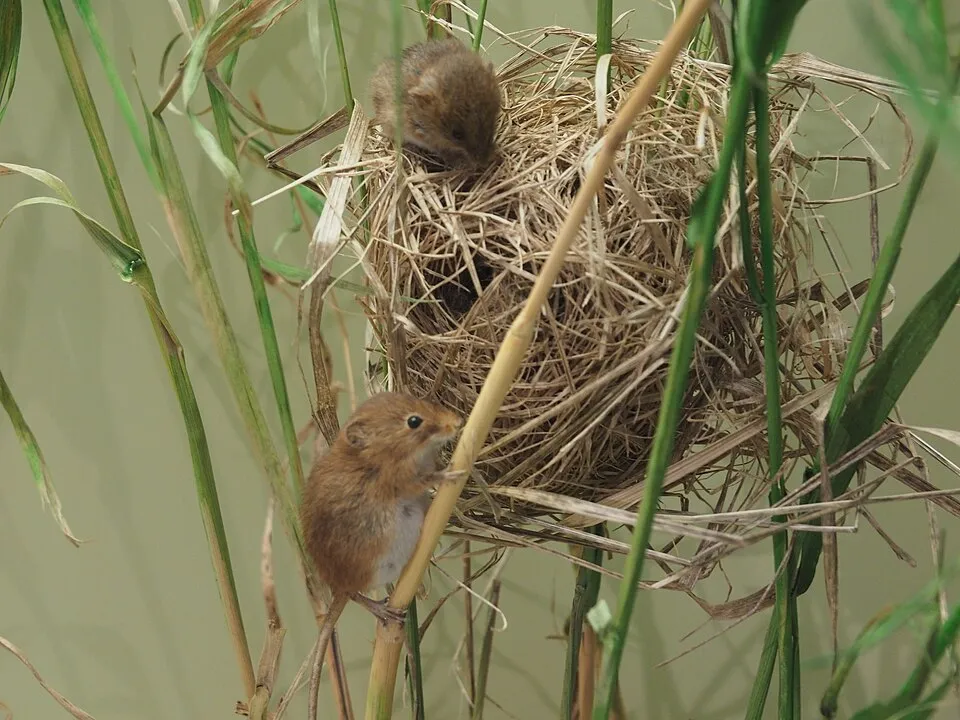
A harvest mouse can build a breeding nest from the same plants that hold it up. It splits living grass leaves lengthwise and weaves the strips together while they remain attached to the plant.
The finished nest is a small ball suspended among stems. Its position is part of the design. The stems support the nest above the ground, and the woven walls surround the space where the young develop.
6. Northern Paper Wasp (Polistes fuscatus)

A paper wasp scrapes fibers from weathered wood and chews them into a pulp. It shapes the pulp into a comb of cells. Once the material dries, the nest has the papery texture that gives the wasp its name.
The open cells are easy to spot in a photograph. A queen that survives the winter can start a new nest, and workers can add cells as the colony grows. Each cell gives a developing wasp its own space.
7. African Mound-Building Termite (Macrotermes michaelseni)
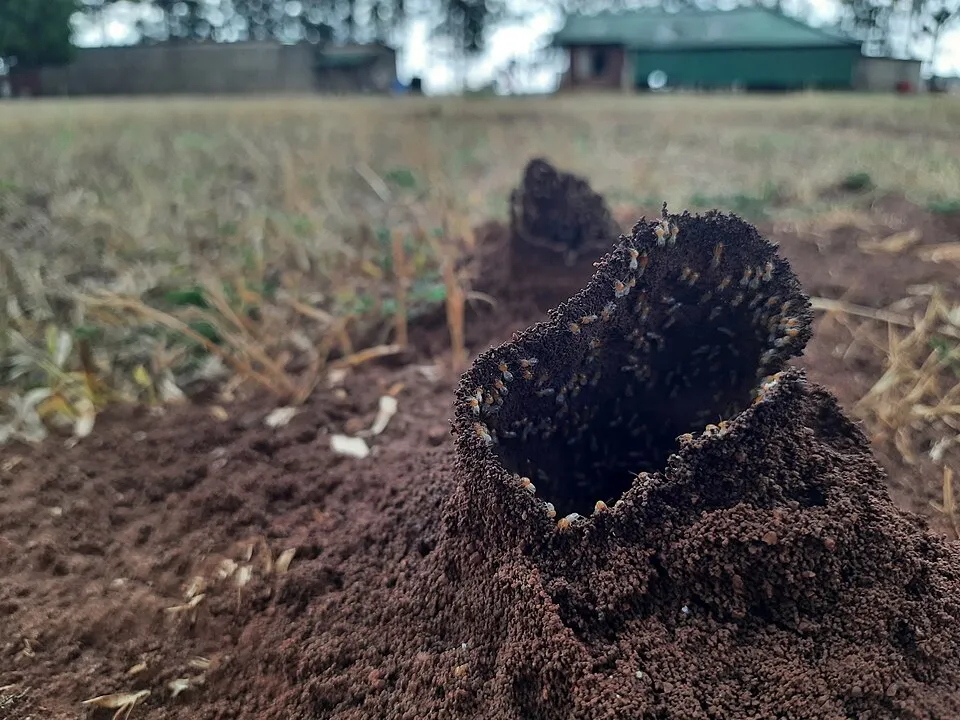
The soil above a termite colony can look solid from the outside, but passages run through the mound. Those passages carry air as different parts of the mound warm and cool over the course of the day.
Researchers studying Macrotermes michaelseni in Namibia found that daily changes in temperature helped drive this circulation. The mound’s shape and the network inside it help the colony exchange gases with the outside air.
8. Diving Bell Spider (Argyroneta aquatica)
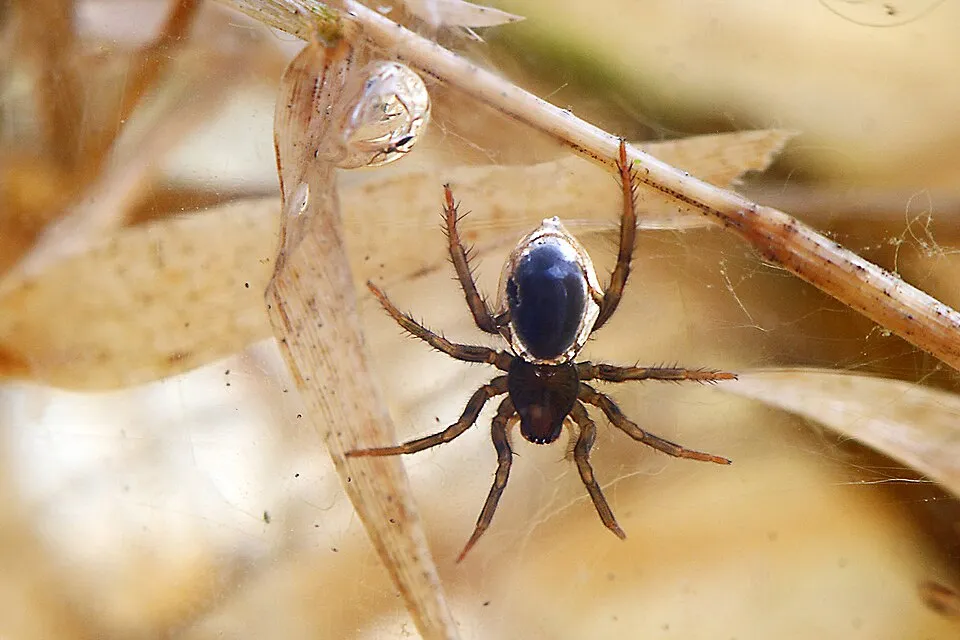
A diving bell spider spins a silk chamber among underwater plants. It visits the surface, traps air against its body hairs, and carries that air down to the chamber. Enough trips turn the web into an underwater refuge with a pocket of air inside.
The spider can breathe from that air pocket, and dissolved oxygen can also move from the surrounding water into it. The bell gradually loses volume as gases move between the air pocket and the water, so the spider can replenish it with another trip to the surface.
9. Evergreen Bagworm (Thyridopteryx ephemeraeformis)

A dangling bundle of leaf pieces can look like debris caught on a branch. It may be an evergreen bagworm. The caterpillar binds plant fragments together with silk and carries the case as it crawls and feeds.
When it is ready to pupate, the caterpillar fastens the bag to a twig or another support. The same structure serves first as a traveling shelter and then as a fixed place to complete its transformation.
10. Case-Building Caddisfly Larvae (Order Trichoptera)
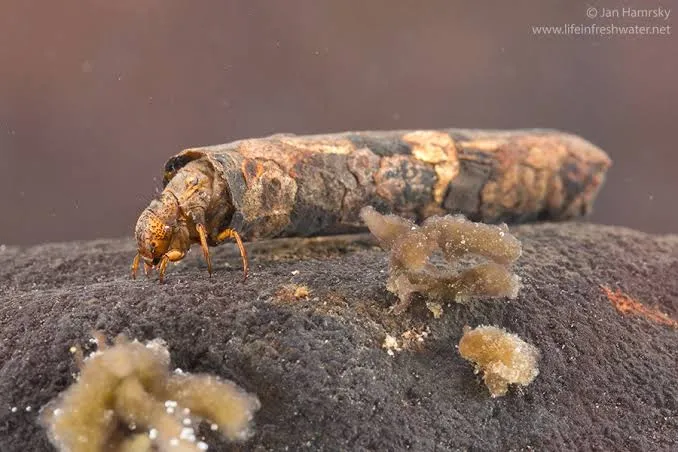
A little tube of sand or pebbles moving across a streambed may have a caddisfly larva inside. Many species use silk to bind the materials around them into cases. Depending on the species, those materials can include grains of sand, small stones, or pieces of plants.
The larva can extend its head and legs to move while the rest of its body stays inside. Like the bagworm, it carries its shelter. The difference is where you might see it. Look for bagworms on branches and for these caddisfly cases in freshwater.
Frequently Asked Questions
Do beavers live inside their dams?
Beavers live in lodges or bank dens. A dam slows the flow of water and helps maintain the pond around the shelter. At a pond with both structures, the barrier across the water is the dam and the shelter is the lodge.
Do all caddisfly larvae build portable cases?
Some carry cases, some build fixed retreats, and others live freely. A moving tube made of sand, stones, or plant fragments is a clue that you are looking at one of the case-building kinds.
Which animal builds an underwater home filled with air?
The diving bell spider builds a silk chamber underwater and fills it with air from the surface. Its bell allows it to breathe while staying submerged.
Sources
- National Park Service, Beaver Dams and Prairie Dogs.
- Frontiers in Ecology and Evolution, Temperature buffering in sociable weaver nests.
- Max Planck Institute for Biological Intelligence, Rufous hornero nest architecture.
- The Mammal Society, Harvest Mouse.
- Cornell University, Paper Wasps.
- Journal of Experimental Biology, Solar-powered ventilation of African termite mounds and The diving bell and the spider.
- University of Maryland Extension, Bagworms on Trees and Shrubs.
- The Riverfly Partnership, Caddisflies.