Heard an owl outside and want to know which one it was? Listen for the rhythm. A Tawny Owl gives a wavering hoot, a Barn Owl lets out a rasping screech, and a Long-eared Owl repeats a soft note with a pause between each call. The five recordings below let you compare those sounds and hear how a Little Owl and a Short-eared Owl differ.
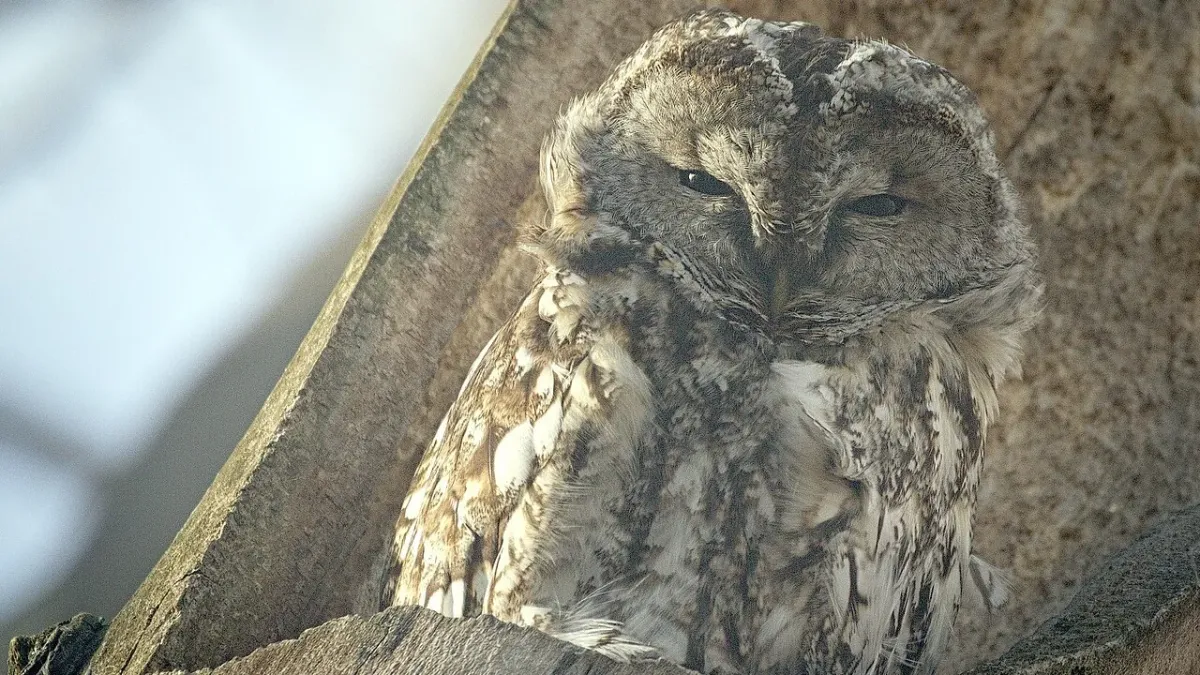
1. Tawny Owl — the familiar “twit-twoo”
Listen for a long hoot, a pause, then a quieter note leading into a wavering finish. This recording captures the male’s territorial hoot. A sharp kee-wick is a separate contact call often given by a female. When the two calls answer each other, they make the familiar twit-twoo.
Where to listen — Mature woodland, leafy parks and churchyards with old trees. Autumn evenings are a good time to listen.
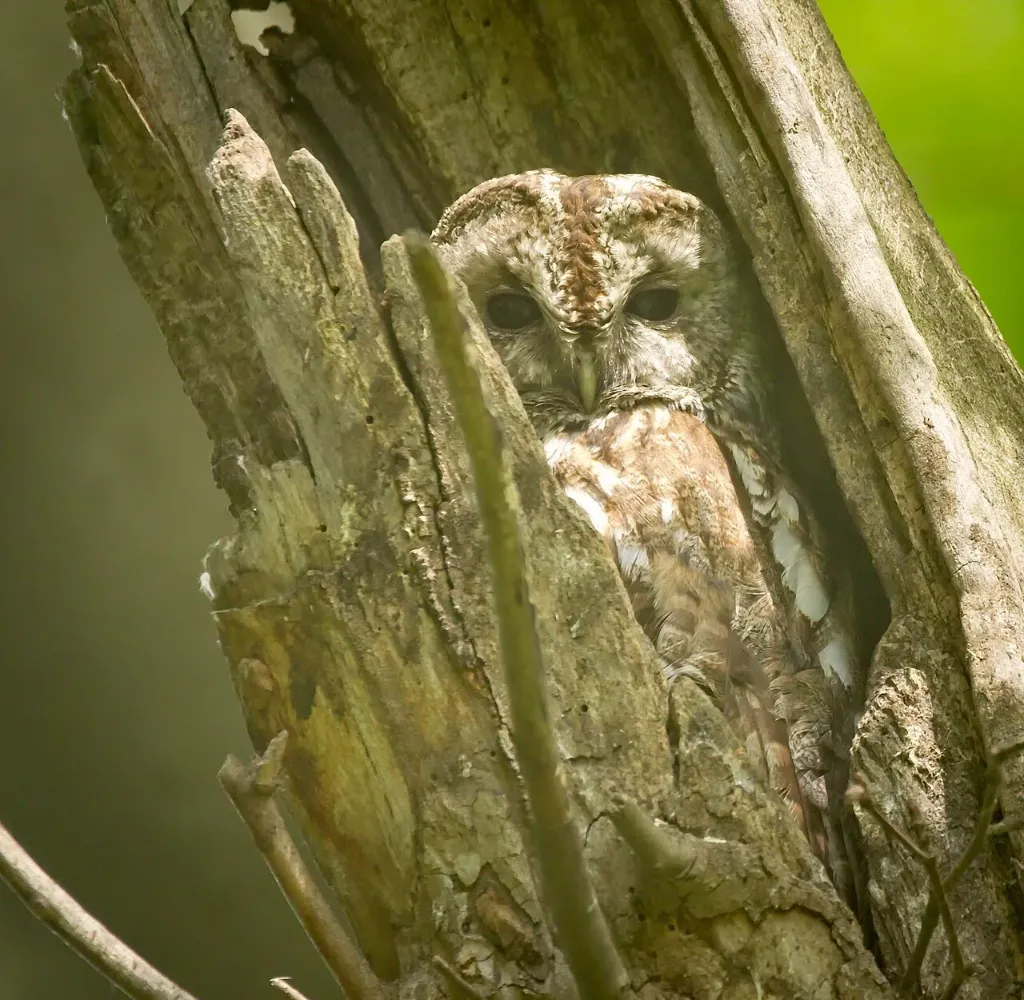
Tawny Owl peering out from a broken tree trunk.
2. Barn Owl — a long, rasping screech
Start with the volume low. In this recording from Cardiganshire, Wales, a harsh screech cuts through the quiet and repeats several seconds later. The rough, drawn-out sound is quite different from the round tone of a hoot. Young Barn Owls can also make repeated hissing sounds when begging for food.
Where to listen — Open farmland and rough grassland, especially around dusk. Watch for a pale owl flying low over field margins.

Barn Owl perched in Dumfries and Galloway, Scotland.
3. Little Owl — a short, repeated “woop”
Give this recording a few seconds. Once the calls begin, you’ll hear a series of short, fairly high notes, each with a clear gap after it. Little Owls can also give a sharper kiew call, so the same bird may sound different on another visit. This song was recorded in the Netherlands.
Where to listen — Farmland with old trees, pasture and orchards in parts of England and Wales. Scan fence posts and exposed branches in daylight, too.
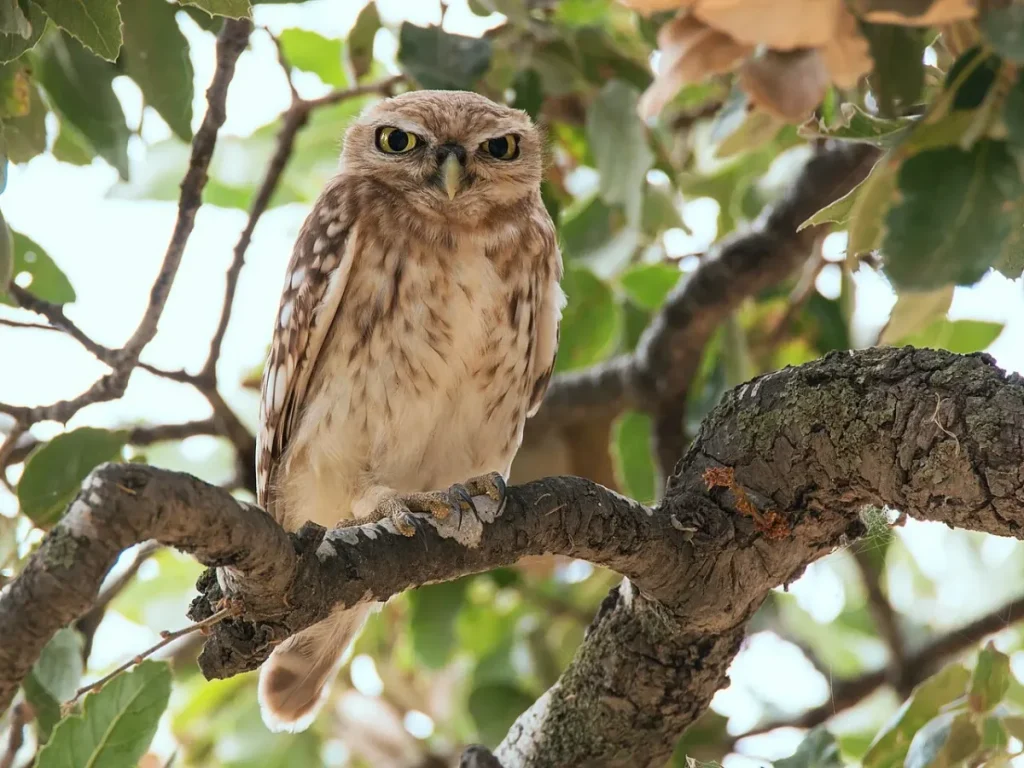
Little Owl perched on a branch in Israel.
4. Long-eared Owl — a soft hoot with long gaps
The male’s territorial call sounds like a low hoo made by blowing across the top of a bottle. In this excerpt from Slovakia, the same short note repeats about every two seconds. Listen for the pattern over several calls. A single note can be easy to miss.
Where to listen — Dense woodland and scrub near open hunting ground. Early spring is a better time to hear this secretive owl calling.

Long-eared Owl roosting among branches in Hungary.
5. Short-eared Owl — a quick run of low hoots
The low notes in this clip follow one another quickly enough to fit a whole run into a few seconds. Play it after the Long-eared Owl recording to hear the difference in pace. Male Short-eared Owls can give rapid strings of hoots during display flights, sometimes with audible wing-claps. The species also makes harsh barks.
Where to look and listen — Open moorland, rough grassland and coastal marshes. In winter, look for one hunting low over coastal grassland in daylight or around dusk. You may see it before you hear it.

Short-eared Owl flying low over cattails.
How to identify an owl call you heard outside
Let the sound repeat before deciding. Record 20–30 seconds from where you are, then note the time and what surrounds you. A wavering hoot from mature trees points toward Tawny Owl. A drawn-out screech by open fields makes Barn Owl worth checking. For low hoots, compare the gaps between notes. The Long-eared Owl clip has a clear pause after each hoot, while the Short-eared Owl clip sounds like a quick burst.
Sources
- Woodland Trust — How to identify UK owl calls. Woodland Trust
- British Trust for Ornithology species guides — Tawny Owl, Little Owl, Long-eared Owl and Short-eared Owl. BTO
- Natural History Museum — Barn Owl.