Wild ducks can sleep while floating on calm water or while resting on land near the water’s edge. They also nap during the day. A mallard with its bill tucked into its back feathers may look sound asleep, but it can sometimes keep one eye open and watch for movement.
Where do ducks sleep at night?
Look for resting ducks in sheltered water, along quiet banks, or on low islands. The spot can change with the species, the weather, and what the birds are doing after dark. Mallards sometimes leave their daytime resting areas around dusk to feed, so a pond full of ducks in the afternoon may look empty later that evening.
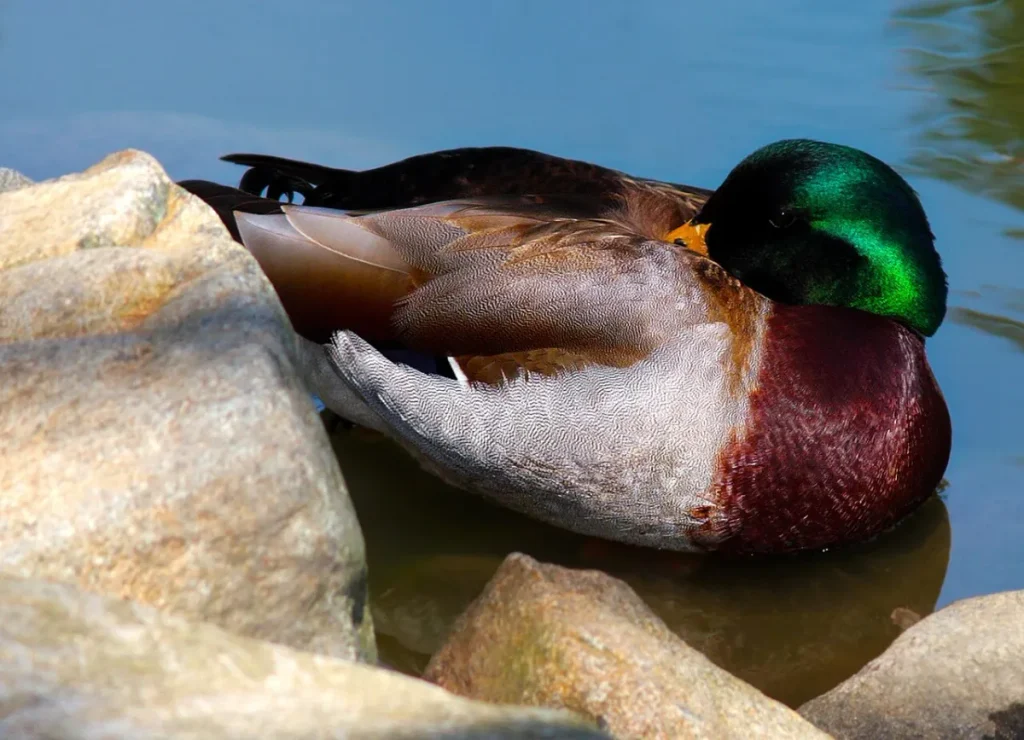
A male mallard rests on the water beside rocks at the Brooklyn Botanic Garden.
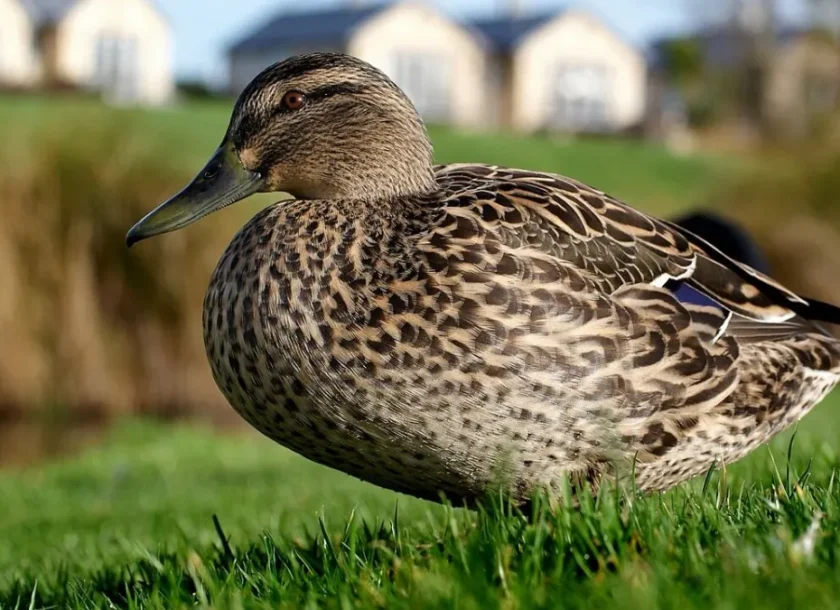
On land, a resting duck may settle low against the ground and turn its head backward, tucking its bill into the feathers behind its shoulder. Look for that posture on the bank as well as on the water. A duck in this position may still open its eyes briefly to check its surroundings.

A mallard rests on land with its bill tucked into its feathers.
Do ducks really sleep with one eye open?
Yes. Mallards can enter unihemispheric slow-wave sleep, a state in which one half of the brain sleeps while the other stays more alert. The open eye can still pick up signs of danger.
In an experiment, researchers recorded the brain activity of mallards resting in rows of four. The ducks at the exposed ends used this kind of sleep more often than the ducks in the middle. They also tended to point the open eye away from the group, toward the side a predator could approach from.
Next time you see a row of resting mallards, compare an end bird with one in the middle. The end bird may keep its outward-facing eye open even with its bill tucked. You can watch for this from the path without disturbing the flock.
Related reading · How Do Ducks Stay Warm in Winter?
Sources
- Rattenborg, Lima, and Amlaner · Study of one-eyed sleep and predator detection in mallards. PubMed
- University of Alaska Fairbanks Geophysical Institute · How ducks stay alert while sleeping. Geophysical Institute
- Bengtsson et al. · GPS study of mallard resting and feeding habitats. PubMed
- Ducks Unlimited · What waterfowl do after dark.