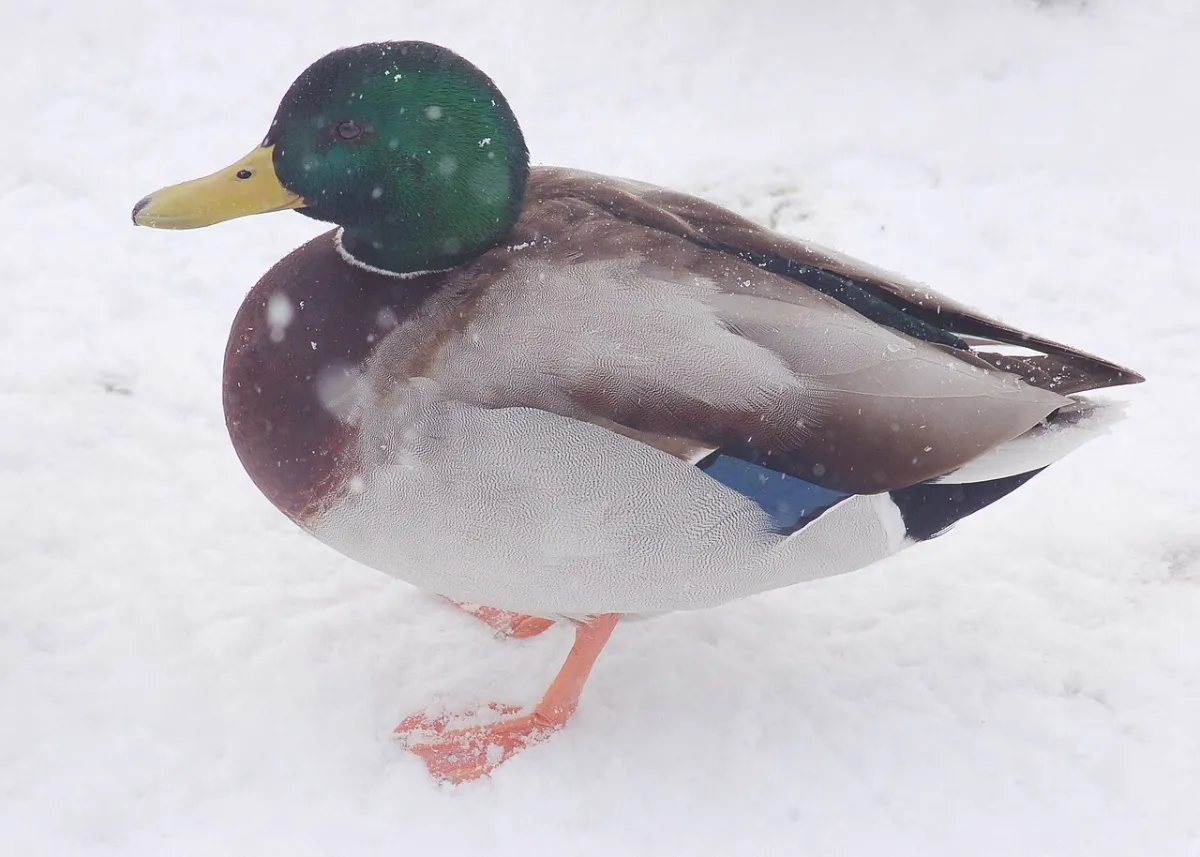
Ducks can get cold in winter, especially around their bare feet. They conserve body heat with insulating feathers, a system that transfers heat between blood vessels in their legs, and resting positions that cover exposed skin. That’s how a Mallard can stand on ice while keeping its core warm.
1. Down feathers trap warmth close to the body
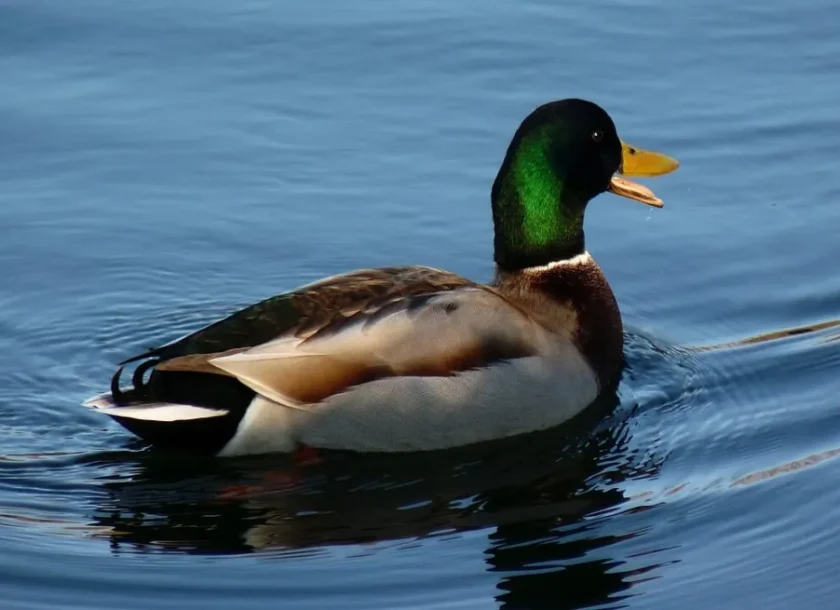
A duck’s soft down traps air close to its skin. That layer of air slows heat loss. Overlapping outer feathers help shed water, protecting the insulating layer underneath. When a duck preens, it uses its bill to smooth and reposition its feathers, helping maintain the outer layer.

A Mallard preens its feathers at the water’s edge.
2. Blood vessels in the legs slow heat loss
Warm blood flows down toward a duck’s foot through arteries. Cooler blood returning from the foot flows in the opposite direction through nearby veins. Some heat passes from the outgoing blood to the returning blood before reaching the toes. This is called countercurrent heat exchange.
The foot still receives blood, but it can stay much cooler than the body. A cooler foot loses less heat to ice or cold water. For a closer look at how those same feet are shaped for swimming, see 6 Animals With Webbed Feet and How They Use Them.
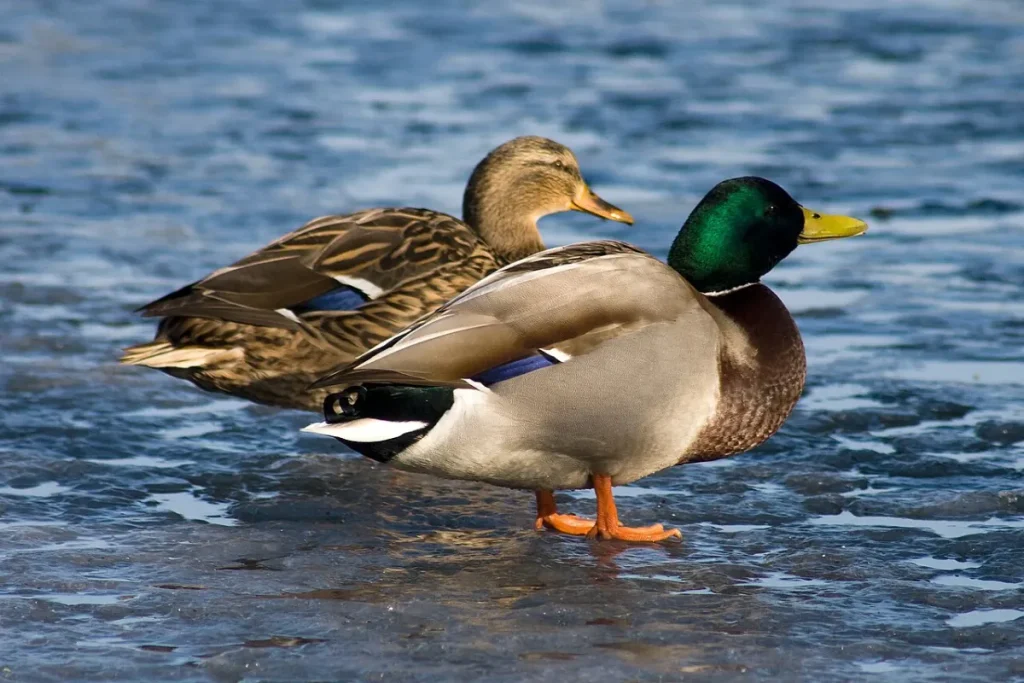
Male and female Mallards stand on ice.
3. Tucking one foot keeps it out of the cold
A resting duck may pull one foot up into its belly feathers and stand on the other. The tucked foot is shielded from cold air, and the duck can switch feet as it rests. You may see this posture in mild weather too. On a cold day, it gives the bird a simple way to reduce how much bare skin is exposed.
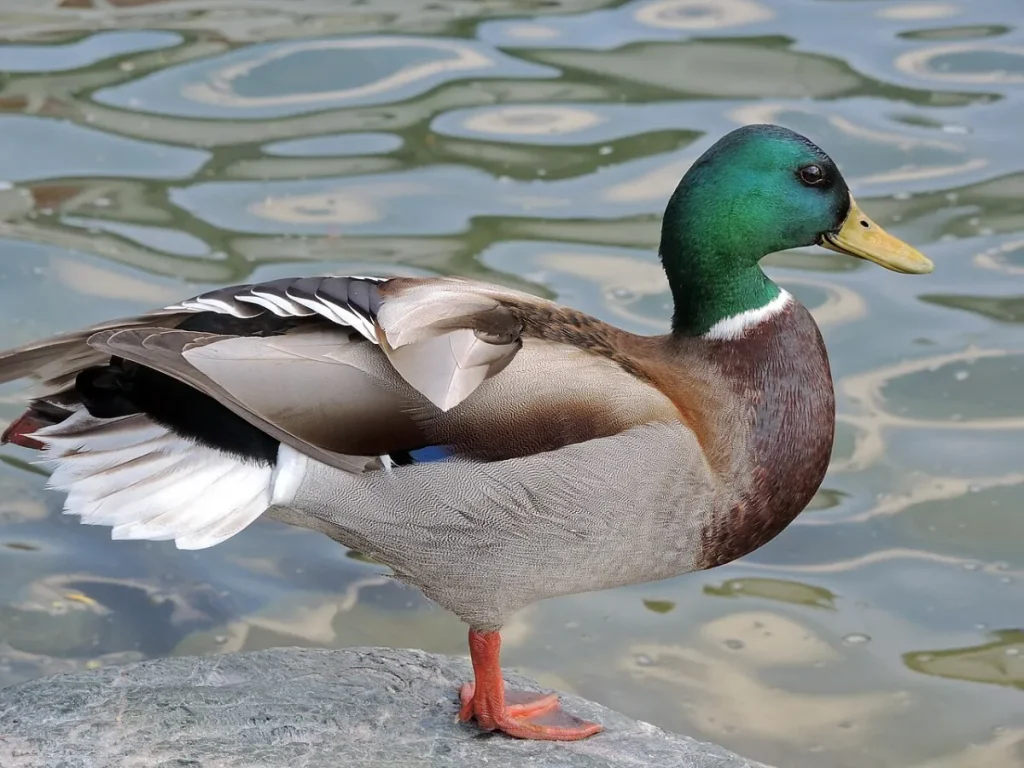
A Mallard stands on one foot beside Lake Zürich, Switzerland.
During a prolonged cold spell, ducks still need food to fuel their metabolism. If ice or snow makes feeding difficult, they may use stored fat or move to a place where food is easier to reach.
Sources
- Cornell Lab of Ornithology. Why Don’t Birds Get Cold Feet? All About Birds
- National Audubon Society. How Birds Keep Their Feet From Freezing in Frigid Temperatures. Audubon
- Journal of Avian Biology. What Do We Really Know About the Water Repellency of Feathers? nsojournals.onlinelibrary.wiley.com
- Ducks Unlimited. Winter Weather and Waterfowl.