A mallard spreads the webbing between three toes when it paddles. A beaver has broad, webbed hind feet and smaller front paws for gripping branches. A platypus gets most of its swimming power from its front feet. All three have skin connecting their toes, but each puts that extra surface area to work in a different way. Audubon
Where Is the Webbing?
| Animal | Where to look | What the feet do |
|---|---|---|
| Mallard | Between the three forward toes | Paddle and steer at the surface |
| Blue-footed booby | Between all four toes | Help it move in water and feature in courtship displays |
| North American beaver | On the large hind feet | Push it through the water |
| North American river otter | On both front and hind feet | Help it paddle, with strong thrust from the hind feet |
| Platypus | Most conspicuous on the front feet | Provide most of the power for swimming |
| African clawed frog | On the broad hind feet | Push water backward during a kick |
1. Mallard
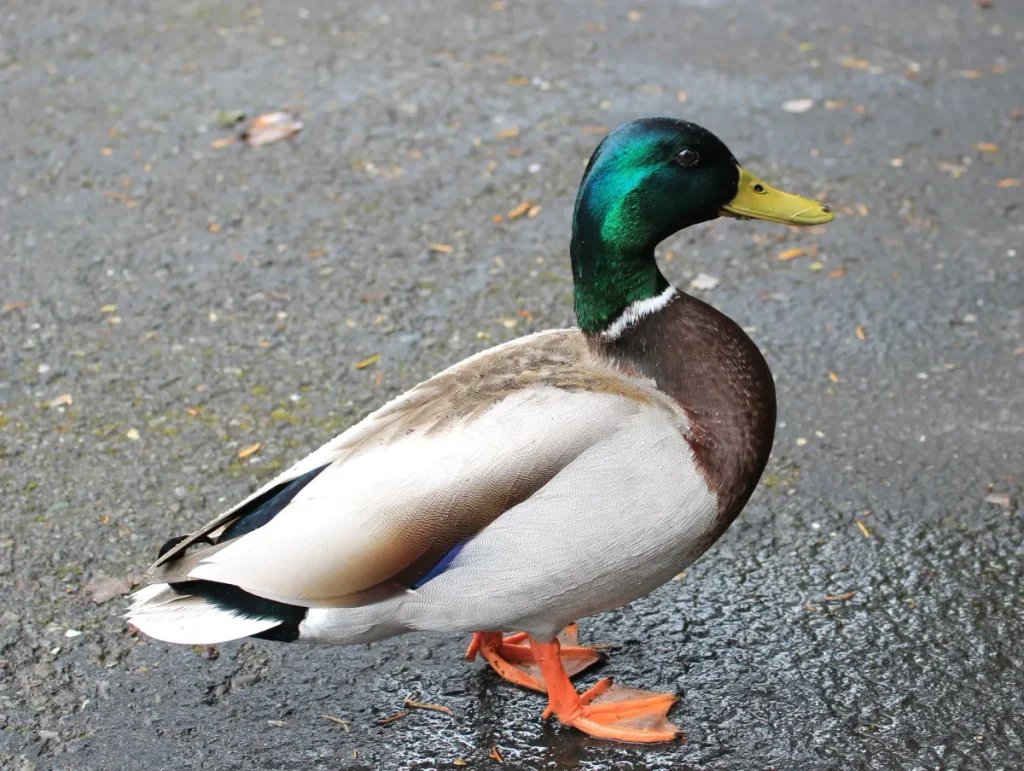
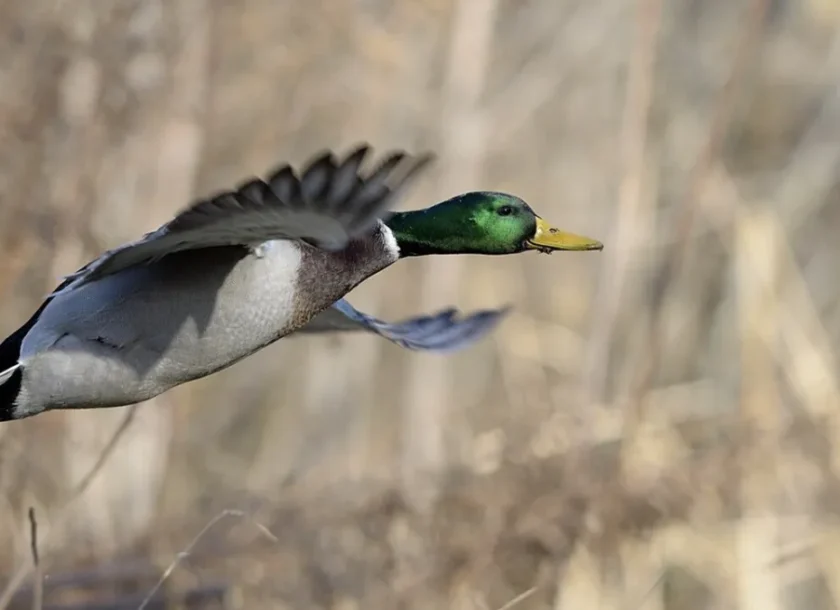
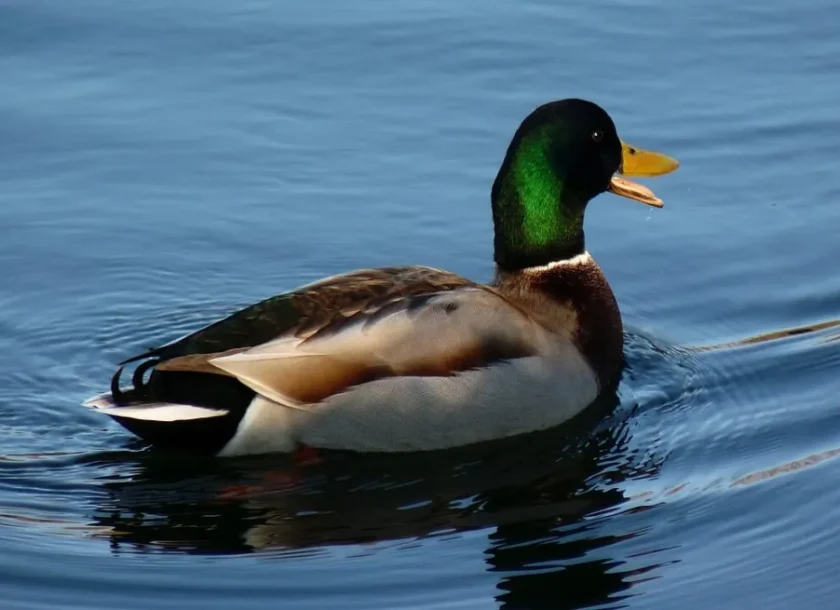
A male mallard with orange webbing between its forward toes.
Look at a mallard’s foot from above. Three long toes point forward, with a fan of skin between them. A much smaller toe points backward and sits outside the fan. This arrangement is called a palmate foot.
During a swimming stroke, the forward toes spread and give the duck a wider surface to push against the water. The toes can draw closer together as the foot comes forward for the next stroke. Unit 1. What is …a Waterfowl?
2. Blue-Footed Booby
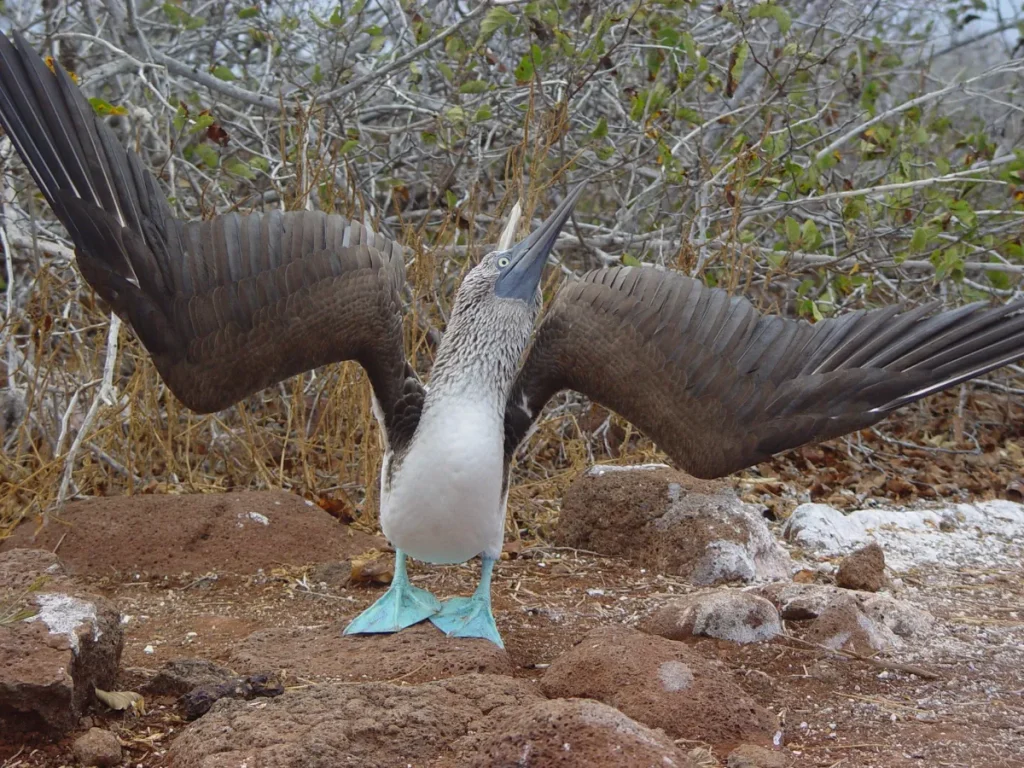
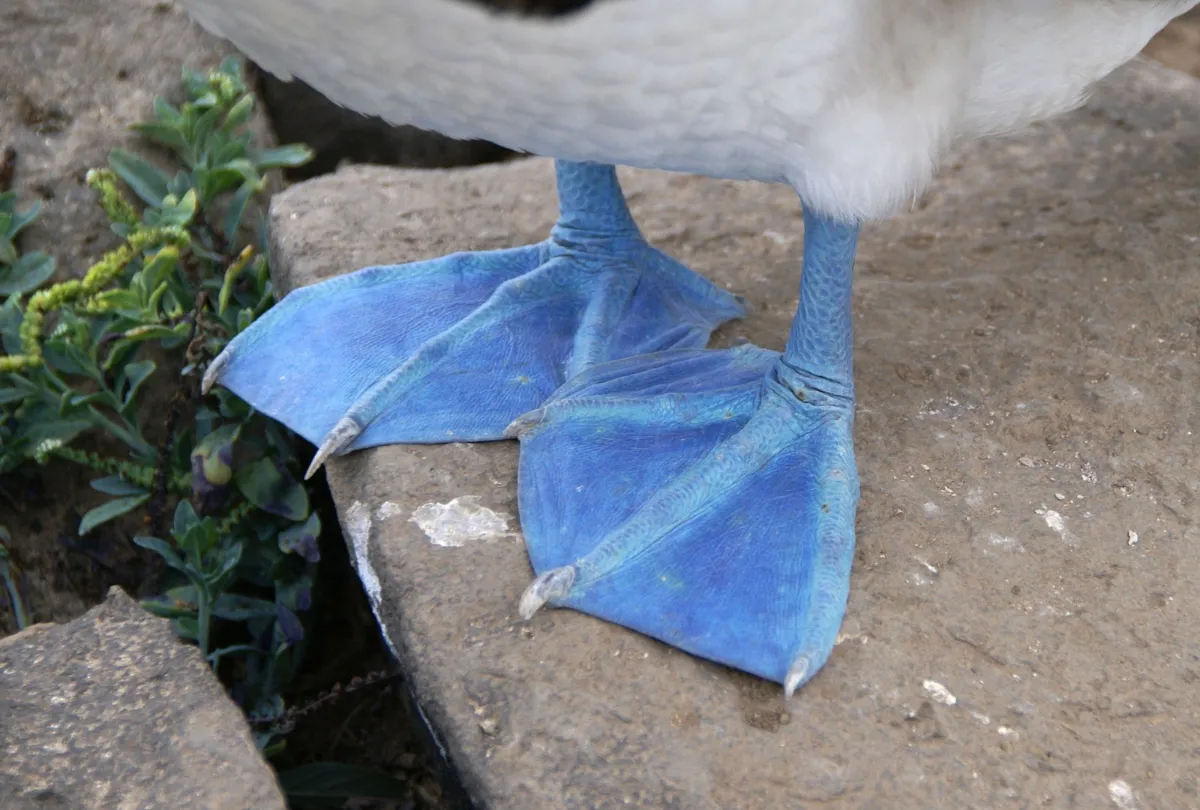
A blue-footed booby displays on Santa Cruz in the Galápagos.
A blue-footed booby has webbing that connects all four toes, including the one that sits at the back or side of the foot. This arrangement is called totipalmate. The blue color makes the outline of the foot easy to see.
Those feet also have a role on land. During courtship, a booby lifts one foot at a time in a slow, high-stepping display. The raised foot gives its partner a clear view of the blue surface. allaboutbirds.org
3. North American Beaver
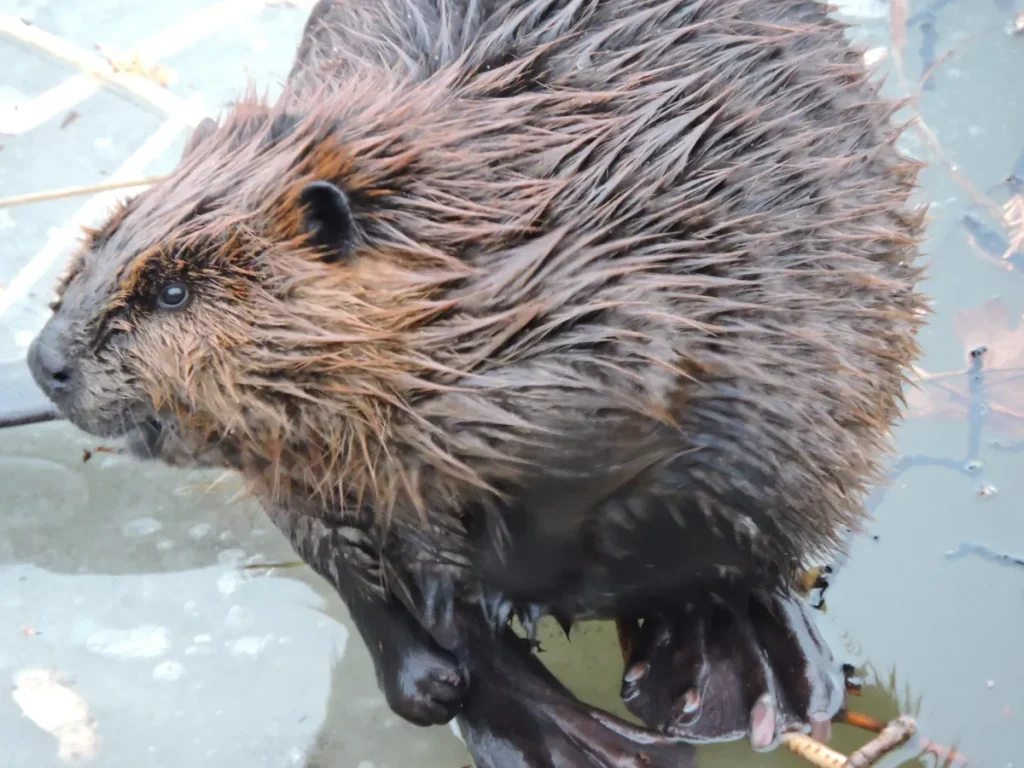
A North American beaver on thin ice, with a broad hind foot visible beneath its fur.
A beaver’s hind feet are much larger than its front paws. The hind toes spread into broad paddles for swimming. Its smaller front paws have separate, clawed digits that can grasp sticks and dig.
The difference is especially easy to see when a beaver comes ashore and sits upright. Its front paws can hold food while its hind feet support its body. Those front paws also come in handy when moving the branches used to build a lodge. See how a beaver lodge differs from a muskrat lodge. nationalzoo.si.edu
4. North American River Otter

A close-up of the webbing between a North American river otter’s toes.
A North American river otter has webbing on all four feet. In the close-up, the membrane sits between the toes, with the claws extending beyond it.
The otter can paddle with its front feet and generate a stronger push with its hind feet. Its long, muscular tail also helps propel it through the water. Watch an otter swim and you may see its body and tail undulate as it moves. nationalzoo.si.edu
5. Platypus

A platypus seen head-on, with its front feet beside its bill.
The platypus does most of its swimming with its front feet. When spread, the webbing extends beyond the front claws and forms a broad paddle. Its hind feet help steer and stabilize it.
On land, the front webbing folds back. That exposes the claws so the platypus can walk and dig a burrow. The historical illustration below shows how far the web can extend. Environment and Heritage
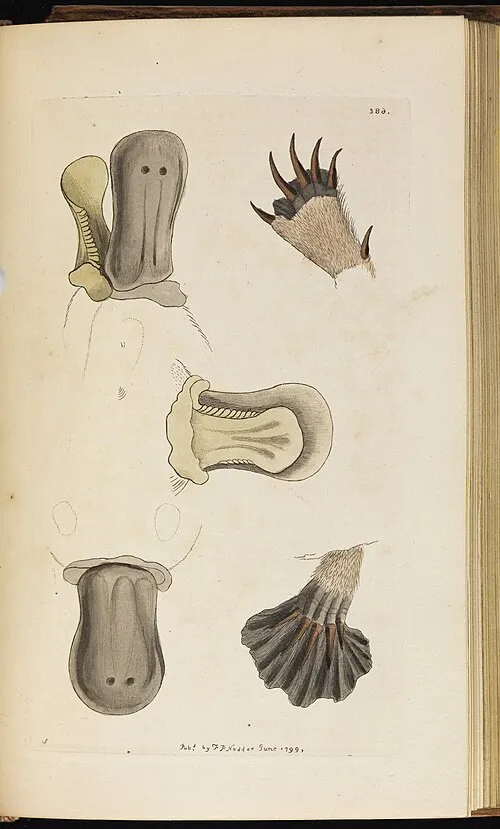
A historical illustration of the platypus bill and feet. The lower-right drawing shows an extended web.
6. African Clawed Frog
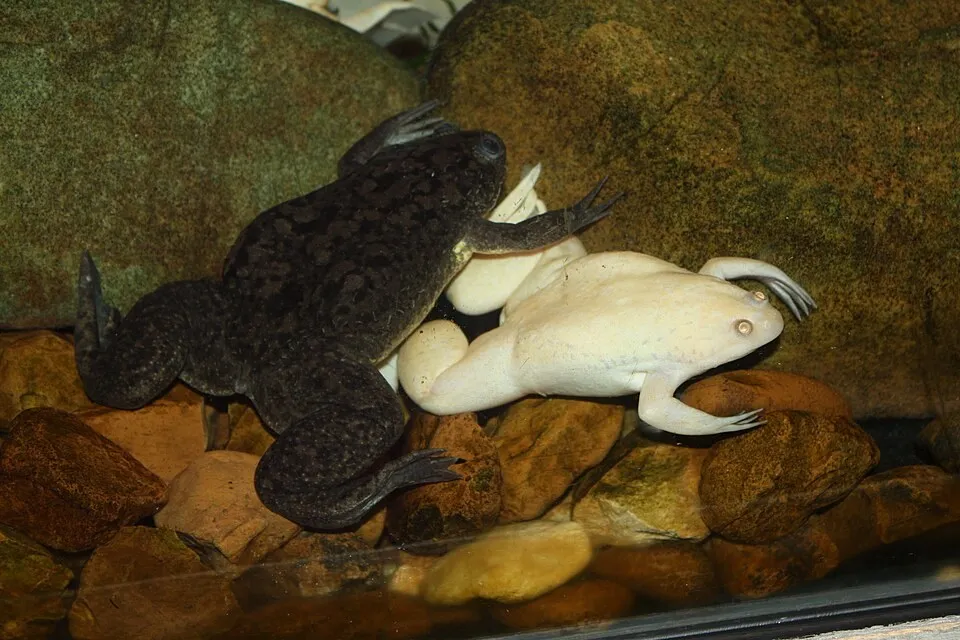
Two African clawed frogs. The darker frog’s broad hind foot is visible near the bottom.
An African clawed frog kicks with powerful hind legs and broad, webbed feet. The three inner toes on each hind foot have hard, claw-like tips. Its short front fingers are separate and help push food toward its mouth.
If you see one from above, compare the shape of the front fingers with the broad fan behind them. On the same animal, one pair of feet handles food and the other provides the main swimming stroke. nationalzoo.si.edu
How to Tell Webbed Feet From Lobed Toes

An American coot lifting a foot, showing the separate lobes along its toes.
Look for the open spaces between the toes. A mallard has a sheet of skin that bridges those gaps. An American coot has fleshy flaps along the sides of each toe, so the toes still have separate outlines. Both birds swim well, and this is one feature you can use to tell them apart when they step out of the water. Audubon Field Guide
Sources
- National Audubon Society — Webbed Feet Are an Evolutionary Hit and American Coot
- Cornell Lab of Ornithology — Blue-footed Booby
- Smithsonian’s National Zoo — Beaver, North American River Otter, and African Clawed Frog
- Australian Museum — Platypus
- Wellcome Collection — Historical Illustration of the Platypus Bill and Feet