Ducks use calls to keep in touch, signal to other birds, and warn their young. The loud quack-quack-quack most people recognize usually comes from a female mallard. A male mallard has a quieter, raspier voice. Once you hear both recordings, the difference is easy to pick out at a pond.
Why does a female mallard quack?
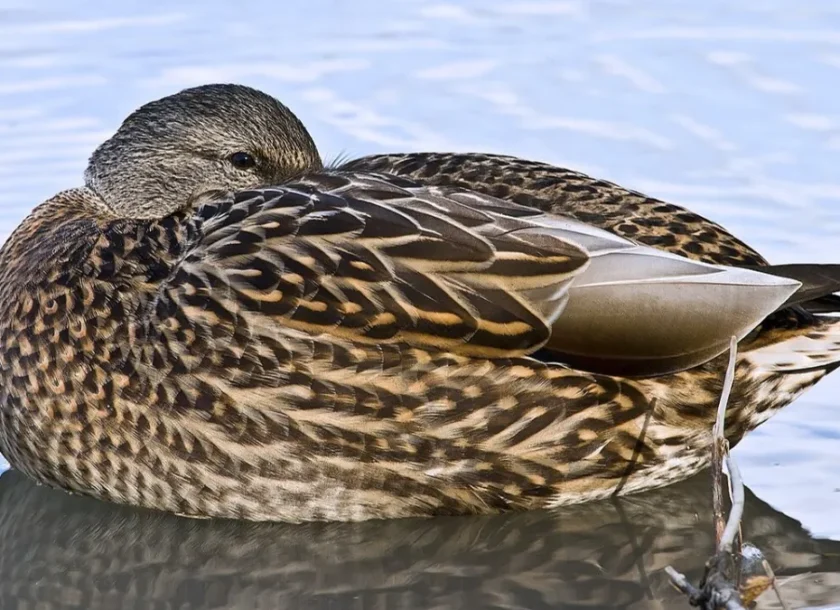
A female mallard may give a loud series of quacks when other ducks fly overhead. This is often called a hail call. Listen for a strong first note followed by softer ones. Females can also use calls to stay in contact with a mate or other ducks nearby.

A female mallard swims among lily pads.
Female mallard calls recorded in Surrey, England. Listen for how the loud series changes as it goes on.
Do male ducks quack?
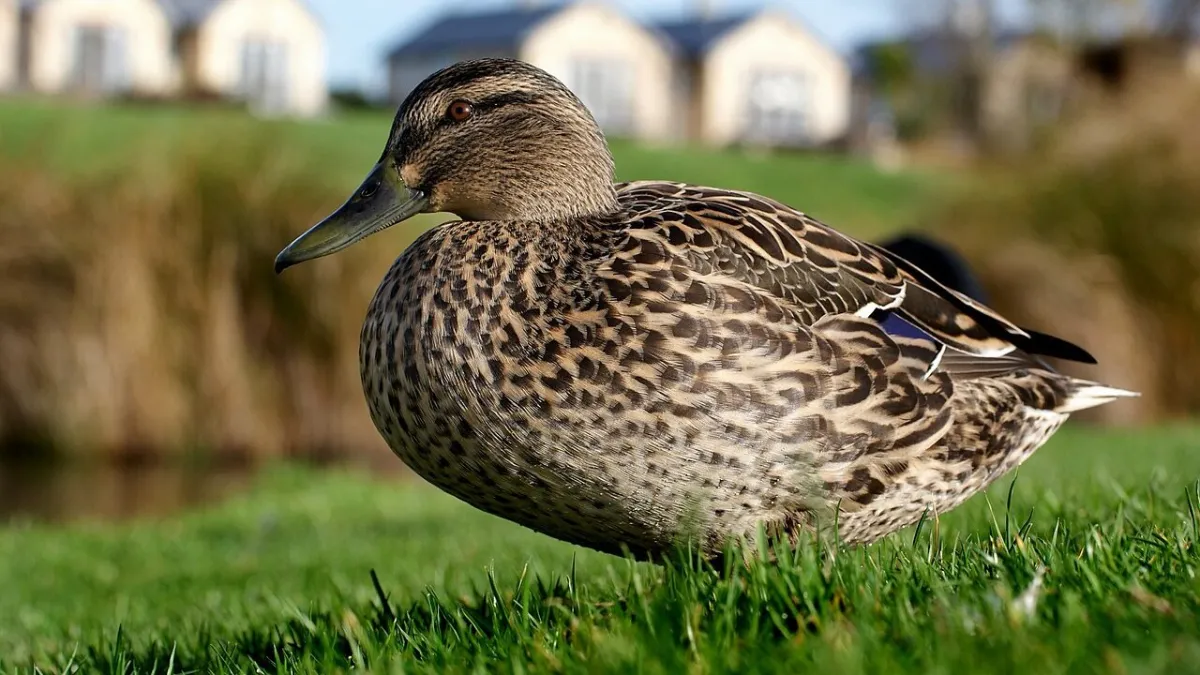
A male mallard makes a softer, raspy call, often just one or two notes at a time. If there are several ducks close together, watch which bird opens its bill. The brown female may be the one making the loud calls, even when the green-headed male is easier to spot.

The male mallard in the recording below, photographed from the original video in Wellington, New Zealand.
Male mallard call. Listen for the short, husky notes, with pauses between them.
Why do ducks quack at night?
Mallards can stay active after dark. They may feed, court, or move between resting and feeding areas. A quack at night can be part of ordinary communication, and the sound alone gives you little information about what prompted it.
Do all ducks sound like mallards?
Duck calls vary by species. A male American Wigeon gives a nasal, three-part whistle. A male Wood Duck can make a thin whistle that rises and falls. If you hear a whistle from a flock, listen for the pattern and look for the bird making it.
Sources
- Cornell Lab of Ornithology · Female, male, and juvenile mallard calls. allaboutbirds.org
- Ducks Unlimited · How waterfowl use calls to communicate and what ducks do after dark. Ducks Unlimited
- Cornell Lab of Ornithology · American Wigeon sounds and Wood Duck sounds.