Some of the most serious threats to Arctic tundra animals occur far from the tundra itself. A spoon-billed sandpiper can return to an undisturbed breeding site in Arctic Russia and still lose the tidal flats it needs to feed along its migration route. A polar bear may raise cubs on the coastal tundra, yet depends on sea ice to hunt seals.
The IUCN Red List groups Vulnerable, Endangered and Critically Endangered species under the term threatened. The categories below are global assessments. Each animal uses the Arctic tundra or its coastal edge for part of its life.
| Animal | Global IUCN status | Key threat |
|---|---|---|
| Spoon-billed sandpiper | Critically Endangered | Loss of tidal feeding flats and shorebird hunting |
| Polar bear | Vulnerable | Loss of the sea ice it uses to hunt |
| Snowy owl | Vulnerable | Possible changes in prey availability, plus collisions |
| Red-breasted goose | Vulnerable | Shooting and disturbance at feeding and resting sites |
| Long-tailed duck | Vulnerable | Accidental capture in fishing nets, particularly in the Baltic Sea |
1. Spoon-billed sandpiper (Calidris pygmaea)
This small shorebird with a spoon-shaped bill breeds on the coastal tundra of Chukotka, in far northeastern Russia. It migrates south along the East Asian coast and feeds on exposed tidal flats along the way. When those flats are filled or developed, the birds lose places to refuel before the next leg of their journey. Hunting of shorebirds along the route adds to that pressure.

A spoon-billed sandpiper foraging on a mudflat near its breeding grounds in Chukotka.
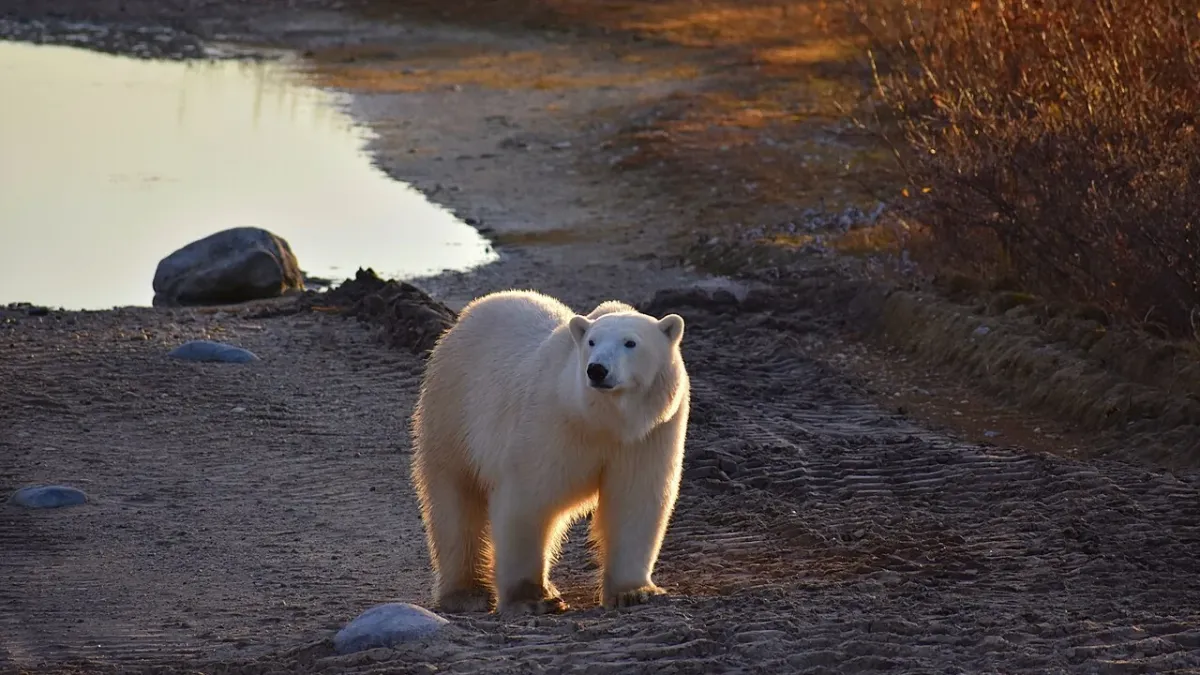
2. Polar bear (Ursus maritimus)
Some female polar bears dig maternity dens in snowdrifts on the Arctic coastal plain, where they give birth and shelter their cubs. For hunting, polar bears rely heavily on sea ice, where they can reach seals. In areas where the ice breaks up earlier or forms later, bears can spend longer ashore with fewer chances to feed. Our polar bear tundra habitat guide shows how they use both habitats.
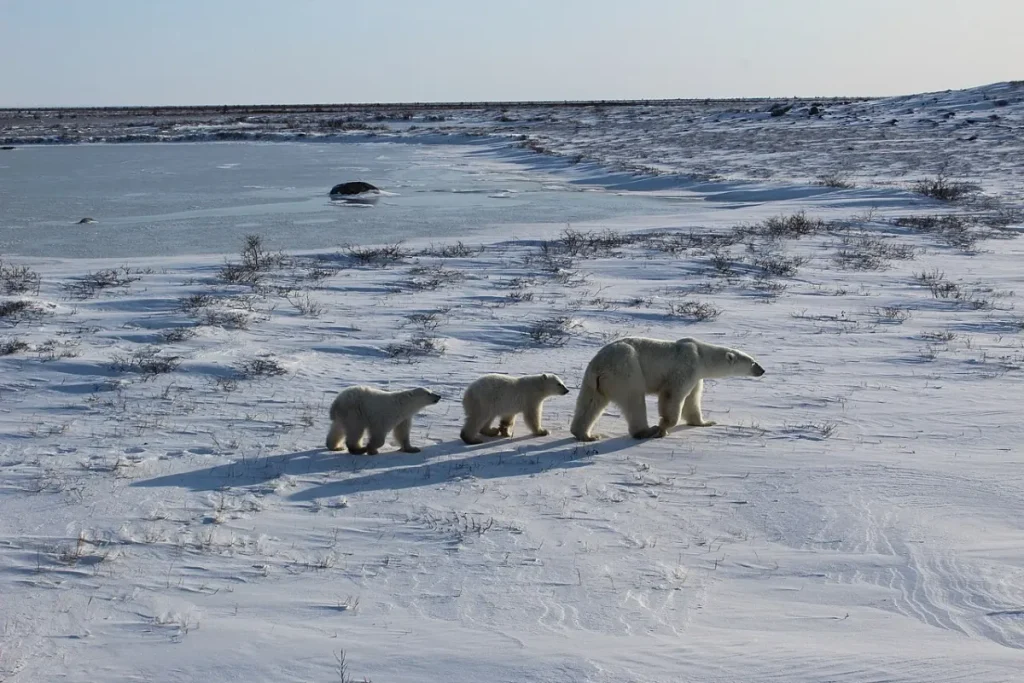
A polar bear and two cubs crossing the snowy tundra near Churchill, Manitoba.
3. Snowy owl (Bubo scandiacus)
Snowy owls breed on open Arctic tundra and depend heavily on lemmings to feed their chicks in many parts of their range. Scientists suspect that climate-related changes affecting prey availability contribute to the decline, but the relative importance of different causes is still uncertain. Collisions with vehicles and infrastructure are also documented threats.

A young snowy owl on the tundra at Utqiaġvik, Alaska.
4. Red-breasted goose (Branta ruficollis)
Red-breasted geese breed on the tundra of Arctic Russia, including the Taimyr Peninsula. Many spend winter around the Black Sea, feeding in fields and gathering at roosts. Shooting along the flyway can kill or injure birds. Hunting activity can also repeatedly flush feeding flocks, cutting into the time they have to eat.

A red-breasted goose in the Taimyr Nature Reserve, Arctic Russia.
5. Long-tailed duck (Clangula hyemalis)
Long-tailed ducks breed near freshwater ponds and wetlands on Arctic tundra, then many move to coastal waters for winter. While diving for food, they can become entangled in gillnets and drown. BirdLife’s global assessment points to a major decline in wintering numbers in the Baltic Sea, where accidental capture in fishing gear is a serious concern.

A long-tailed duck in shallow water near Utqiaġvik, Alaska.
For more on how Arctic wildlife finds food and raises young in this landscape, see 8 Arctic Tundra Animals and How They Survive.
Sources
- Wildfowl & Wetlands Trust — Spoon-billed sandpiper conservation and the Convention on Migratory Species draft action plan. WWT
- IUCN Polar Bear Specialist Group — Red List assessment and USGS — Polar bear maternal denning. Polar Bear Specialist Group
- BirdLife International — Snowy Owl and Long-tailed Duck. BirdLife DataZone
- IUCN — Red-breasted Goose global assessment and AEWA — Red-breasted Goose action plan.