Arctic foxes and muskoxen stay active through the Arctic winter. Arctic ground squirrels spend it underground. And every spring, Lapland longspurs fly north to raise their young on the same treeless ground. These animals use the Arctic tundra in different ways, depending on where they find food, shelter, and a place to breed.
The Arctic tundra stretches across far northern Alaska, Canada, Greenland, and Eurasia. Its open landscape includes low shrubs, sedges, mosses, and rocky ground. In summer, the surface can thaw even while deeper ground stays frozen. That short season brings new plant growth and abundant insects, both of which draw animals to the tundra. education.nationalgeographic.org
Arctic Tundra Animals at a Glance
| Animal | How it uses the tundra | How it gets through the cold season |
|---|---|---|
| Arctic fox | Hunts and scavenges in open country | Stays active with a thick winter coat |
| Muskox | Grazes on low-growing plants | Stays active beneath a dense undercoat |
| Caribou | Many northern herds use tundra calving grounds | Winter range varies by herd |
| Arctic hare | Feeds among low shrubs and rocky ground | Stays active and browses on woody plants |
| Arctic ground squirrel | Digs burrows in suitable ground | Hibernates underground |
| Snowy owl | Hunts and breeds on open tundra | Some stay in the Arctic, while others move south |
| Rock ptarmigan | Feeds among low vegetation and rocky slopes | Often remains in northern areas, shifting locally |
| Lapland longspur | Nests on the ground in summer | Migrates south after breeding |
1. Arctic Fox
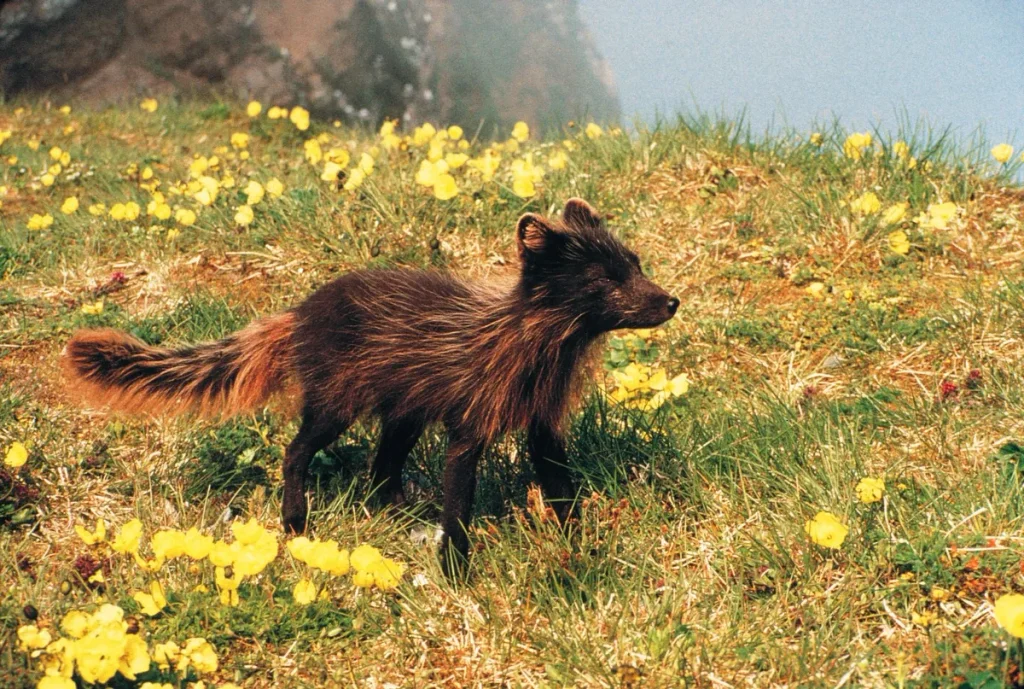
An Arctic fox in its dark summer coat on St. George Island, Alaska.
An Arctic fox has short ears, a compact body, and fur on the soles of its feet. These features help it handle the cold while it searches for small mammals, birds, or carrion. On inland tundra, lemmings can be an important food source. Near the coast, the fox has a different menu and may scavenge along the shore.
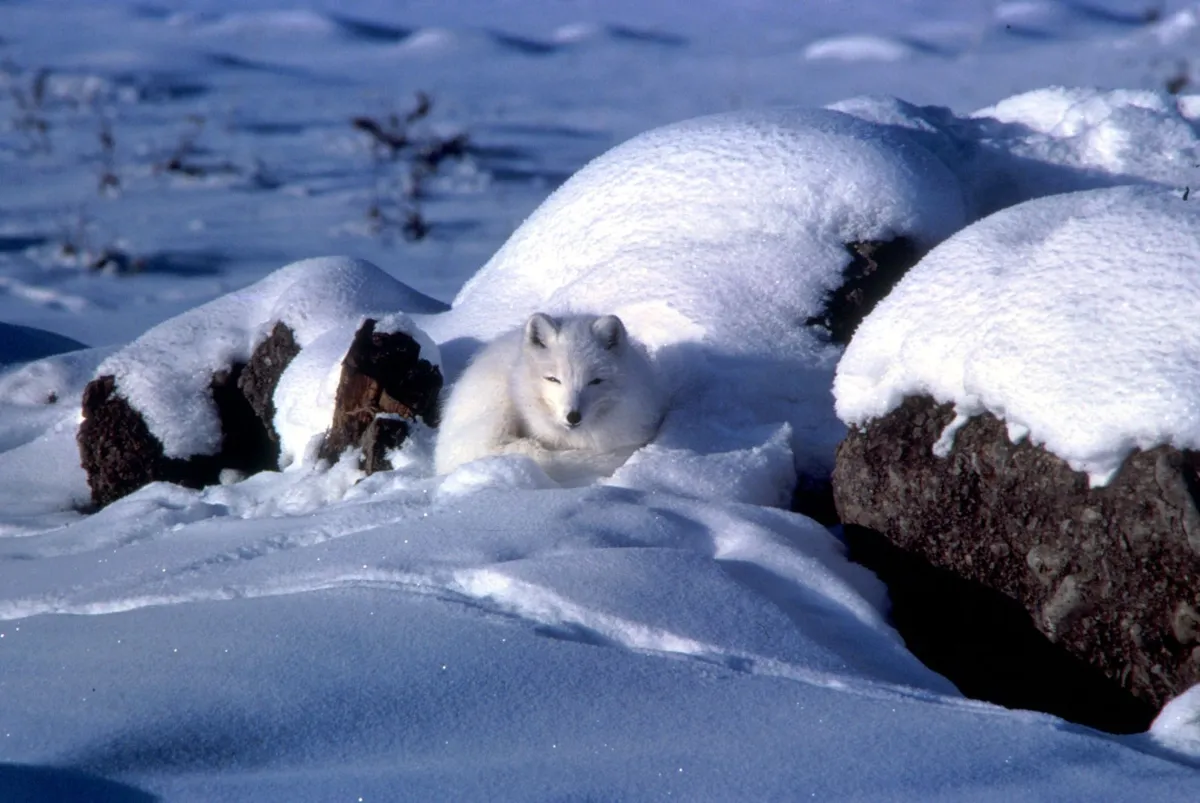
Many Arctic foxes grow a white winter coat and turn brownish or gray in summer. Foxes of the blue color morph stay darker through the year. Coat color alone can make two Arctic foxes look like different animals, especially when the photos were taken in different seasons. adfg.alaska.gov
2. Muskox

A muskox on Nunivak Island, Alaska. Long guard hairs hang down its sides.
A muskox wears two layers of insulation. Long outer hairs hang down its sides, while a soft, dense undercoat called qiviut traps warmth close to its body.
Muskoxen feed on grasses, sedges, and other low-growing plants. Where deep snow makes food hard to reach, exposed ridges and slopes can provide feeding areas because the wind clears some of the snow. adfg.alaska.gov
3. Caribou

A caribou in the Arctic National Wildlife Refuge, Alaska.
Many migratory caribou herds travel to open tundra to give birth in late spring or early summer. Their winter ranges vary. Some herds move toward boreal forests, while others winter in open country.
Caribou use their broad hooves to help travel over soft ground and dig through snow for food. In winter, lichens can make up an important part of their diet. The movements of one herd can differ considerably from those of another, even within Alaska. nps.gov
4. Arctic Hare

An Arctic hare runs over tundra in southwestern Greenland.
Arctic hares live in parts of northern Canada and Greenland. Their compact bodies and relatively short ears help limit heat loss. They remain active in winter, feeding on woody plants such as willows when softer summer vegetation is unavailable.
Many Arctic hares turn white for winter. In the far north, some populations stay white year-round. So a white hare photographed on bare tundra may be showing its usual coat for that location. National Geographic
5. Arctic Ground Squirrel

An Arctic ground squirrel with small ears and pale spots in its fur.
An Arctic ground squirrel spends the short growing season feeding and putting on fat. As temperatures fall, it retreats to a burrow and hibernates for months. Its body temperature can drop below the freezing point of water without its tissues freezing, then rise again during brief periods of warming.
This is one way animals use underground shelter. See more examples in Animals That Live Underground. home.nps.gov
6. Snowy Owl

A male snowy owl flies low over the Arctic tundra.
Snowy owls breed in open Arctic landscapes, where they often watch for prey from low rises or other vantage points. Lemmings are important prey during the breeding season. In years when these rodents are abundant, snowy owls can raise more young.
Winter movements vary. Some snowy owls remain in northern regions, while others travel well south of the tundra. An open field or shoreline can give a visiting owl the clear view it needs to hunt. allaboutbirds.org
7. Rock Ptarmigan
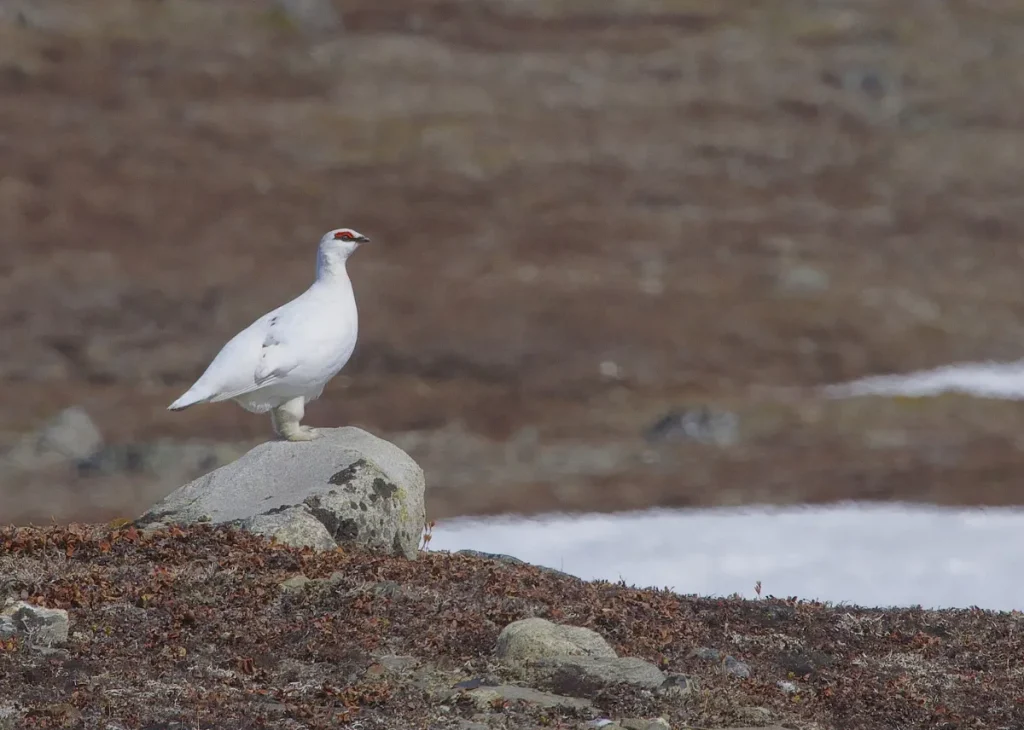
A rock ptarmigan in mostly white plumage stands on a rock near Nome, Alaska.
Rock ptarmigan live in open, rocky country, including Arctic tundra and high mountain habitats. Their plumage changes with the seasons. White feathers blend into snow, while darker, mottled feathers are harder to pick out against exposed rocks and vegetation.
Feathers also cover their feet, adding insulation. During winter, rock ptarmigan may shift to more sheltered areas where they can reach buds and twigs. allaboutbirds.org
8. Lapland Longspur

A Lapland longspur forages on the tundra of Kigigak Island, Alaska.
This small songbird comes to the tundra to breed. It builds its nest on the ground among low vegetation and feeds on insects during the breeding season, when the Arctic summer offers far more food than winter.
Lapland longspurs migrate south after breeding. In North America, winter flocks can be found in open habitats such as grasslands and farm fields, where they feed on seeds. allaboutbirds.org
Do Polar Bears Live on the Arctic Tundra?
Polar bears use some coastal tundra for resting or denning. Their main hunting habitat is sea ice, where they catch seals. If you’re comparing animal habitats, a muskox gets its food directly from tundra vegetation, while a polar bear depends primarily on prey from the marine environment. Polar Bears International
Is Arctic Tundra the Same as Alpine Tundra?
Arctic tundra occurs at high northern latitudes. Alpine tundra occurs above the tree line on high mountains, including mountains far from the Arctic. Some animals, such as rock ptarmigan and Arctic ground squirrels, use both kinds of habitat. A photo of one of these animals can give you a clue about the landscape, but you still need the location to tell which type of tundra you’re looking at. education.nationalgeographic.org
Sources
- Alaska Department of Fish and Game — Alaska’s Tundra & Wildlife, Arctic Fox, and Muskox
- U.S. National Park Service — Caribou and Arctic Ground Squirrel
- Canadian Geographic — Arctic Hare
- Cornell Lab of Ornithology — Snowy Owl, Rock Ptarmigan, and Lapland Longspur
- Polar Bears International — Diet and Prey