Yes, polar bears use coastal tundra, especially in places where the sea ice disappears in summer. Along western Hudson Bay, they come ashore after the ice breaks up and return when the bay begins to freeze again. The tundra gives them a place to rest and, for some pregnant females, a place to give birth. Sea ice gives them access to their main prey. Polar Bears International
1. Sea ice is their main hunting habitat
Sea ice is frozen seawater. It gives polar bears a platform from which to hunt ringed seals, their main prey, and larger bearded seals. Around Hudson Bay, bears build up fat reserves while they have access to seals. Those reserves help them get through the months they spend on land. U.S. Fish & Wildlife Service

A polar bear leaps between pieces of sea ice off Spitsbergen, Svalbard.
2. Summer ice breakup brings bears onto the tundra
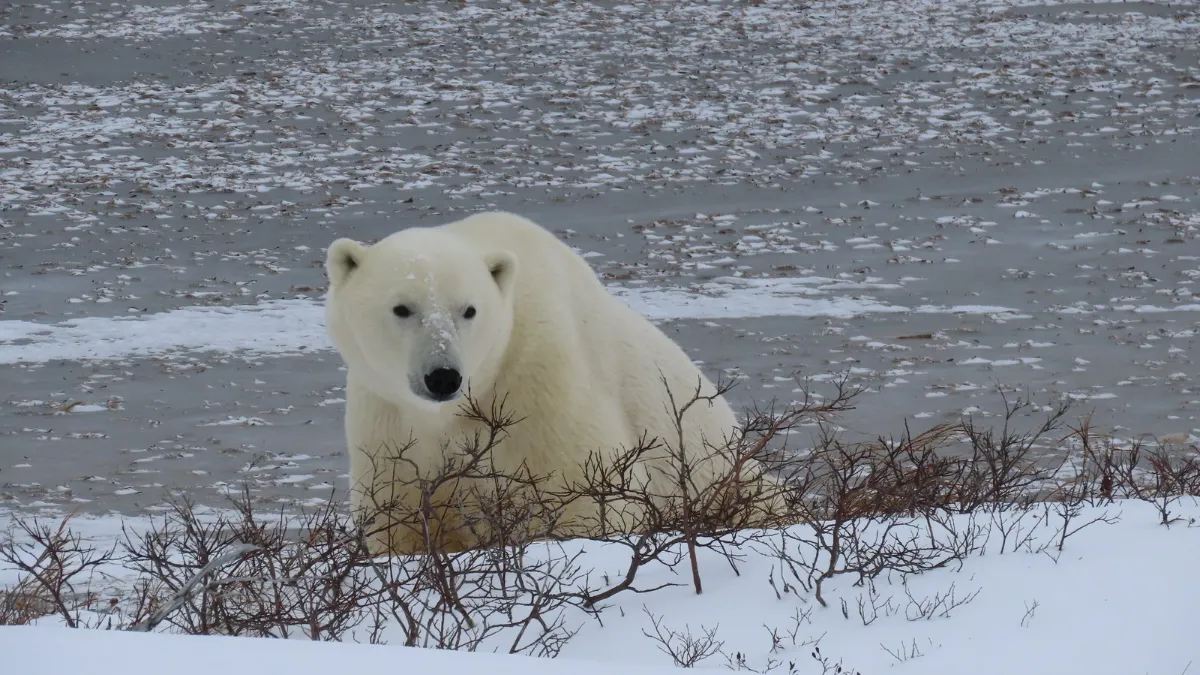
In western Hudson Bay, bears move ashore as the ice breaks up. The timing varies by year. Some rest among low shrubs or make shallow beds on land. By autumn, many gather along the coast near Churchill, Manitoba, where they can reach the first ice as it forms. Polar Bears International

A polar bear on the autumn tundra near Churchill, Manitoba.
3. Bears can eat on land and still lose weight
Some polar bears eat berries and other vegetation or catch birds while ashore. In a study published in Nature Communications, researchers tracked 20 polar bears in western Hudson Bay for about three weeks each. Some bears rested for long periods, while others spent more time moving or looking for food. Nineteen of the 20 lost weight, despite the variety of foods some found. nature.com

A GPS-collared polar bear in Wapusk National Park during a study of how bears use energy on land.
4. Some mothers stay ashore to give birth
Pregnant bears in western Hudson Bay may spend the winter in maternity dens dug into peat banks near rivers, streams, or lakes. Cubs are generally born around late December or early January and nurse in the den before emerging with their mother in late winter or early spring. Manitoba’s Wapusk National Park contains one of the world’s largest known polar bear maternity denning areas. Polar Bears International
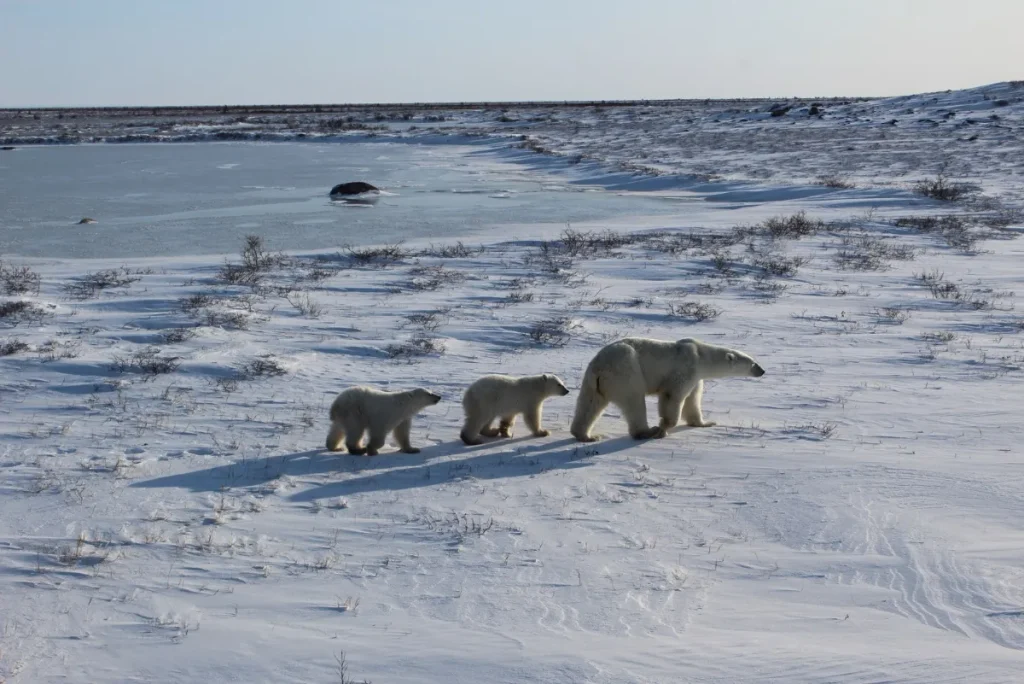
A mother polar bear and two cubs cross snowy ground near Churchill, Manitoba.
5. The return to sea ice follows the local freeze-up
When new coastal ice can support their weight, bears in western Hudson Bay begin venturing out to look for seals. Early in the freeze-up, they may move back and forth between land and ice. The bay’s annual freeze-and-melt cycle makes this shift especially visible around Churchill. In other parts of the Arctic, ice conditions differ, so the amount of time bears spend ashore varies by region. Polar Bears International