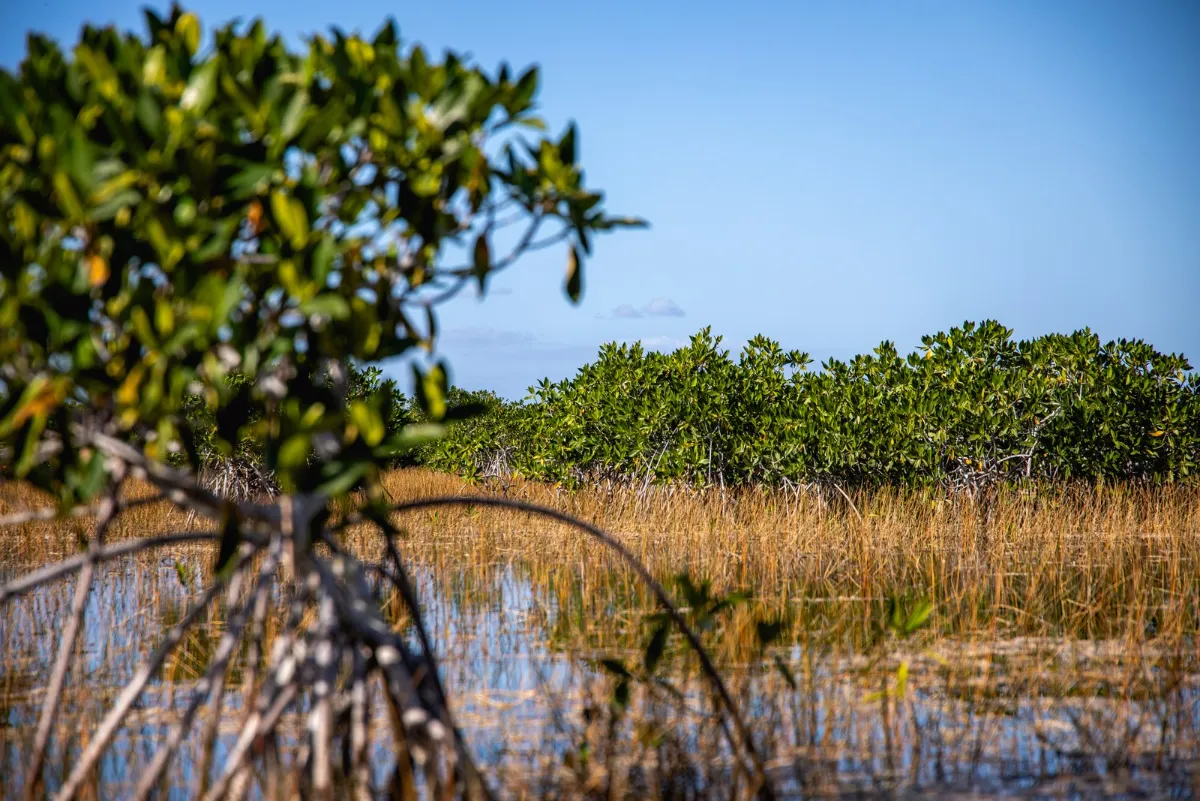
At low tide, a mudskipper can move across a mangrove mudflat on its front fins. In the water just beyond it, young fish shelter among tangled roots. Higher up, a tree crab grips a leaf, and a cuckoo searches the branches for insects. A single mangrove forest can offer all of these habitats within a short stretch of shore. BiodiversitySG
Mangrove forests grow along tropical and subtropical shores where tides regularly flood the ground. The animals below come from different parts of the world, from Florida and the Caribbean to Southeast Asia and Australia. Each uses a particular part of the forest for food, shelter, or a place to grow. Smithsonian Ocean
Where Mangrove Animals Live
| Part of the mangrove forest | Animals | How they use it |
|---|---|---|
| Submerged roots and shallow water | Gray snapper, upside-down jellyfish | Young snapper find cover. Jellies rest in shallow, sunlit water. |
| Tidal creeks and riverbanks | Saltwater crocodile | Moves and hunts along waterways. |
| Mudflats and soft sediment | Giant mudskipper, green mud crab | Mudskippers move over exposed mud. Mud crabs use soft bottoms and burrows. |
| Roots, trunks, and branches | Mangrove tree crab, mangrove cuckoo, proboscis monkey | Crabs climb between levels. Birds and monkeys feed among the branches. |
In the Water and Along Tidal Creeks
1. Gray Snapper

A gray snapper, also called a mangrove snapper, photographed in the U.S. Virgin Islands.
Young gray snapper settle in sheltered estuaries, including mangroves and seagrass beds. The spaces between submerged roots give small fish places to hide. As gray snapper grow, many move into rocky coastal areas or onto reefs. That makes mangroves one of the places where this fish spends its early life. Discover Fishes
2. Upside-Down Jellyfish
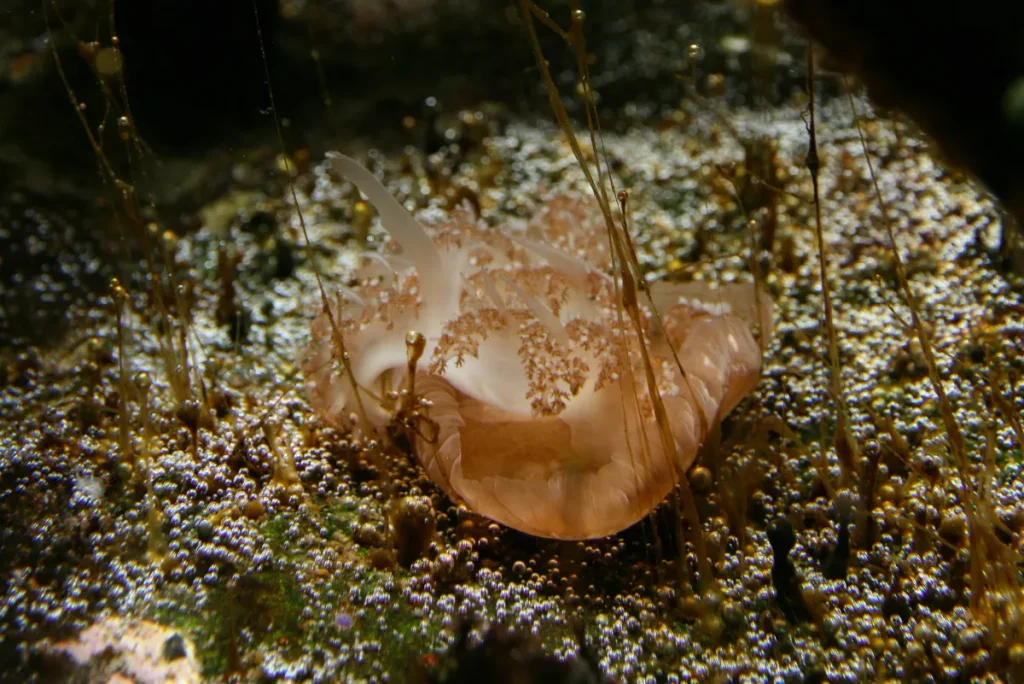
An upside-down jellyfish rests with its branched oral arms facing upward.
This jellyfish often rests on its bell in calm, shallow water near mangroves. Its branching oral arms point toward the surface and can look like a clump of underwater plants.
Microscopic algae live inside its tissues. By resting upside down, the jelly exposes those algae to sunlight. The algae produce sugars that help nourish the jelly, which can also capture small prey. Monterey Bay Aquarium
3. Saltwater Crocodile
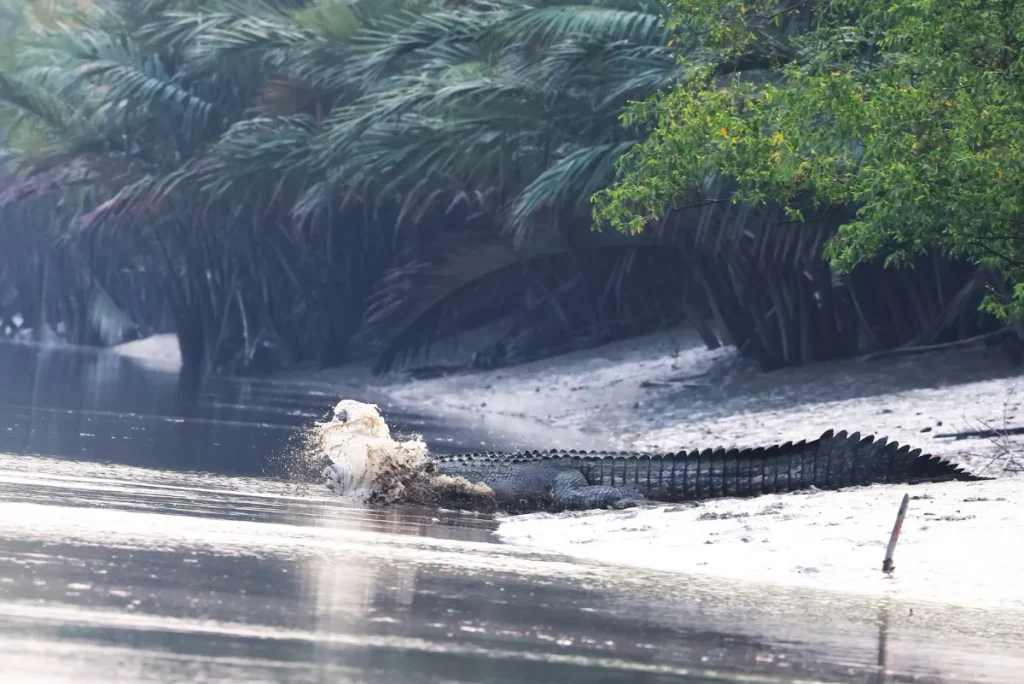
A saltwater crocodile enters the water in the Sundarbans mangrove forest in Bangladesh.
Saltwater crocodiles use tidal rivers and estuaries, including mangrove-lined channels. They also occur in freshwater wetlands. Their eyes and nostrils sit high on the head, so they can watch and breathe while most of the body stays below the surface.
A crocodile uses the larger waterways between mangrove stands. Those channels connect sheltered banks, areas where it can hunt fish, and other parts of the estuary. Be crocwise
On Mudflats and in Soft Sediment
4. Giant Mudskipper

A giant mudskipper at Sungei Buloh, Singapore, with its raised eyes above the water.
A giant mudskipper moves across wet mud using its fleshy front fins. It can spend time out of the water by keeping water in its gill chambers and absorbing oxygen through its skin.
When two mudskippers meet on a mudflat, a territorial fish may raise its dorsal fin and open its mouth wide. The display makes it look bigger to its rival. BiodiversitySG
5. Green Mud Crab

A green mud crab photographed in Sri Lanka. Its broad shell and large claws are visible.
Green mud crabs live in estuaries and mangrove areas with soft bottoms. Some dig burrows in mud that is exposed at low tide. Many adults stay below the low-tide mark, where they remain submerged even as much of the nearby mudflat dries out. marinewaters.fish.wa.gov.au
On Roots, Trunks, and Branches
6. Mangrove Tree Crab
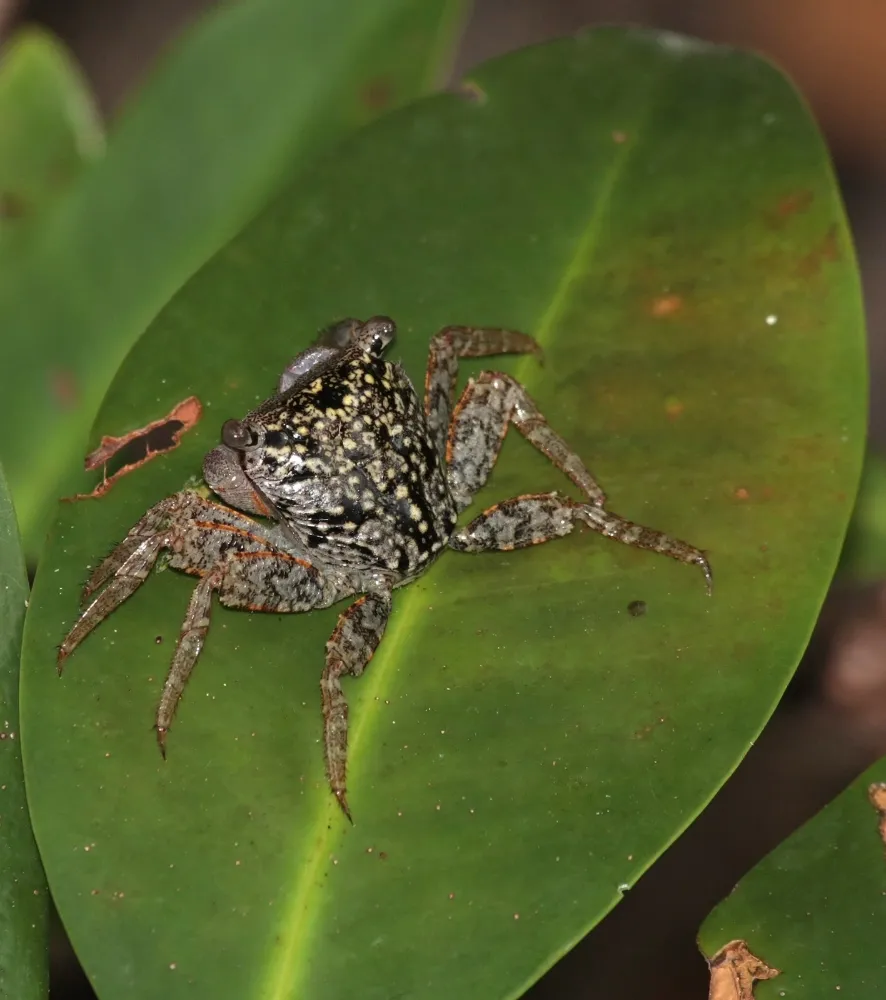
A mangrove tree crab grips a mangrove leaf.
The mangrove tree crab can move between the lower roots and the branches as the water rises and falls. At high tide, it can climb into the tree. When the tide goes out, exposed roots and shorelines give it more places to search for food.
It eats plant and animal material, including parts of the mangrove tree itself. A crab on a leaf and one picking through debris at the base of the trunk can be using the same tree at different stages of the tide. Smithsonian Ocean
7. Mangrove Cuckoo

A mangrove cuckoo perched among branches in Ceiba, Puerto Rico.
In southern Florida, mangrove cuckoos use red and black mangroves as well as some other coastal habitats. They often feed among the branches, pausing to search the leaves for caterpillars and other prey before moving to another perch. A dark mask through the eye and a warm buff underside are useful features to look for in a photo. allaboutbirds.org
8. Proboscis Monkey
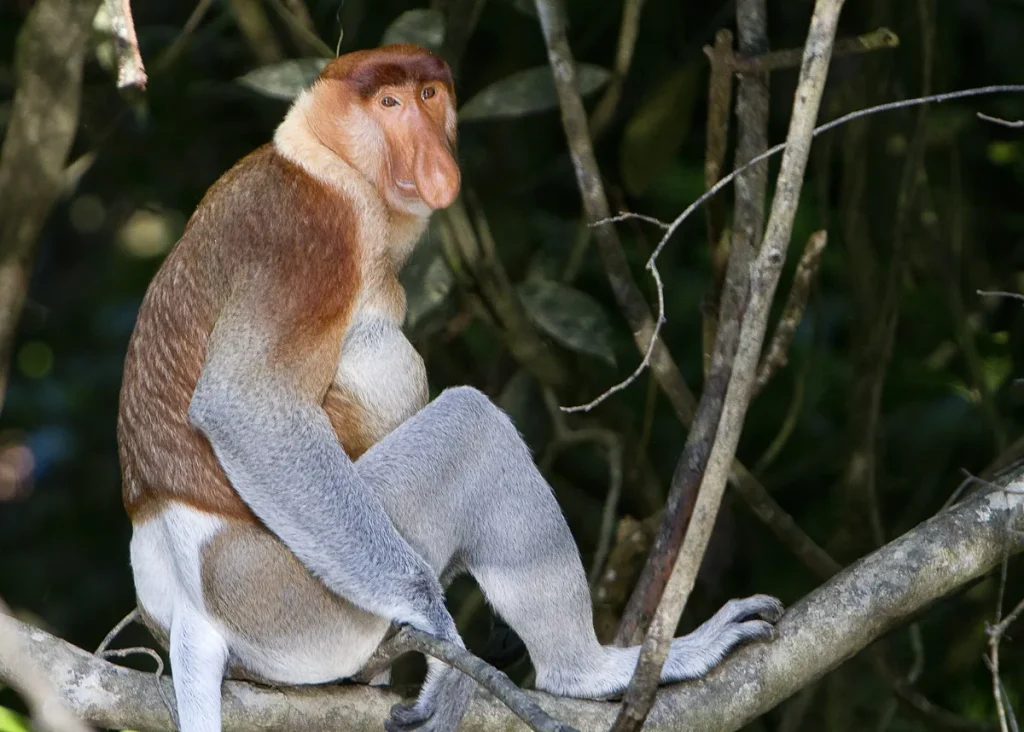
A proboscis monkey sits on a branch in Borneo.
Proboscis monkeys are native to Borneo, where they use mangroves and other forests near rivers. They feed on leaves and other plant material and often sleep in trees near water.
They are also capable swimmers. A wide creek can interrupt a route through the branches, and proboscis monkeys sometimes cross by swimming. That ability helps them move through a landscape cut by waterways. UW–Madison
Mangrove forests are just one of the many types of wetlands found around the world. Freshwater marshes, swamps, and coastal wetlands also support a remarkable variety of wildlife. Discover more in our guide to 15 animals that live in wetlands.
Why Are Mangrove Roots Important to Young Fish?
When the tide covers the roots, small fish can move into spaces between them. Those spaces provide shelter and can be harder for larger predators to enter. As the tide drops, the same bank may expose mud where other animals feed. This change in access helps explain why the wildlife along a mangrove shore can look different just a few hours later. Florida Keys National Marine Sanctuary
Tides also shape wildlife on rocky shores. Explore Pacific Coast tide pool animals.
Sources
- NOAA Florida Keys National Marine Sanctuary — Mangrove Forest
- Florida Museum of Natural History — Gray Snapper and Mangrove Life
- Monterey Bay Aquarium — Upside-Down Jelly
- Northern Territory Government — Saltwater Crocodiles
- Singapore National Parks Board — Giant Mudskipper
- Western Australia Department of Primary Industries and Regional Development — Green Mud Crab
- Smithsonian Ocean — Mangrove Tree Crab
- Cornell Lab of Ornithology — Mangrove Cuckoo Life History
- Wisconsin National Primate Research Center — Proboscis Monkey