At low tide on the Pacific coast of North America, a green “flower” in a rock pool might be a sea anemone. A rusty lump on a submerged rock could be a gumboot chiton. And a patch of gravel that suddenly darts away might be a tidepool sculpin.
Start by noticing where an animal is and how it moves. Look for tentacles on the pool wall, spines in rounded rock hollows, and quick movements across the bottom. These ten animals live in tide pools or along the surrounding rocky shore. The mix varies from beach to beach.
Pacific Coast Tide Pool Animals at a Glance
| Animal | Where to look | What gives it away |
|---|---|---|
| Giant Green Anemone | Pool walls and submerged rocks | A ring of green tentacles around a central mouth |
| Ochre Sea Star | Wet rock faces and around mussel beds | Usually five thick arms with a rough surface |
| Bat Star | Lower pools and submerged rocks | Broad webbing between short, triangular arms |
| Purple Sea Urchin | Crevices and rounded rock hollows | A round cluster of closely packed spines |
| California Mussel | Exposed rock faces and ledges | Dark, elongated shells packed into beds |
| Black Turban Snail | Upper pool edges and rocky ledges | A small, dark spiral shell |
| Giant Owl Limpet | Bare rock and patches of low algae | A broad, low, cap-shaped shell |
| Gumboot Chiton | Low-shore rocks and sheltered pools | A leathery, reddish-brown oval |
| Lined Shore Crab | Cracks along the pool edge | A flattened shell with fine horizontal lines |
| Tidepool Sculpin | Pool bottoms among rocks and algae | A broad-headed fish that makes short, quick dashes |
1. Giant Green Anemone
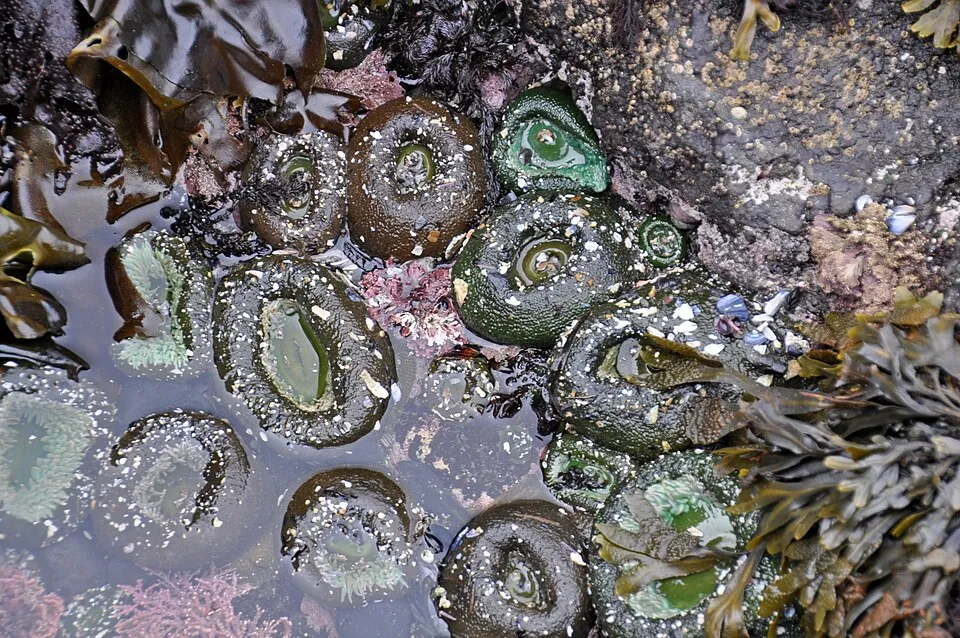
The giant green anemone (Anthopleura xanthogrammica) spreads a ring of tentacles when submerged. The tentacles catch prey and pass it toward the mouth at the center. Some of the green comes from the anemone’s own pigments, and much of it comes from microscopic organisms living in its tissues.
An exposed anemone can pull its tentacles inward and look like a rounded lump. To see the familiar flowerlike shape, look for one already open underwater.
2. Ochre Sea Star
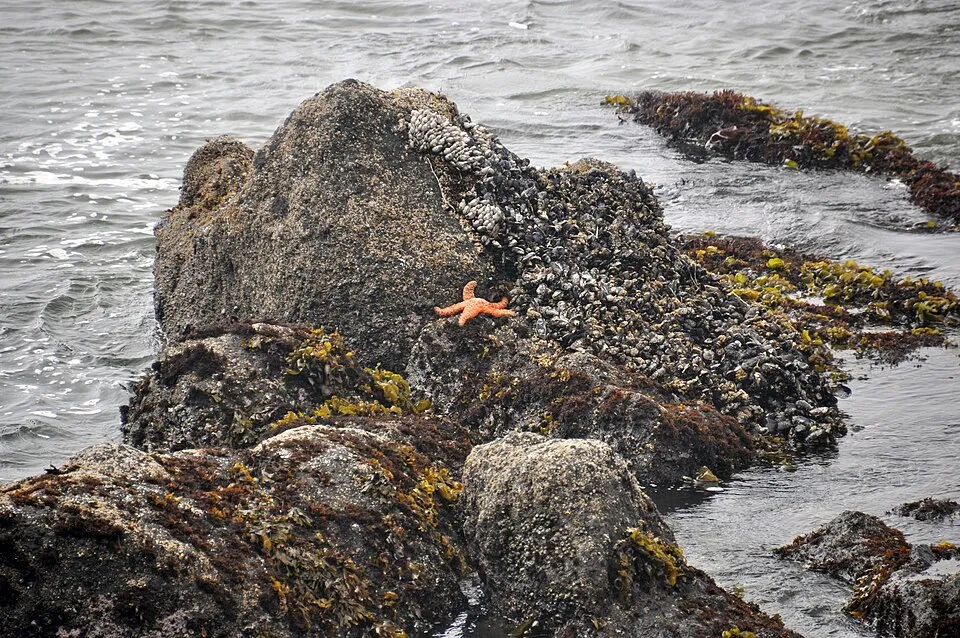
The ochre sea star (Pisaster ochraceus) often clings to wet rocks near mussels, one of its main foods. Its thick arms and rough upper surface are more useful identification clues than color. Individuals can be orange or purple.
Look along the edges of a mussel bed, where dark shells meet bare rock. By eating mussels, ochre sea stars help keep them from taking over space that other rocky-shore animals also need.
3. Bat Star
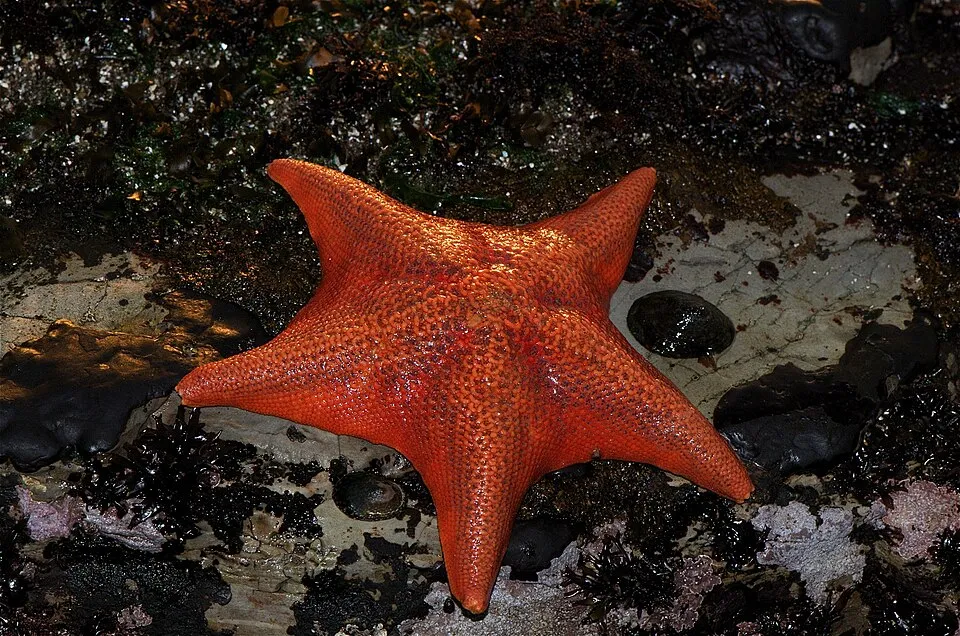
The bat star (Patiria miniata) has short, triangular arms joined by broad webbing. Its outline is the best clue. Its body can be orange, purple, or mottled, so color alone can easily confuse it with another sea star.
Compare the gaps between the arms. An ochre sea star typically has five clearly separated arms. A bat star has a broader, more continuous outline between the arm tips.
4. Purple Sea Urchin
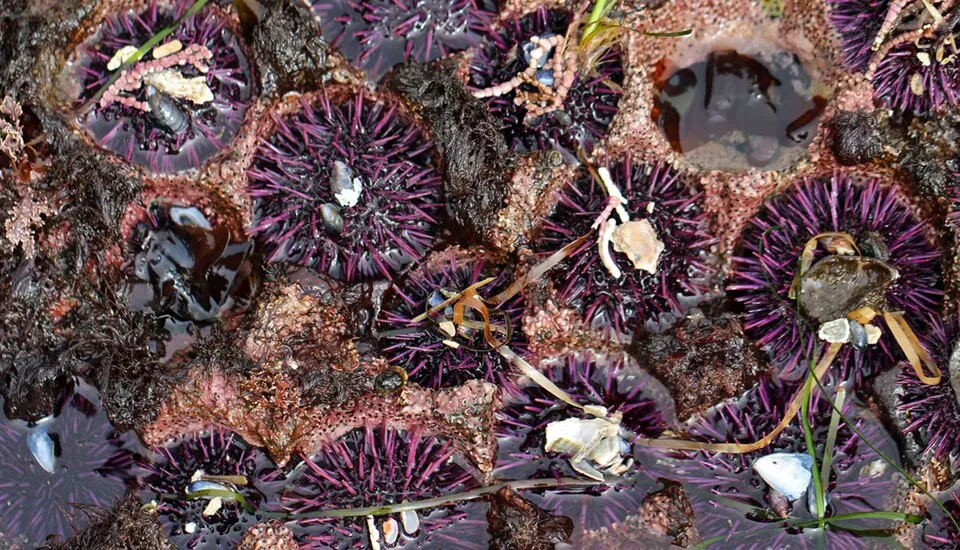
The purple sea urchin (Strongylocentrotus purpuratus) often sits in a crevice or a rounded hollow in the rock. Look for a dense cluster of spines. An urchin can use its teeth and spines to wear down rock, gradually enlarging the recess it occupies.
Tube feet between the spines help it move and hold on. In a still pool, look closely between the spines and you may see the slender feet extending toward the rock.
5. California Mussel
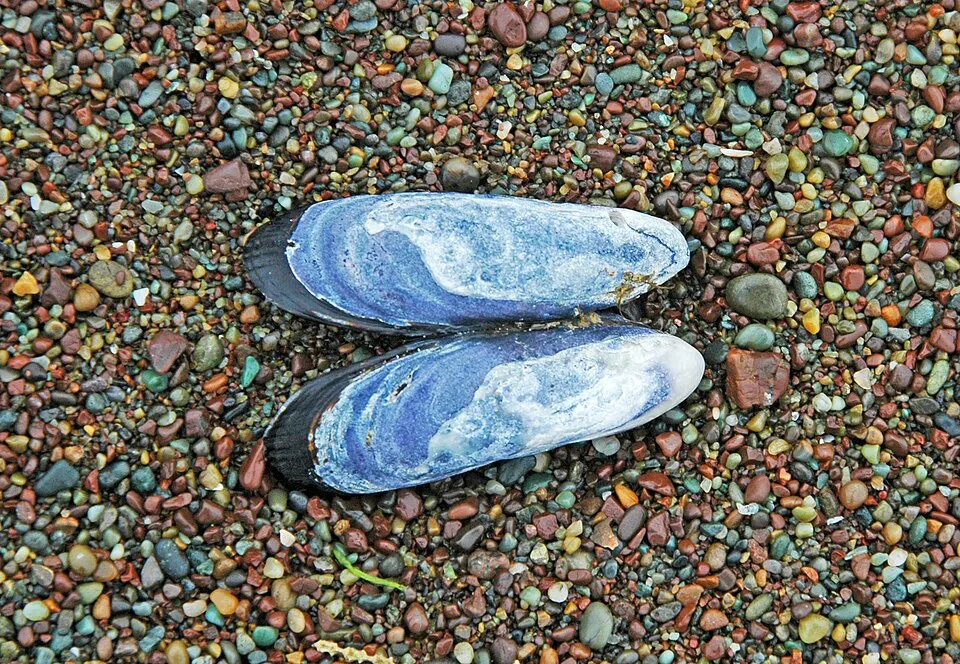
California mussels (Mytilus californianus) grow in dense beds on wave-washed rock. Their long, dark shells often overlap. Each mussel attaches to a surface with tough fibers called byssal threads.
When the tide covers the bed, the mussels open slightly and filter small food particles from the water. When exposed, their closed shells protect the soft tissues inside. You can often recognize the whole bed from a distance before you can pick out individual mussels.
6. Black Turban Snail

The black turban snail (Tegula funebralis) has a dark spiral shell and often occurs around rocky ledges and upper pools. When it withdraws, a plate called an operculum closes the shell opening like a door.
Watch a moving shell for a moment. A snail glides on a broad muscular foot. If jointed legs stick out and carry the shell in little steps, a hermit crab has moved into an old snail shell.
7. Giant Owl Limpet

The giant owl limpet (Lottia gigantea) looks like a low cap pressed against a rock. It grazes algae with a rasping, tongue-like structure called a radula.
Some individuals defend patches of algae against other grazers. A large limpet on an open rock face may be using the surrounding patch as a feeding area. From above, its cap-shaped shell is easy to distinguish from the coiled shell of a turban snail.
8. Gumboot Chiton
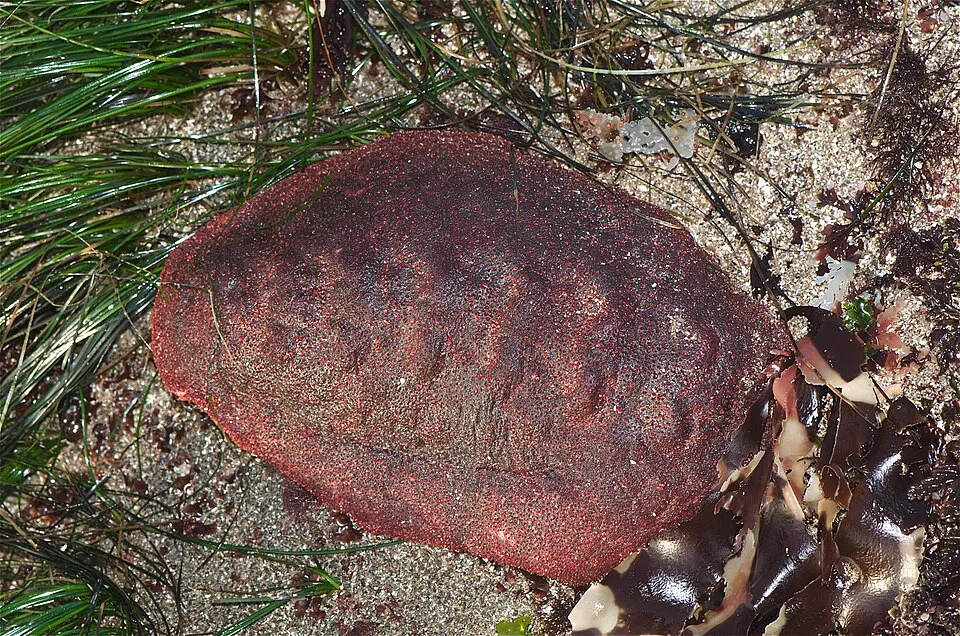
The gumboot chiton (Cryptochiton stelleri) resembles a reddish-brown lump on a rock. A thick, leathery layer called the mantle covers its eight shell plates. Those plates are visible on the backs of many other chitons, but hidden on a living gumboot chiton.
A muscular foot anchors it to the rock. Look for the oval outline and textured surface on submerged rocks or in low-shore pools exposed by a low tide.
9. Lined Shore Crab

The lined shore crab (Pachygrapsus crassipes), also called the striped shore crab, has fine lines across its upper shell. Its flattened body fits into narrow rock crevices.
Look along cracks at the pool edge and pause. A crab that has backed into a crevice may reveal its legs or claws before it moves into view. The stripes are most useful once you can see the top of the shell.
10. Tidepool Sculpin
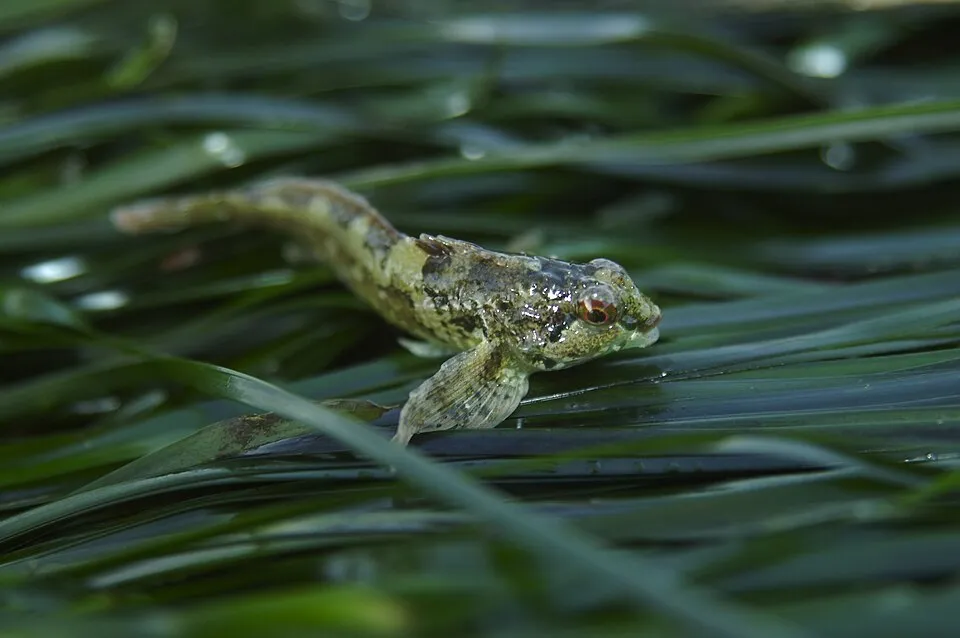
The tidepool sculpin (Oligocottus maculosus) is a small fish with a broad head and mottled coloring. It can sit against the bottom so quietly that its outline is hard to separate from the stones around it.
Watch for a short dash followed by another pause. Once the fish stops, look for its head and eyes against the gravel. Several small fishes occupy Pacific tide pools, so a quick glimpse of movement gives you a reason to look closer.
Frequently Asked Questions
What is the easiest way to tell a bat star from an ochre sea star?
Look at the spaces between the arms. A bat star has short, triangular arms joined by broad webbing. An ochre sea star generally has more clearly separated arms and a rough upper surface. Both can be orange or purple.
Are the green flower-shaped things in tide pools animals?
Yes. Giant green anemones are animals. The structures that look like petals are tentacles, and the opening in the center is the mouth. Microscopic organisms in the anemone’s tissues contribute much of its green color.
Why do nearby tide pools have different animals?
Pools differ in depth, shade, wave exposure, and how long they stay cut off from the ocean. A shallow pool high on the shore can warm up or become saltier as water evaporates. A lower pool gets refreshed by the tide more often and may hold a different set of animals.
When can you see the most tide pool animals?
A low tide exposes more of the rocky shore, and a particularly low tide can reveal pools that are normally submerged. Check local tide times and park guidance, keep an eye on the surf and the returning tide, and observe animals where you find them.
Sources and Further Reading
- U.S. National Park Service — Tidepooling at Point Reyes, Cabrillo Intertidal Field Guide, and Tidepooling on the Olympic Coast.
- U.S. National Park Service — Ochre Sea Stars and Mussel Beds, California Mussel, and Giant Owl Limpet.
- Monterey Bay Aquarium — Giant Green Anemone, Bat Star, Purple Sea Urchin, and Gumboot Chiton.
- Cabrillo Marine Aquarium — Striped Shore Crab.
- FishBase — Tidepool Sculpin.