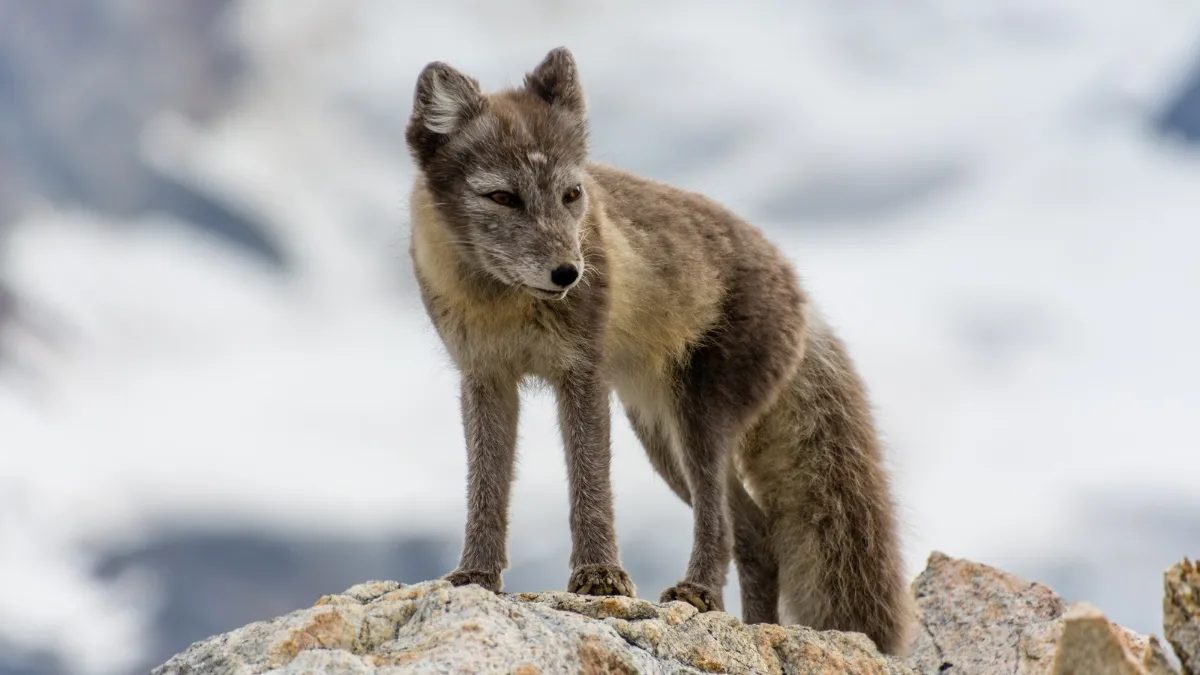
An Arctic fox in the tundra can find a meal even when the ground looks empty. It listens for lemmings moving beneath the snow, stores eggs when geese are nesting, and sometimes heads out onto sea ice to feed on seal remains. What it eats depends on where it lives and what is available that season. nps.gov
1. It listens for prey beneath the snow
A hunting Arctic fox may stop in its tracks and tilt its head. It’s listening for a lemming moving below the surface. Once it has pinpointed the sound, the fox can leap and plunge headfirst into the snow. Researchers on Bylot Island in Canada also recorded foxes digging down to reach lemming nests. nps.gov
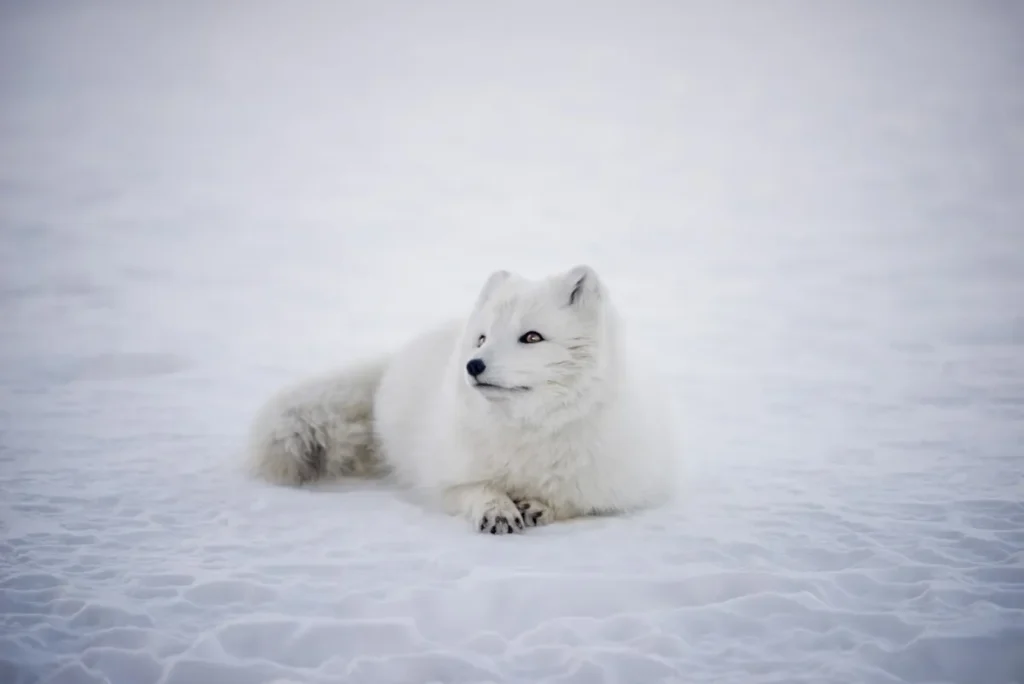
An Arctic fox rests on snow in Iceland.
2. Its menu changes from inland tundra to the coast
Lemmings and tundra voles are important prey where those rodents are abundant. Near rocky coastlines, foxes may feed heavily on nesting seabirds, including auklets and murres. In winter, some venture onto sea ice and feed on leftovers from seals killed by polar bears. A fox living beside a seabird colony can have a very different diet from one hunting on inland tundra. adfg.alaska.gov
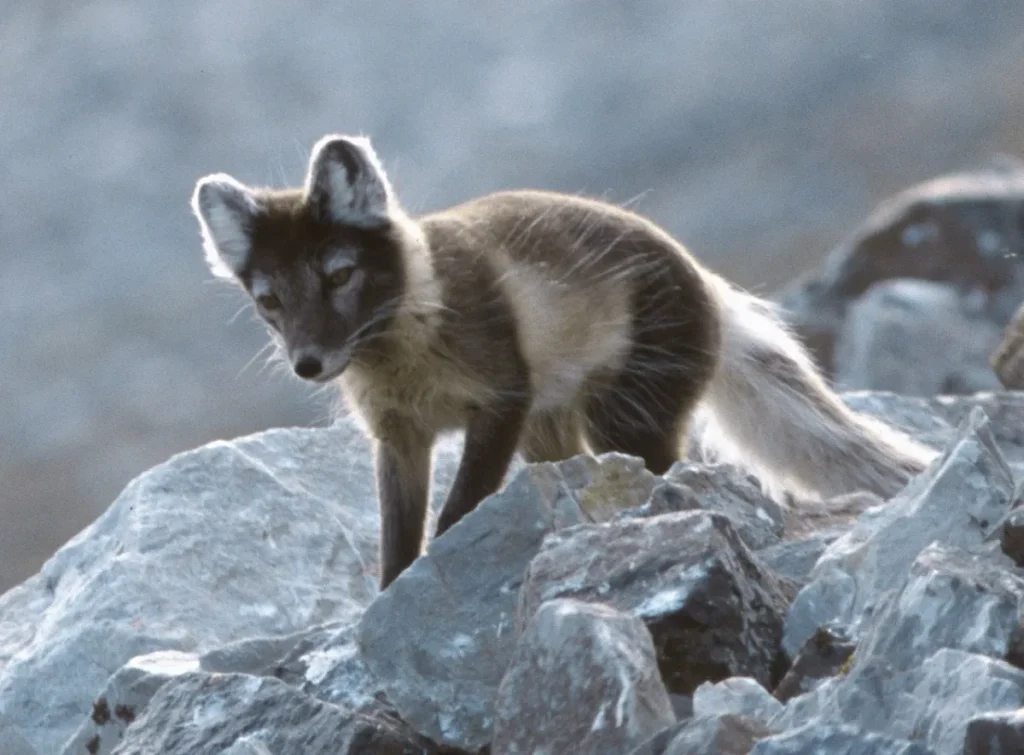
An Arctic fox among the rocks at a little auk colony in Bellsund, Svalbard.
3. It hides goose eggs for later
A goose colony supplies a lot of food in a short time. Arctic foxes can carry eggs away one at a time and bury them in shallow hiding places called caches. At one snow goose colony on Banks Island, Canada, researchers found that foxes stored 97% of the eggs they took. Some eggs cached in summer can still be retrieved the following spring. journalhosting.ucalgary.ca
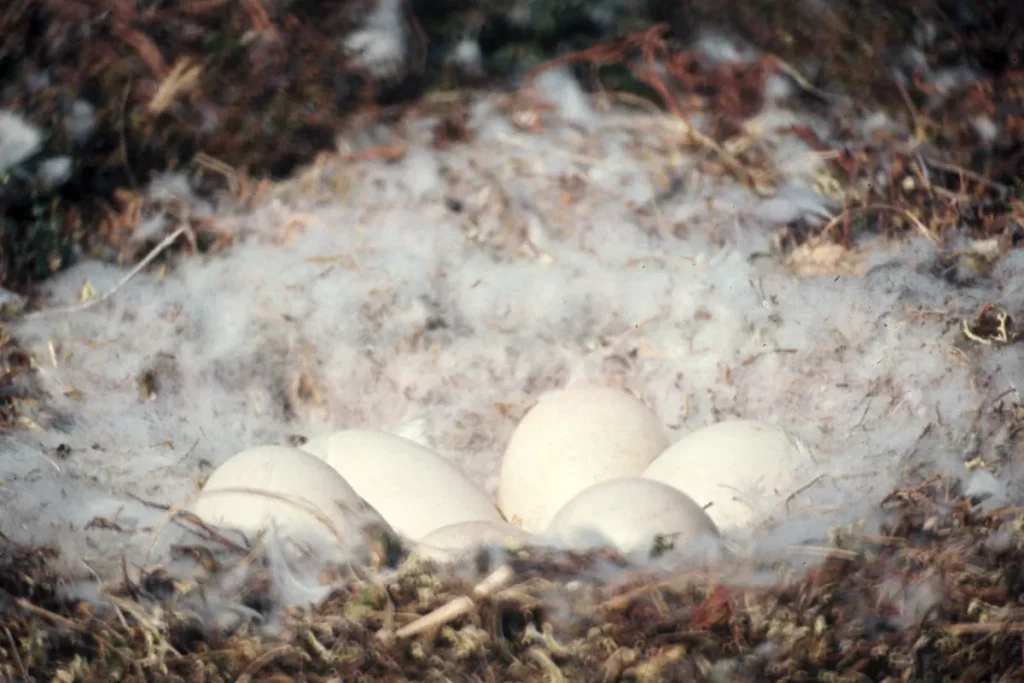
Snow goose eggs in a nest lined with down.
4. Sea ice can connect distant habitats
In 2018, researchers tracked a young female Arctic fox that left Spitsbergen, Svalbard, and reached Ellesmere Island, Canada, 76 days later. She covered 3,506 km (about 2,180 miles) along the route, crossing long stretches of sea ice and ice-covered terrain. She started in a coastal ecosystem without lemmings and eventually settled in a region where lemmings were available. polarresearch.net

Packed sea ice in Storfjorden, Svalbard, with Edgeøya in the background.
Related reading
Sources
- National Park Service — Alaskan Animal Adaptations
- Alaska Department of Fish and Game — Arctic Fox Species Profile
- Samelius and Alisauskas — Foraging Patterns of Arctic Foxes at a Large Arctic Goose Colony
- Clermont et al. — Arctic Fox Prey Caching Events Revealed by Accelerometry
- Fuglei and Tarroux — Arctic Fox Dispersal from Svalbard to Canada