Ducks spend winter wherever they can still reach food and open water. Some stay near their summer habitat and move to an unfrozen river or lake when a pond freezes. Others migrate south, often starting in fall. Some diving ducks spend the winter in sheltered coastal waters.
1. Open rivers and lakes close to home
If the ducks disappear from your local pond after a freeze, check a nearby river or a larger lake with open patches. A short move can give the birds access to water even when the smaller pond has iced over. Mallards live year-round across much of the United States, so a winter flock can include local birds as well as migrants from farther north.

Mallards standing on ice in winter.
2. Wetlands farther south
Many Mallards that breed in Canada and Alaska leave in fall. Some winter in the southern United States or northern Mexico. How far a duck travels depends partly on where it can find suitable habitat along the way.
Researchers studying satellite-tracked Mallards in the Mississippi Flyway found that snow conditions were the strongest indicators of when the birds left their autumn stopovers. Temperatures near or below freezing also mattered. Snow can cover feeding grounds, so what happens on land can influence when these ducks move on.
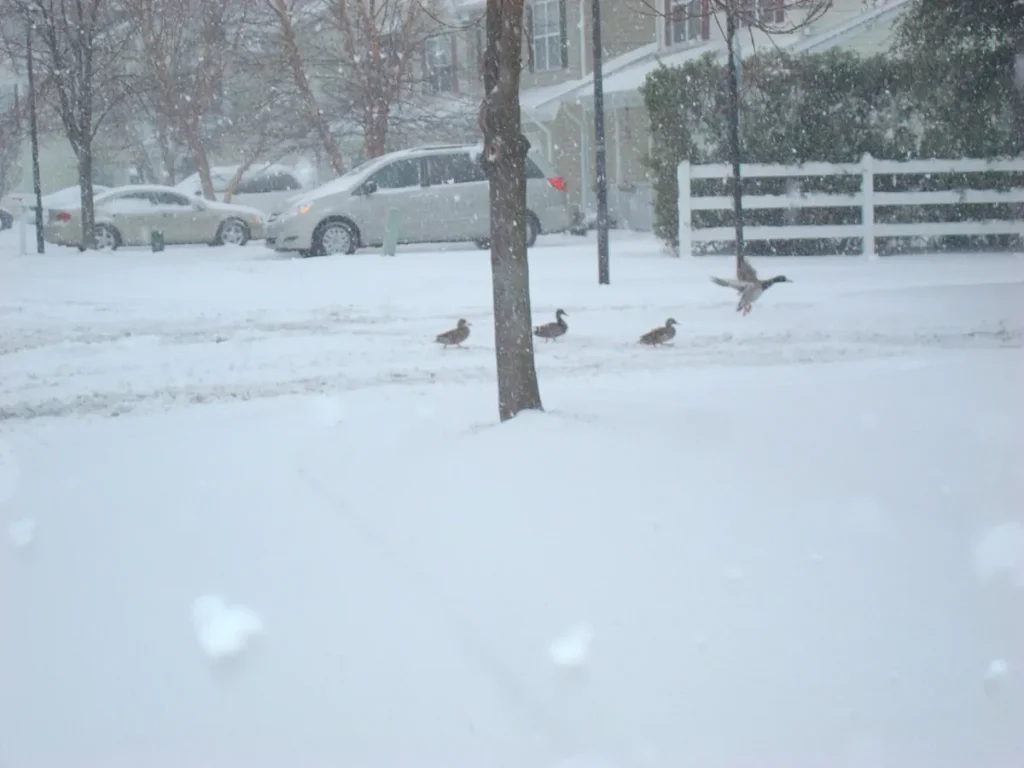
Mallards land during a snowstorm in Virginia Beach, Virginia.
3. Sheltered bays and coastal waters
Common Goldeneyes often spend winter on protected coastal waters. Many western North American breeders move toward the Pacific coast, while eastern breeders may head to the Atlantic coast. Some winter inland on large lakes or rivers that remain open.
If you’re looking for ducks in winter, a sheltered bay is worth scanning even when freshwater ponds nearby are frozen. Watch for a bird that repeatedly disappears underwater and surfaces a little farther along. That behavior can help you pick out a diving duck among birds resting at the surface.
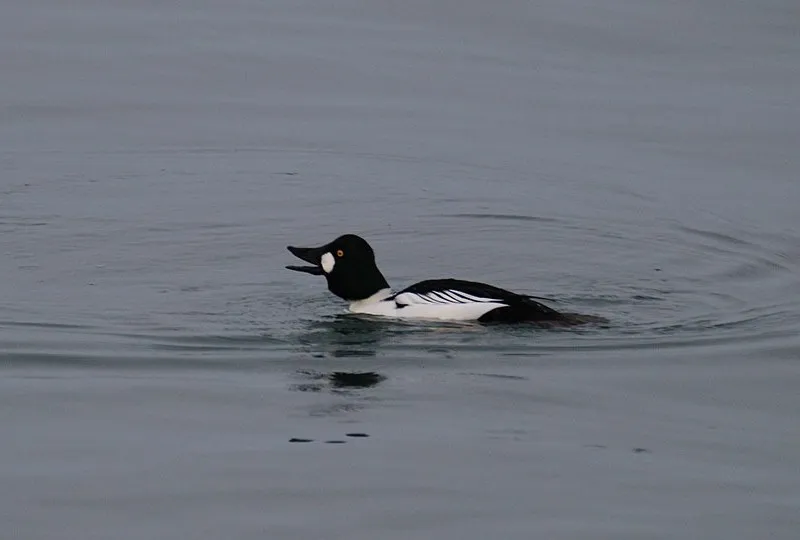
A Common Goldeneye swims along the Tacoma waterfront in Washington State.
For another look at how birds respond to cold weather, see Do Owls Migrate in the Winter?
Sources
- Cornell Lab of Ornithology. Mallard Range Map. blog.allaboutbirds.org
- Cornell Lab of Ornithology. Common Goldeneye Range Map and Common Goldeneye Overview. allaboutbirds.org
- Weller, F. G., et al. (2022). Environmental Drivers of Autumn Migration Departure Decisions in Midcontinental Mallards. Movement Ecology, 10, 1.