Some owls migrate to a winter range, often setting out in autumn. Others spend the whole year in the same area. In North America, a Great Horned Owl may stay in its territory through the winter, a Northern Saw-whet Owl may move south, and a Snowy Owl’s winter destination can vary from one year to the next.
1. Great Horned Owls usually stay put
Most Great Horned Owls are year-round residents, even in northern parts of their range. They can keep hunting through the winter, taking prey such as rabbits and rodents. If you hear a Great Horned Owl hooting in the same neighborhood in summer and winter, both calls could come from an owl that lives there year-round.
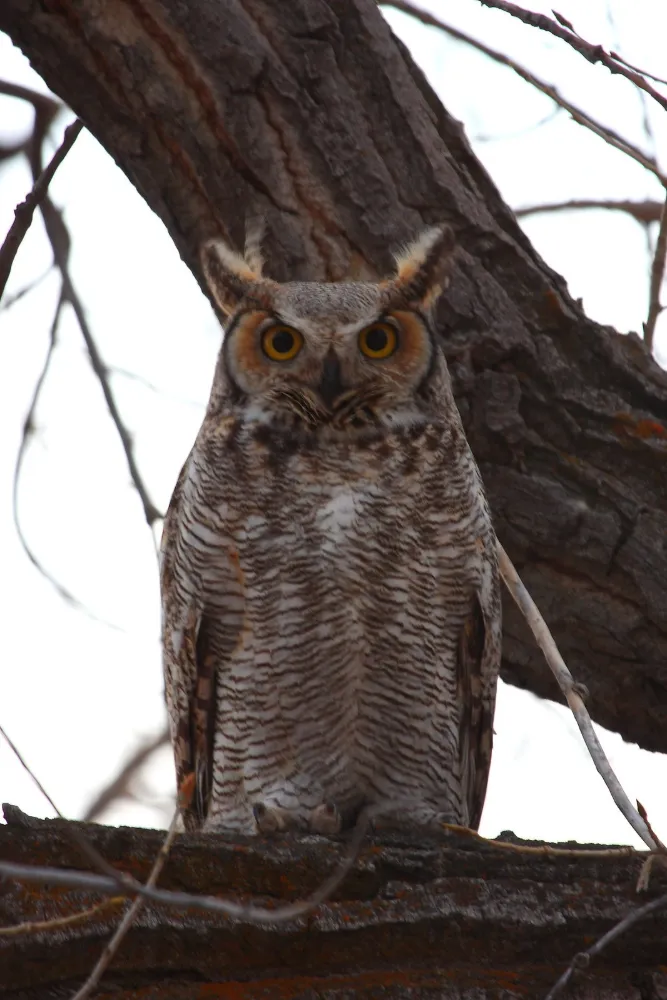
A Great Horned Owl perched in Wyoming in January.
See how this resident owl finds food throughout the year in What Do Great Horned Owls Eat?
2. Many Northern Saw-whet Owls move south in fall
Northern Saw-whet Owls are partial migrants. Some stay in their breeding range all year. Others head south in autumn, and some in western mountain areas move to lower elevations for winter.
They travel at night and often spend winter days tucked into dense cover, especially conifers. A saw-whet owl in a December pine grove could be a local bird or a visitor from farther north. The sighting tells you where it’s spending the winter, while its summer home remains a separate question.

A Northern Saw-whet Owl perched near Lake Huron at the Straits of Mackinac.
3. Snowy Owls can move south in much larger numbers in some winters
Snowy Owls breed in the Arctic. Some move south regularly, while others winter farther north, including on Arctic sea ice. In certain winters, unusually large numbers reach southern Canada and the northern United States. Birders call this an irruption.
A strong Arctic breeding season can help explain a big winter influx. When lemmings are plentiful, Snowy Owls can raise more young. Some of those young birds may then turn up farther south. There’s more to learn about what drives each irruption, but a winter with many sightings can follow a summer when food was abundant.
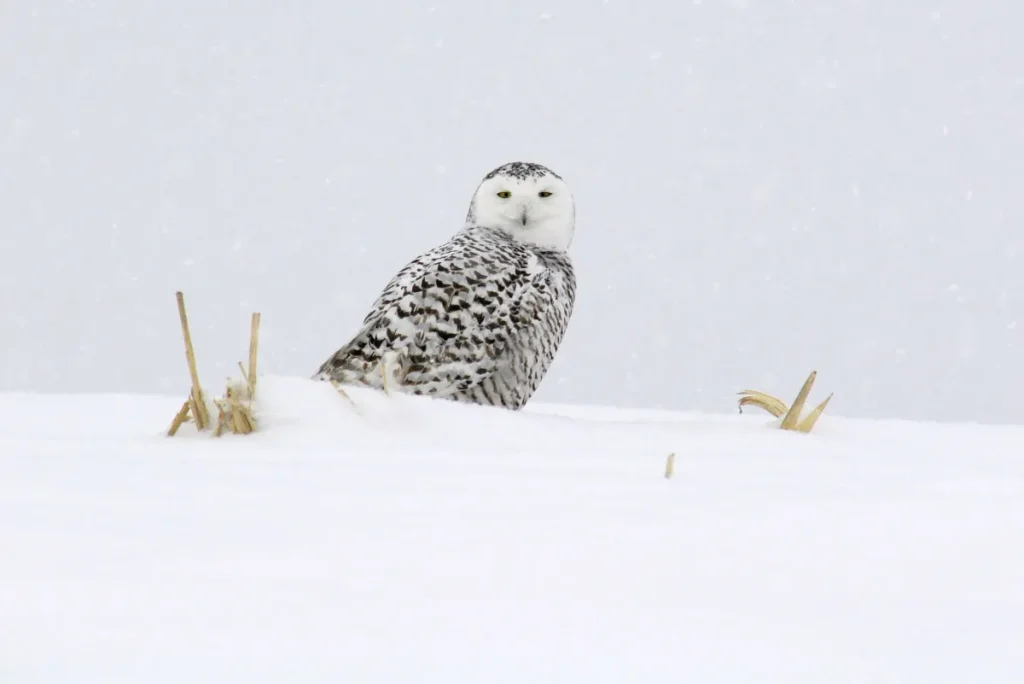
A young Snowy Owl in a snow-covered field in Quebec, Canada.
For a closer look at where these owls breed, read Snowy Owl in the Tundra.
How to tell which owls winter near you
Look at the range map for the species you’re interested in and compare its year-round and nonbreeding areas. The year-round area shows where the species regularly occurs in every season. The nonbreeding area can show where it spends winter away from its breeding grounds. For Snowy Owls, recent local sightings can narrow down where birds have turned up that particular winter.
Sources
- Cornell Lab of Ornithology. Great Horned Owl Nest FAQ. All About Birds
- National Audubon Society. Northern Saw-whet Owl. Audubon Field Guide
- Committee on the Status of Endangered Wildlife in Canada. Snowy Owl Assessment and Status Report. Canada.ca
- Project SNOWstorm. What Is an Irruption?.