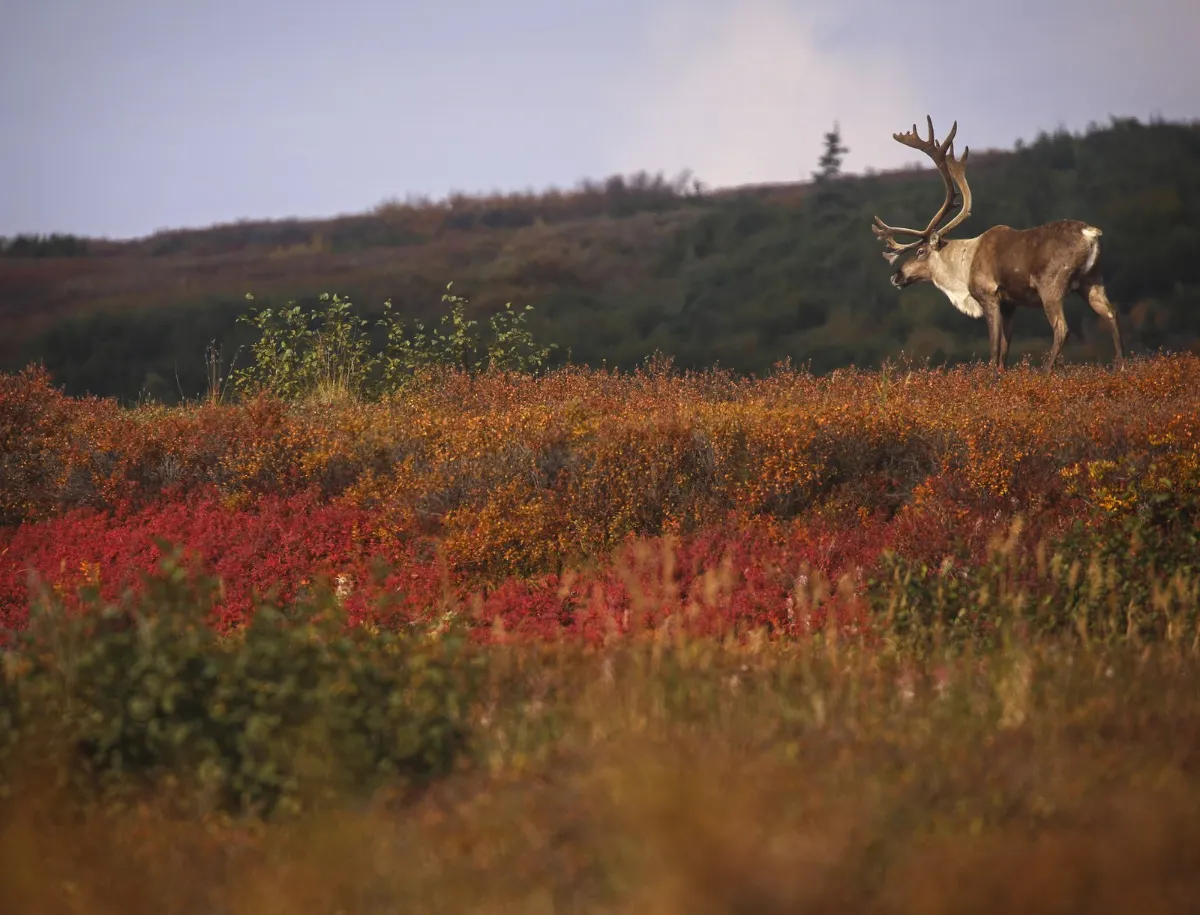
For caribou in the tundra, snow can be both an obstacle and a refuge. In winter, they dig through it to reach food. In summer, lingering snow patches give them somewhere to escape biting insects. Wide hooves, an insulating coat, and the ability to travel long distances help caribou cope as conditions change. adfg.alaska.gov
1. Their wide hooves help them cross snow and soft ground
A caribou’s broad hooves help spread its weight on snow and soft, wet ground. The sharp edges give it grip on ice and help it scrape snow away from food. The feet change with the season, too. In winter, the fleshy pads between the hooves shrink, and tufts of hair between the toes help protect the pads from frozen ground. adfg.alaska.gov

A caribou walking in Denali National Park, Alaska, with its broad hooves visible.
2. Hollow guard hairs slow heat loss
The longer outer hairs in a caribou’s coat contain tiny air spaces. That trapped air helps insulate the animal when winter temperatures drop. These same hairs add buoyancy when caribou swim, a useful feature when a river cuts across their route. Environment and Climate Change

Caribou of the Western Arctic Herd travel across snow in Alaska.
3. They dig feeding craters to reach lichens
A snowy patch can look bare and still hold a meal. Caribou can smell lichens beneath the snow and scrape down to them with their front hooves. The shallow holes they leave are called feeding craters. Lichens are a major winter food for many herds, alongside other foods such as sedges and evergreen leaves. Environment and Climate Change
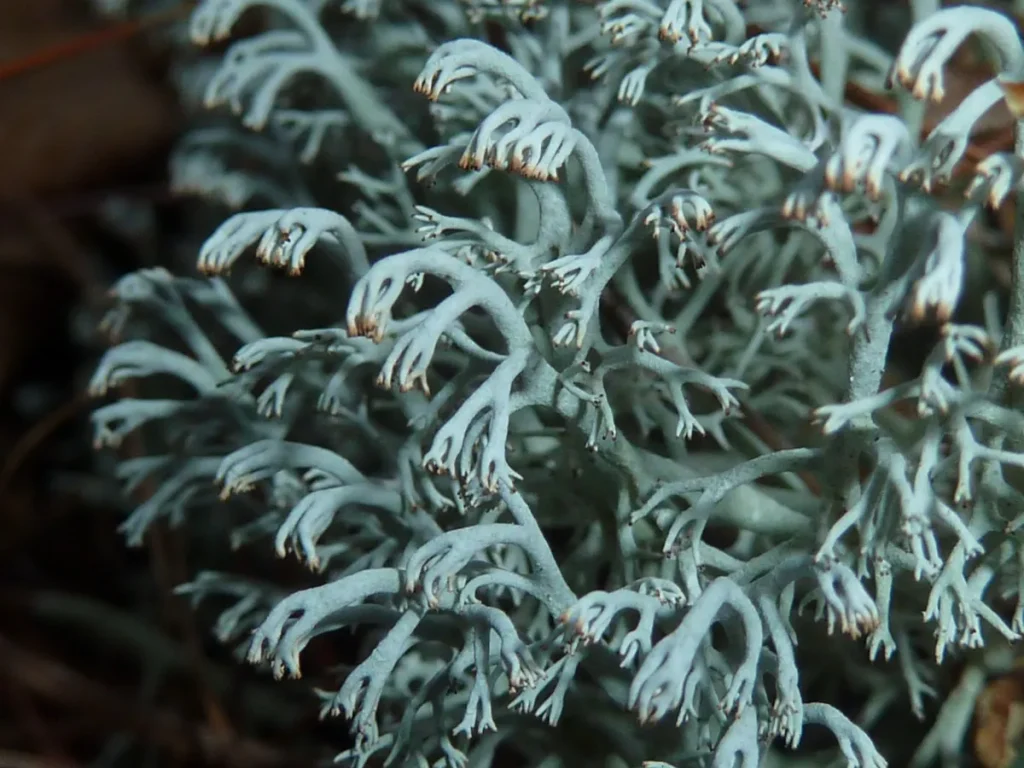
The branching tips of gray reindeer lichen, one of the lichens caribou eat in winter.
4. Many herds migrate to open tundra to give birth
In spring, pregnant females in the Porcupine Caribou Herd head toward the coastal plain of Alaska and Yukon. The route and where they give birth can shift with snow conditions. On the calving grounds, newly emerging plants such as cotton grass provide food for mothers as they begin nursing their calves. Vuntut National Park
A 2019 comparison listed a maximum round-trip migration distance of about 1,350 km (840 miles) for the Porcupine herd, measured in straight lines between seasonal endpoints. The animals’ actual paths can cover more ground. doi.org

A caribou calf stands behind an adult on a slope in Denali National Park, Alaska.
5. In summer, they seek wind and leftover snow
Mosquitoes and other biting insects can drive caribou away from good feeding areas. Herds may bunch into large groups or head for windy ridges, cool coastal areas, and patches of lingering snow. When insect activity eases, caribou can spread out and spend more time feeding. Vuntut National Park

Caribou gather in a large summer group in Alaska’s Noatak National Preserve.
Related reading
8 Arctic Tundra Animals and How They Survive