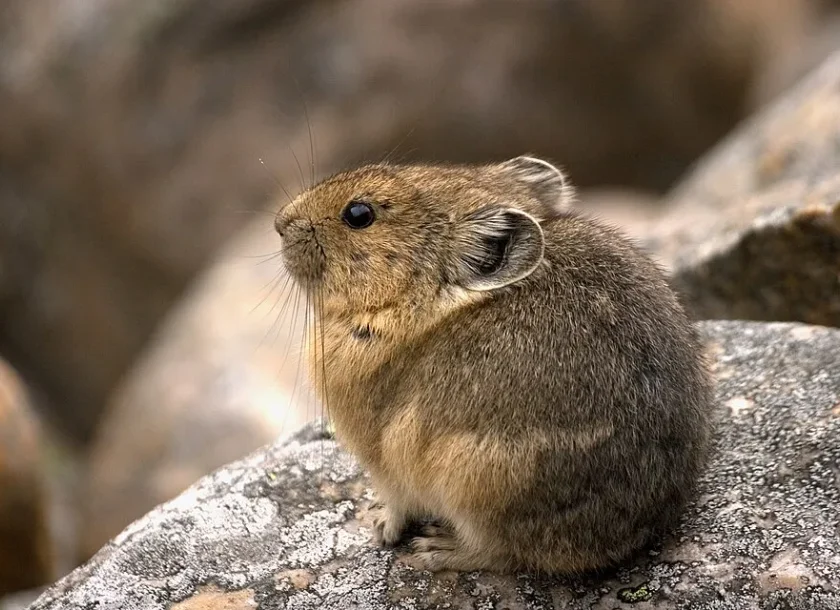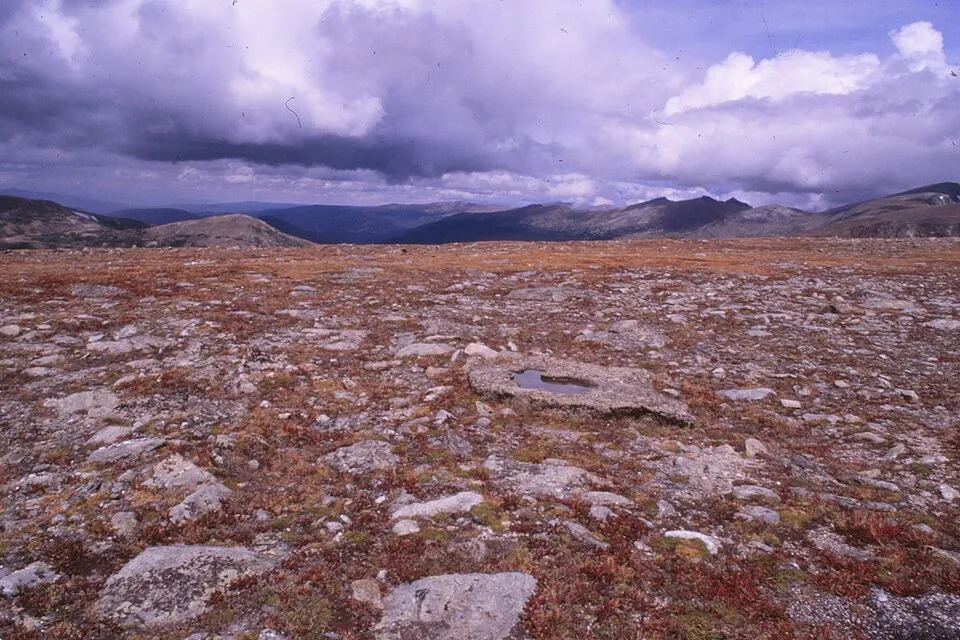
Above the treeline, an American pika spends summer gathering plants to eat through winter. A yellow-bellied marmot in the same mountains builds up fat and hibernates. A white-tailed ptarmigan stays active and trades its mottled summer feathers for white ones. The three animals may live close together, but each gets through the cold season in a different way. nps.gov
Alpine tundra forms high on mountains, where cold, wind, and a short growing season limit tree growth. Low plants grow among rocks, open meadows, and patches of snow. The animals below show how different parts of that landscape provide food, shelter, or a place to hunt. nps.gov
Alpine Tundra Animals at a Glance
| Animal | Mountain region | Habitat clue |
|---|---|---|
| American pika | Western North America | Loose rock slopes beside low vegetation |
| Yellow-bellied marmot | Western North America | Sunny rocks near meadows and burrow entrances |
| White-tailed ptarmigan | Western North America | Low shrubs, lichen-covered rocks, and snowbanks |
| Mountain goat | Western North America | Steep ledges and nearby alpine meadows |
| Alpine ibex | European Alps | Open slopes and crags above the treeline |
| Snow leopard | High mountains of Central and South Asia | Broken terrain with cliffs, boulders, and ravines |
1. American Pika
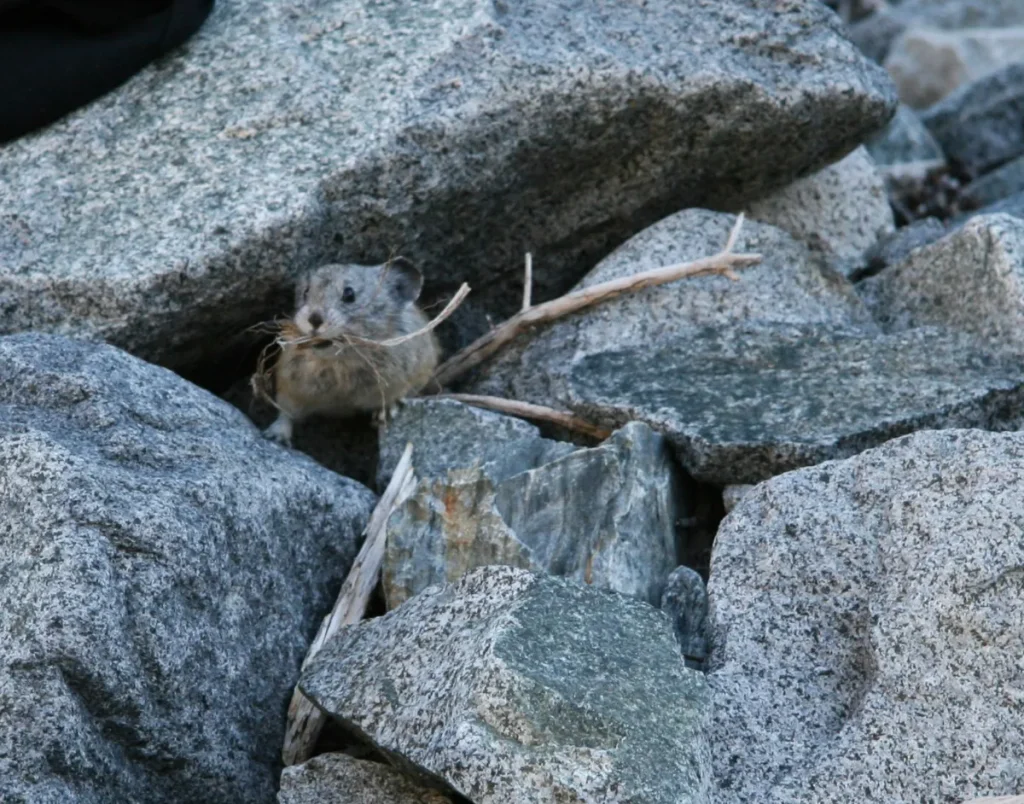
An American pika carries a mouthful of vegetation among rocks in Sequoia National Park.
A pika is about the size of a small potato, with rounded ears and a sharp call that can give it away before you see it. Look around a talus slope, a pile of broken rock where the gaps between stones give it places to hide.
In summer, pikas gather grasses and other plants and store them in piles called haypiles. They stay active through winter, using those stores when snow covers their summer feeding areas. See more animals that store food for winter. nps.gov
2. Yellow-Bellied Marmot

A yellow-bellied marmot on a rock beside a high-elevation meadow in the Sierra Nevada.
A marmot is much larger than a pika. In summer, you may see one resting on a broad rock beside a meadow, close to the cover of a burrow. If it detects danger, its sharp whistle can carry across the slope.
Marmots spend the growing season feeding and building fat reserves. They then retreat underground and hibernate for months. When they emerge in spring depends in part on elevation and local conditions. home.nps.gov
3. White-Tailed Ptarmigan

A white-tailed ptarmigan in mottled plumage at Great Sand Dunes National Preserve, Colorado.
This small grouse can be hard to pick out even in an open meadow. Its brown and gray summer feathers blend into rocks and low plants. In winter, its body feathers turn white. The tail stays white year-round, which can help identify the bird when the tail is visible.
White-tailed ptarmigan remain active in winter. Their feet are feathered, and they may shelter in snowbanks to conserve heat. Some move downslope as conditions change, even though the species spends much of its life in alpine habitat. allaboutbirds.org

A white-tailed ptarmigan blends into the snow in its white winter plumage.
4. Mountain Goat

A mountain goat near the Hidden Lake Trail in Glacier National Park, Montana.
A mountain goat can cross narrow ledges where a small misstep would matter. Each hoof is split into two toes that can spread, and soft inner pads help grip uneven rock.
In summer, mountain goats feed on alpine plants, including grasses and sedges. In winter, steep slopes can still provide food where snow slides off or accumulates less. Goats also use lower, sheltered areas when conditions call for it. home.nps.gov
5. Alpine Ibex
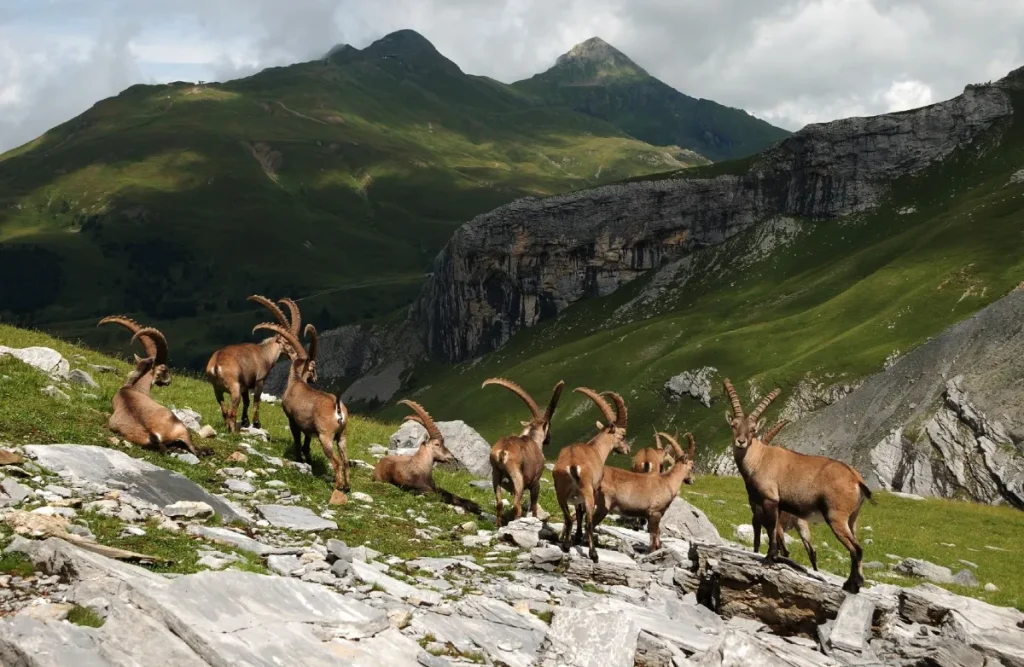
Alpine ibex on an open slope below the Eiger Glacier in Switzerland.
The Alpine ibex lives in the European Alps. Adult males are easy to recognize by their heavy, backward-curving horns. Females have shorter horns, so a herd can contain animals with quite different silhouettes.
Ibex graze on grasses and herbs at high elevations in summer. Many move to different ranges in winter, where shrubs and other exposed vegetation can provide food. A slope full of ibex in July may be empty when the snow settles. Swiss National Park
6. Snow Leopard

A wild snow leopard resting among boulders in Ladakh, India.
Snow leopards use steep, rocky country across the high mountains of Central and South Asia. Cliffs and ravines give them cover as they move through open terrain. In the photo above, the cat’s pale coat and dark markings break up its outline against the rocks.
Its long tail helps it balance on uneven ground. When the cat rests, it can wrap that tail around its body for warmth. Snow leopards range across a variety of mountain habitats, including cold, open slopes above the treeline. Snow Leopard Trust
What Is the Difference Between Alpine and Arctic Tundra?
Alpine tundra is defined by elevation. You reach it by climbing above the treeline on a mountain. Arctic tundra is defined by latitude. It occurs in the far north, where the climate can keep trees from growing even on low, flat ground. Both can look treeless and windswept in a photo, so the location and elevation are the most useful clues. education.nationalgeographic.org
Sources
- U.S. National Park Service — Alpine Tundra Ecosystem, Pikas at Rocky, Yellow-Bellied Marmot, and Mountain Goat Resource Brief
- Cornell Lab of Ornithology — White-Tailed Ptarmigan Life History and Identification
- Swiss National Park — Ibex
- Snow Leopard Trust — Habitat and Physical Features
- National Geographic Education — Tundras Explained