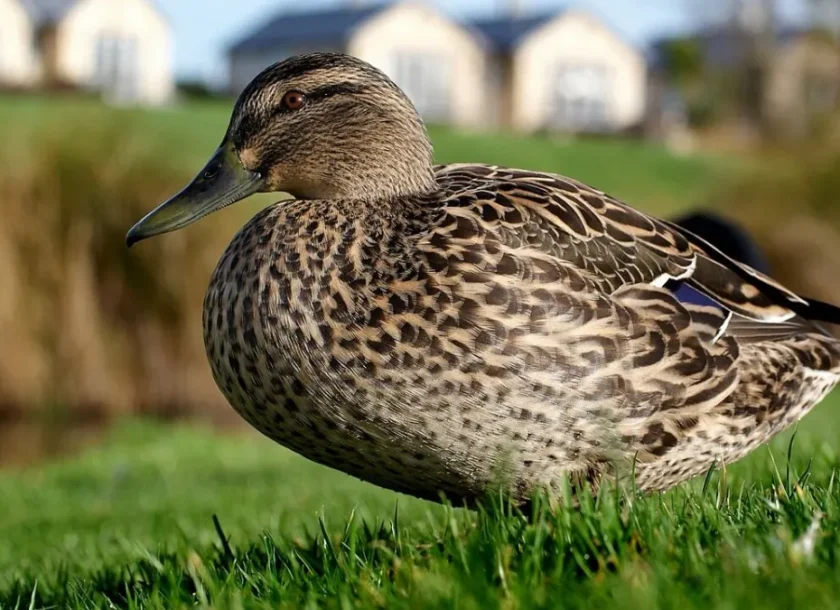
Wild ducks eat seeds, aquatic plants, insects, and other small animals. What ends up on the menu depends on the duck. A Mallard often feeds on plants and seeds in shallow water. A Northern Shoveler strains tiny food particles from the water, while a Common Merganser dives after fish.
What do wild ducks eat in ponds?
Mallards eat seeds, stems, and roots from plants such as pondweeds and sedges. They also pick up aquatic insects, snails, and other small animals. When you see a Mallard tip tail-up, it’s reaching beneath the surface for food within reach of its bill. This kind of surface feeding is called dabbling.
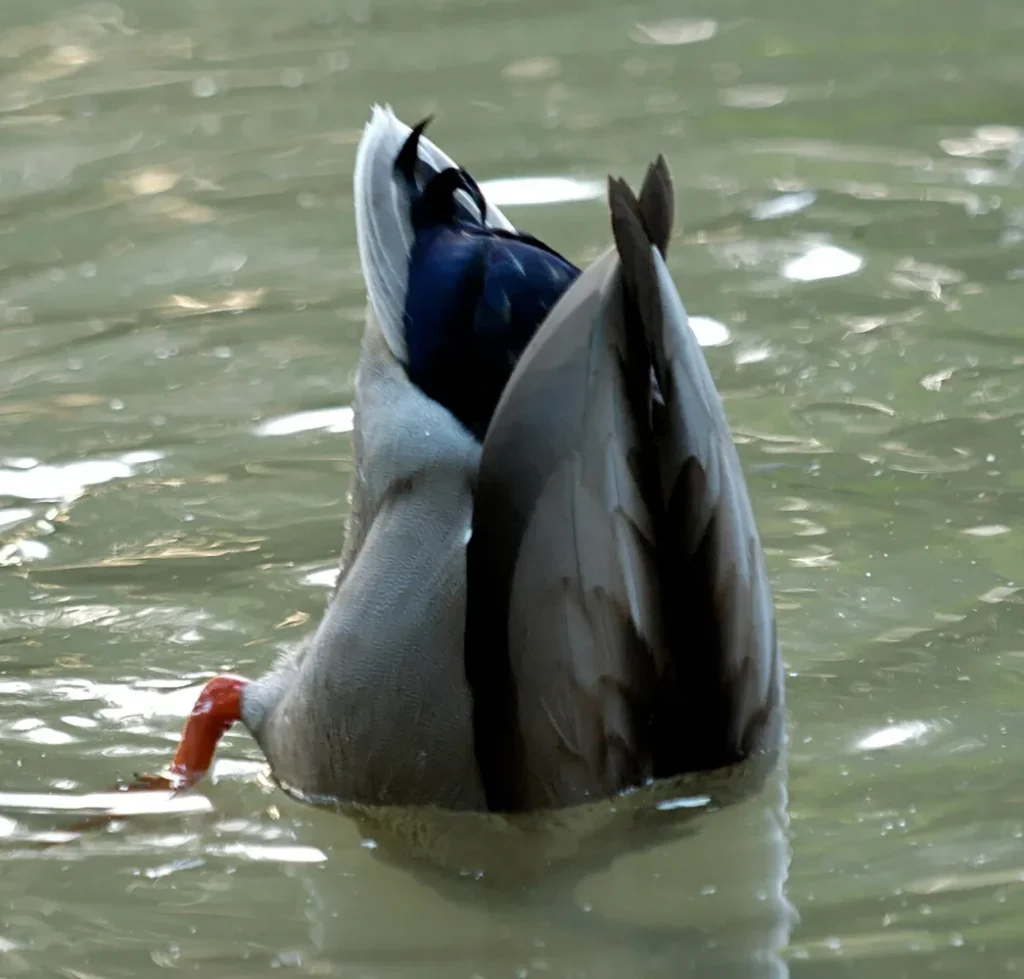
A Mallard tips up to look for food in a pond at the Jardin des Plantes in Paris.
How a Northern Shoveler filters its food
Watch a Northern Shoveler swim with its wide bill partly submerged. Along the edges of the bill are rows of comb-like projections called lamellae. They strain tiny crustaceans, other aquatic invertebrates, and seeds from the water as it passes through the bill.
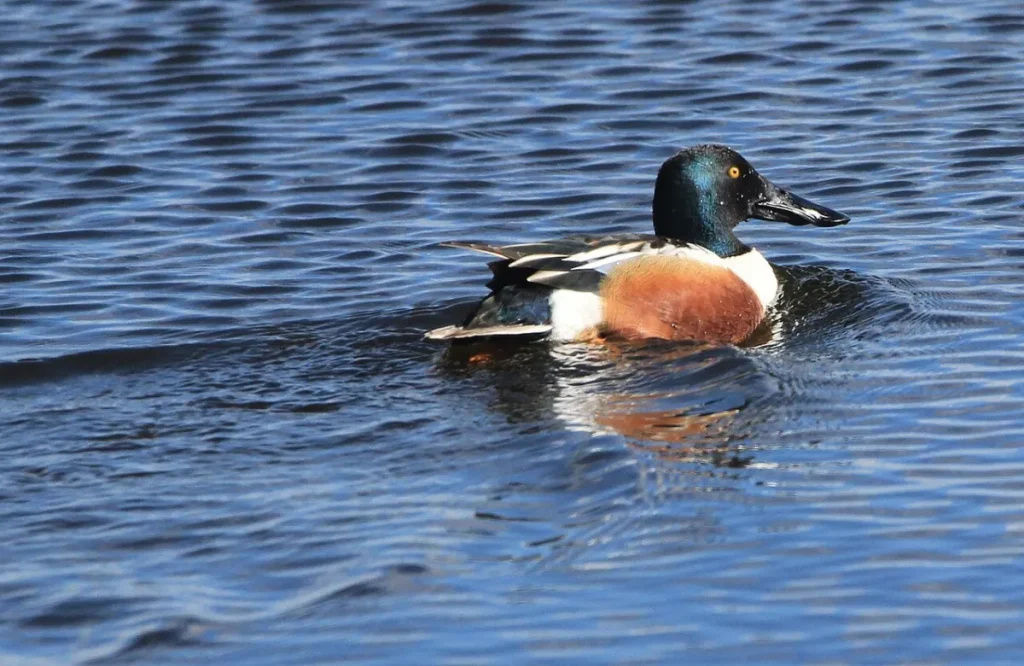
A Northern Shoveler shows the broad bill it uses to strain food from water.
Do wild ducks eat fish?
Some do. Fish make up most of a Common Merganser’s diet. It dives underwater and hunts by sight. Its narrow bill has serrated edges that help it hold slippery prey.
If you see a duck disappear completely beneath the surface, it may be diving for food. Diving ducks use their feet to push through the water, as explained in Why Do Ducks Have Webbed Feet?

A Common Merganser holds a fish in Gothenburg, Sweden.
What do ducks eat in winter?
Mallards often eat wetland seeds during winter. They may also feed in harvested fields, where corn or other grain has been left behind. Common Mergansers continue to hunt fish and sometimes dive into deeper water where fish are schooling.
When ice or snow makes food harder to reach, ducks may move to another feeding area. See where those movements take them in Where Do Ducks Go in Winter?
Sources
- National Audubon Society. Mallard Field Guide. Audubon Field Guide
- Cornell Lab of Ornithology. Northern Shoveler Life History. allaboutbirds.org
- Cornell Lab of Ornithology. Common Merganser Life History. allaboutbirds.org
- Ducks Unlimited. Mallard Foraging Habits and Diet.