Ducks have webbed feet because the skin between their toes gives each foot a broad surface to push against water. A duck can spread its toes to make a wide paddle, then draw them closer together as it brings its foot forward. Diving ducks also use those paddles to stay underwater, and ducks can spread their feet in the air to help slow down before landing.
1. The webbing opens during each swimming stroke
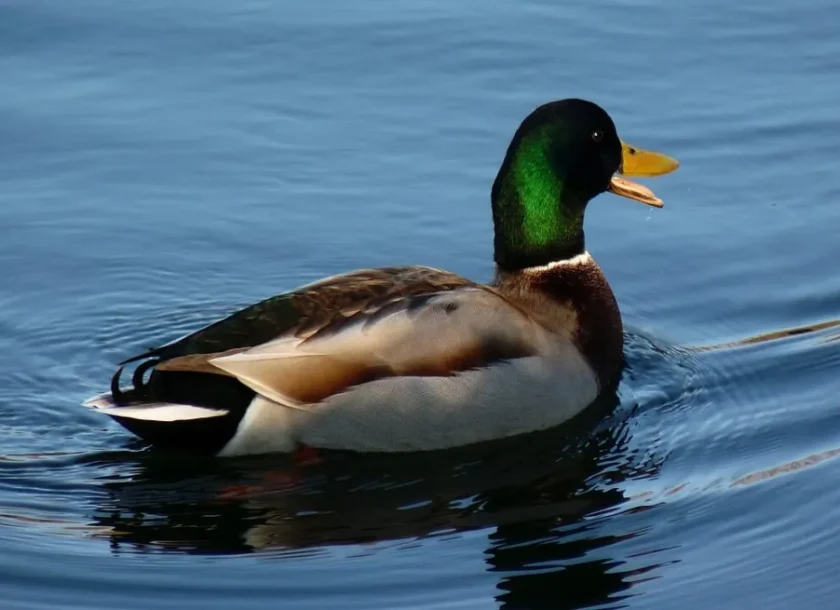
On a Mallard’s foot, a sheet of skin links the three forward toes. A small fourth toe points backward. When the duck sweeps its foot back through the water, the forward toes spread and pull the webbing open. That broad surface pushes water behind the bird, moving it forward. As the foot comes forward for the next stroke, the toes draw closer together so the foot meets less resistance.

A male Mallard’s orange webbed foot is visible as he swims.
Ducks share this basic foot shape with geese. Other swimmers use different arrangements, including separate lobes along each toe. See the photos in 6 Animals With Webbed Feet and How They Use Them.
2. Diving ducks paddle to stay near the bottom
A floating duck has to work against buoyancy when it dives. Researchers filmed Barrow’s Goldeneyes feeding underwater and found that their paddling produced a force directed mostly downward. By continuing to stroke with their webbed feet, the ducks could hold their position near the bottom long enough to feed.
That is a different job from swimming across a pond. At the surface, the duck wants to move forward. At the bottom, the same broad feet help it stay in one place.
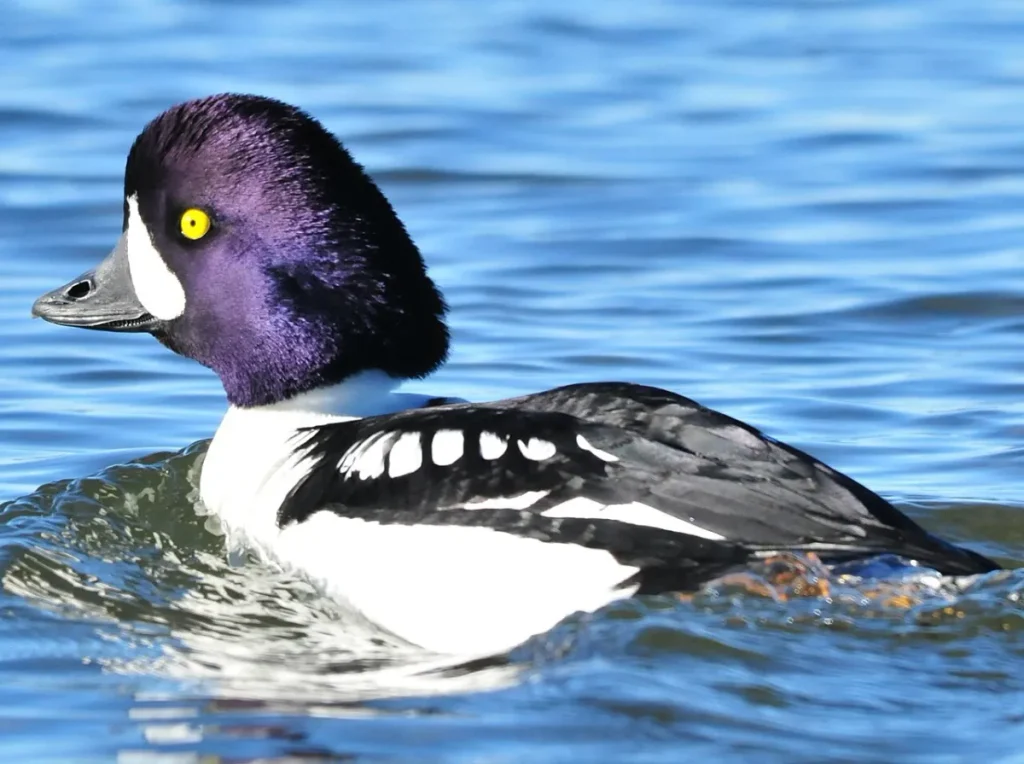
A male Barrow’s Goldeneye at Seedskadee National Wildlife Refuge, Wyoming.
3. Spread feet add drag before landing
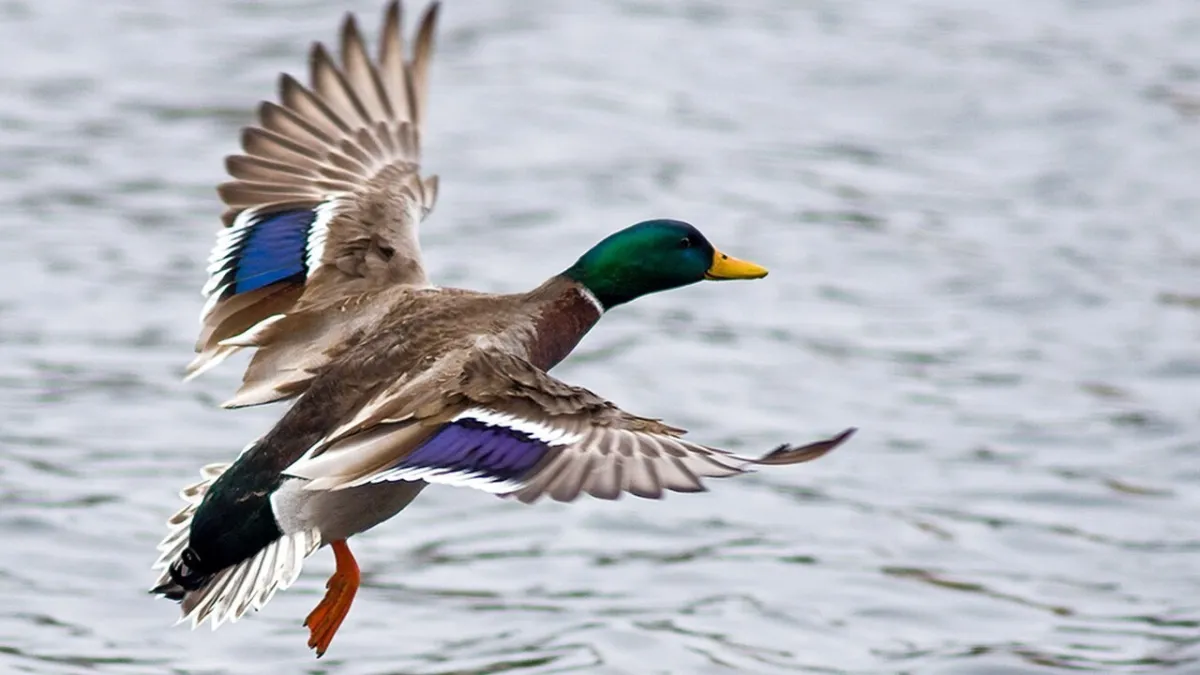
Watch a Mallard approach a landing spot and you may see it drop its feet and fan out its toes. The open webbing creates a little extra air resistance while the bird is still above the surface. That helps it slow down before touching down.

A male Mallard lowers its orange feet before landing at Lake Superior.
Sources
- U.S. Fish and Wildlife Service. Junior Duck Stamp Educator Guide, “Webbed Wonders”. Unit 1. What is …a Waterfowl?
- The Natural History of Animals, Vol. 5, “Animal Movement”, p. 58. upload.wikimedia.org
- Ribak, G., Swallow, J. G., and Jones, D. R. (2010). Drag-Based “Hovering” in Ducks. PLOS ONE.