In winter, some frogs rest at the bottom of ponds, some tuck themselves under fallen leaves, and some toads dig deep into the soil. An American bullfrog can spend winter underwater. A wood frog usually stays on land. An American toad can burrow below the frost line.
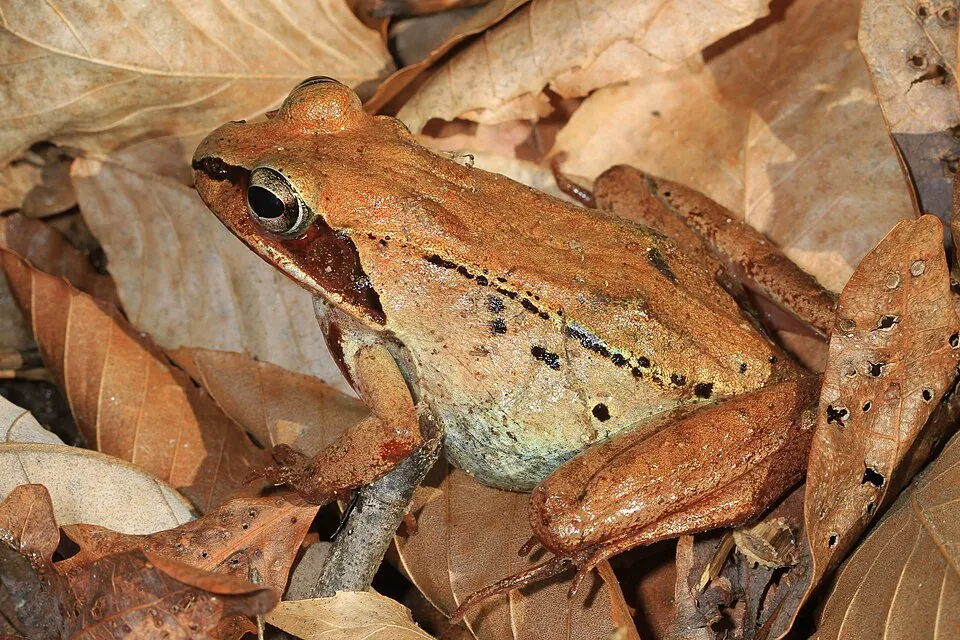
The place a frog spends the summer can be a poor clue to where it spends the winter. A wood frog visits a pond to breed, then may spend the coldest months beneath leaves on the forest floor.
| Winter shelter | Example | How it helps |
|---|---|---|
| Underwater in a pond | American bullfrog | Liquid water below the ice provides dissolved oxygen. |
| Beneath fallen leaves | Wood frog | Leaf litter provides cover, and the frog can survive partial freezing. |
| In a burrow below the frost line | American toad | Deep soil protects the toad from the coldest surface temperatures. |
1. At the Bottom of a Pond
American bullfrogs can spend winter underwater in ponds and other permanent bodies of water. Cold slows their metabolism, so they use less oxygen. While submerged, they take in dissolved oxygen through their skin.
A pond can freeze at the surface and still have liquid water underneath. For a frog wintering there, the amount of oxygen in that water matters. Frogs may rest on the bottom or be partly covered by sediment. The water around them still needs to supply oxygen, which is why a pond that stays iced over and loses oxygen can become dangerous.

2. Under Fallen Leaves on the Forest Floor
Wood frogs spend winter on land, often tucked under leaf litter. Their bodies can withstand a degree of freezing that would kill many other frogs.
As ice forms outside the cells, water is drawn out of them. The frog’s liver releases glucose, which helps protect the cells from losing too much water. The heart can temporarily stop beating during freezing, then resume after the frog thaws. The leaves provide shelter while the frog’s own chemistry helps it survive the cold.
3. In a Burrow Below the Frost Line
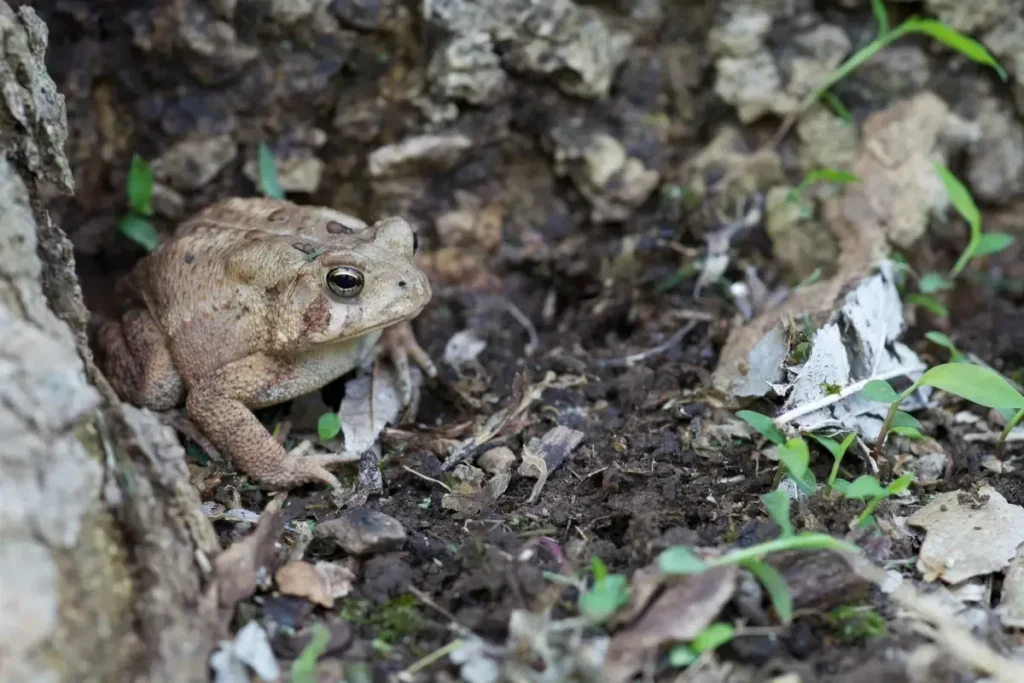
An American toad can use its hind feet to dig backward into loose soil. In winter, it can retreat below the frost line, the depth to which the ground freezes. Deeper down, temperatures fluctuate less than they do at the surface.
This is a different way of dealing with the same problem. The wood frog can survive partial freezing in shallow shelter, while the toad digs deep enough to avoid the worst of the freeze. See how other animals use underground shelters.
Frequently Asked Questions
Do frogs hibernate in winter?
Many frogs in cold climates enter winter dormancy, often called hibernation or brumation. They become much less active as temperatures fall. Some may move or emerge briefly if the weather warms.
Where do frogs go in winter in the UK?
The common frog (Rana temporaria) may shelter under rocks, in a compost heap, or at the bottom of a pond. Even within one species, frogs can spend winter in different places.
Can every frog survive being frozen?
Freeze tolerance varies by species. Wood frogs can survive partial body freezing. Frogs that overwinter in ponds generally rely on liquid water and enough dissolved oxygen to get through the cold months.