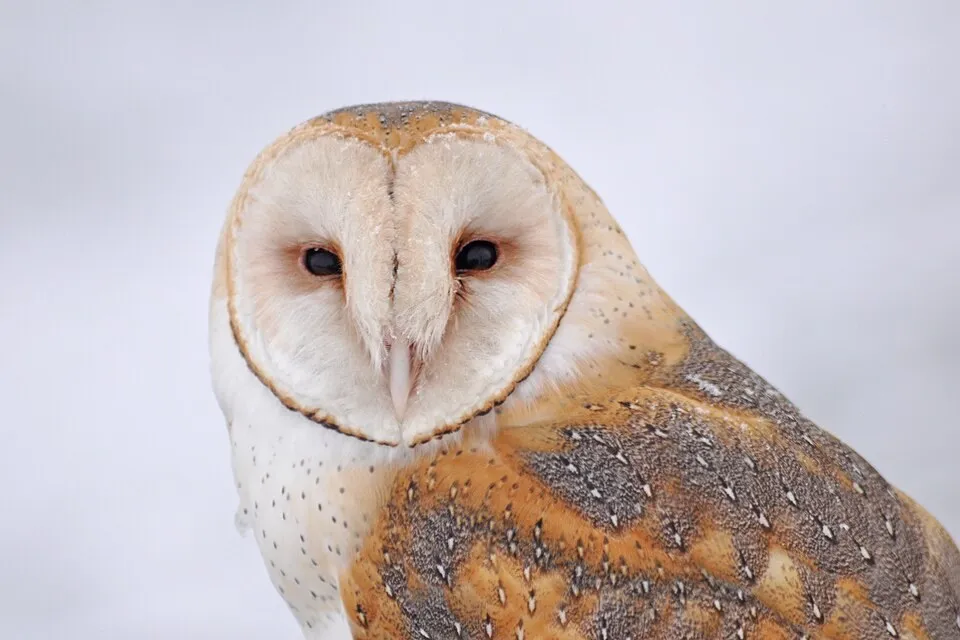
Barn owls eat mostly small mammals. Voles, mice, and shrews are common prey, and barn owls also catch rats and pocket gophers where those animals are available. The mix changes from place to place. In Britain, field voles are a major part of the diet. In California’s Napa Valley, nest cameras recorded American barn owls bringing back thousands of prey items, with voles at the top of the list. The Barn Owl Trust
1. Voles, mice, and shrews make up much of the diet
The Barn Owl Trust reports that field voles account for about 45% of the British barn owl diet, followed by common shrews at 20% and wood mice at 15%. Rough grassland is an important hunting habitat. An owl flying over it can listen for small mammals moving through the grass. The Barn Owl Trust

A young field vole in Bremen, Germany. Field voles are a major prey species for barn owls in Britain.
2. California nest cameras caught pocket gophers on the menu
Researchers recorded 11,404 prey deliveries at 29 nest boxes in California’s Napa Valley during 2017 and 2018. Voles accounted for 49.6% of all recorded deliveries, mice for 22%, and pocket gophers for 17.5%. These numbers describe what adults brought to the monitored nest boxes during the study. wildlife.humboldt.edu
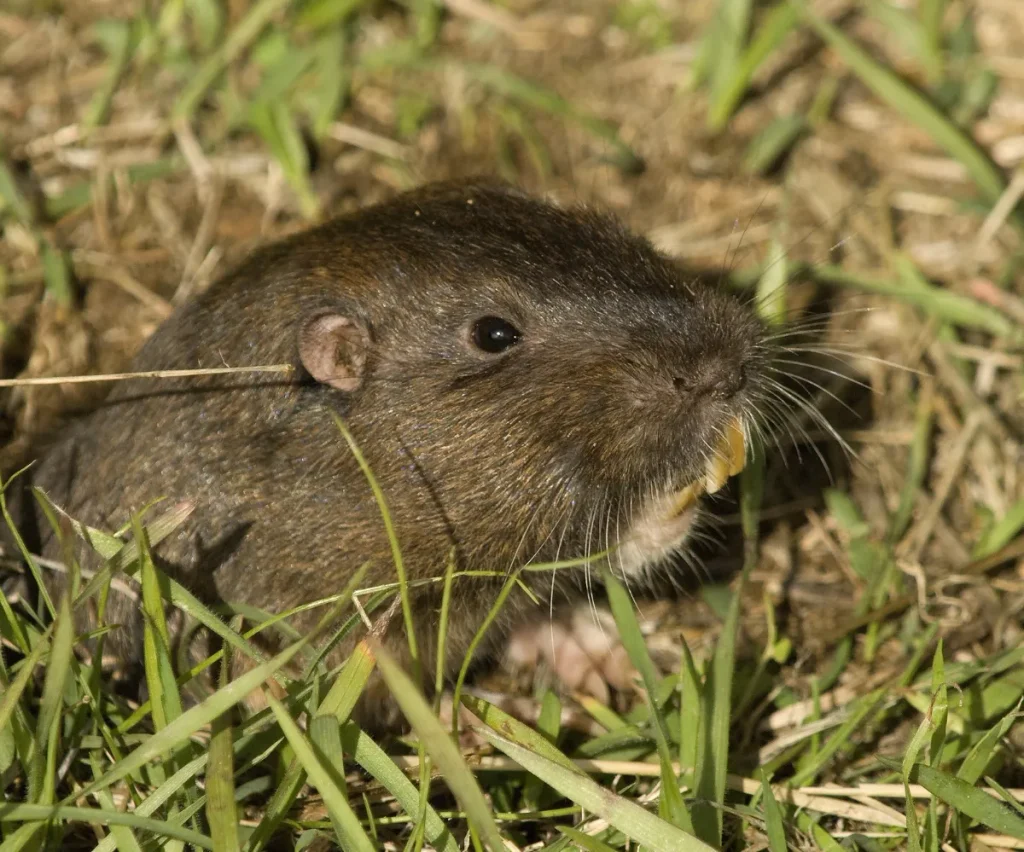
A Botta’s pocket gopher. Pocket gophers are among the prey American barn owls bring to their nests in California.
3. Barn owls do eat rats
Rats are documented prey on both sides of the Atlantic. The Barn Owl Trust lists brown rats among the prey taken in Britain, and the Napa Valley cameras recorded some rats among the less frequent deliveries. Barn owls can also take the occasional small bird, frog, or insect. The Barn Owl Trust
4. Barn owl pellets preserve clues about each meal
A barn owl often swallows small prey whole. After digestion, it brings up a compact pellet through its beak. The pellet can contain fur, teeth, jawbones, and pieces of skull. A common shrew’s tiny, pointed teeth with reddish tips are one clue that helps researchers tell its remains apart from those of a vole or mouse. Barn Owl Trust
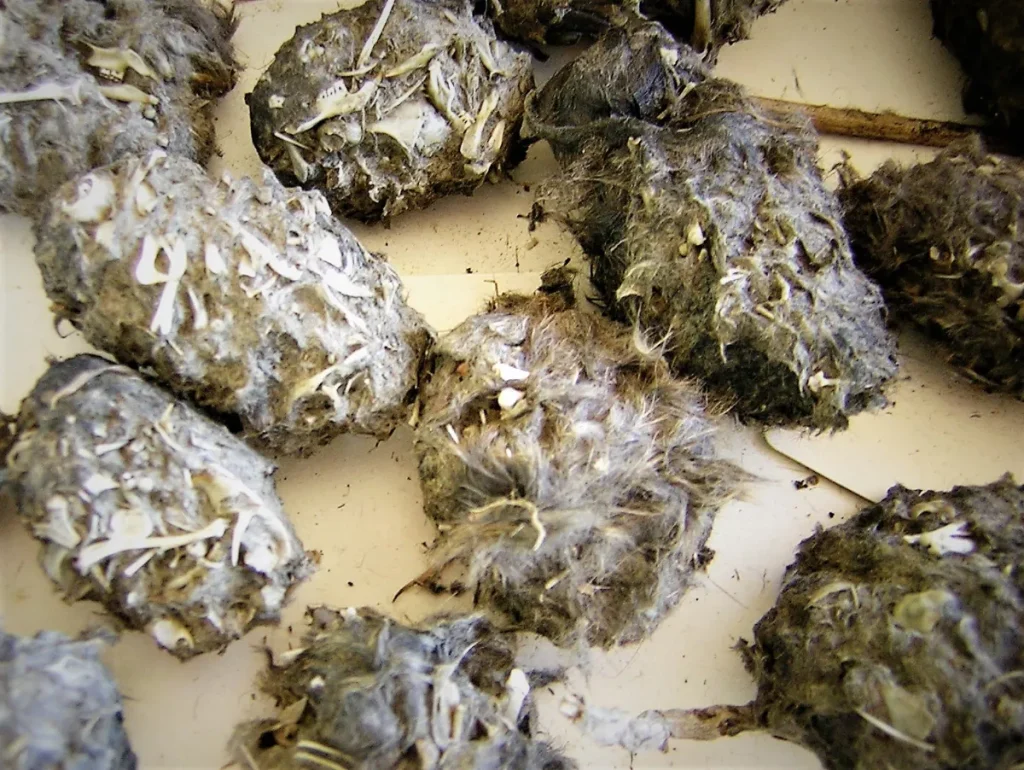
American barn owl pellets from the Florindo Donati protected area in Argentina.
5. Barn owls can track prey by sound
When a barn owl flies low over a field, the animal below may be hidden by grass. The owl’s heart-shaped facial disc helps direct sound toward its ears. Its sensitive hearing helps it pinpoint where the prey is moving, and its quiet flight lets it approach with little noise before dropping feet first. BTO
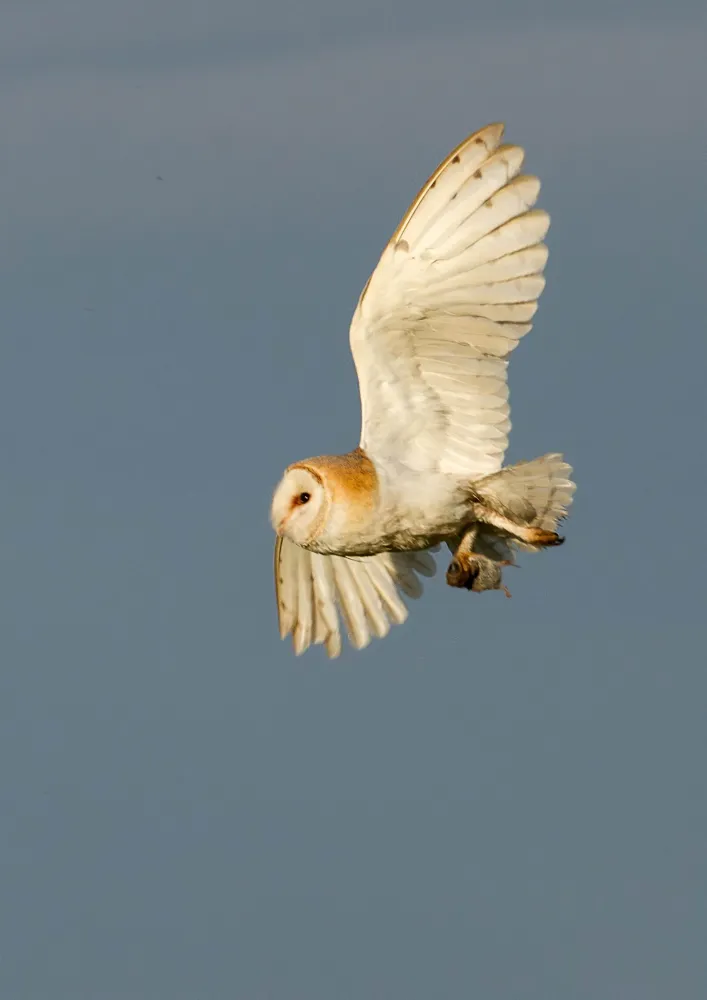
A barn owl carries prey in flight in Norfolk, England.
Related reading · Long-Eared Owl Identification
Sources
- The Barn Owl Trust. Barn Owl Hunting and Feeding
- Cornell Lab of Ornithology. American Barn Owl Life History
- Johnson, M. D., and St. George, D. 2020. Estimating the Number of Rodents Removed by Barn Owls Nesting in Boxes on Winegrape Vineyards
- The Barn Owl Trust. Barn Owl Pellet Analysis and Dissection
- British Trust for Ornithology. Owl Hearing