Owl pellets are compact bundles of material an owl couldn’t digest, such as fur, bones, and teeth. The owl brings the bundle back up through its beak after a meal. From the outside, an owl pellet may look like a small lump of matted fur. Inside, it can hold enough of a skull or jaw to identify what the owl ate. Audubon
What do owl pellets look like?
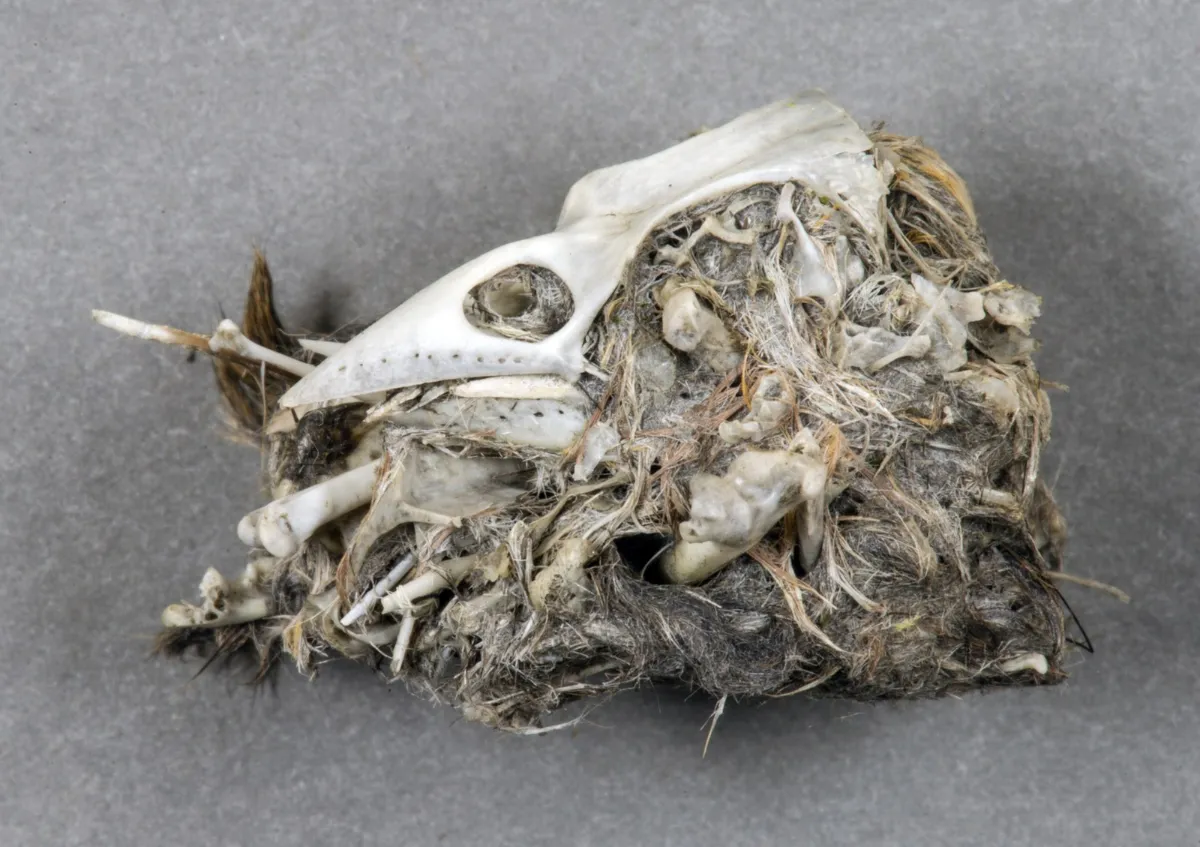
An owl pellet is usually a rounded or oval lump. Look for a felt-like surface, sometimes with a tiny bone sticking out. Color and size vary with the owl species and its prey. Barn owl pellets are often dark and compact, while great horned owl pellets can be gray and crumbly. Owl droppings often leave a whitish, chalky splash on the ground or on a branch. Audubon
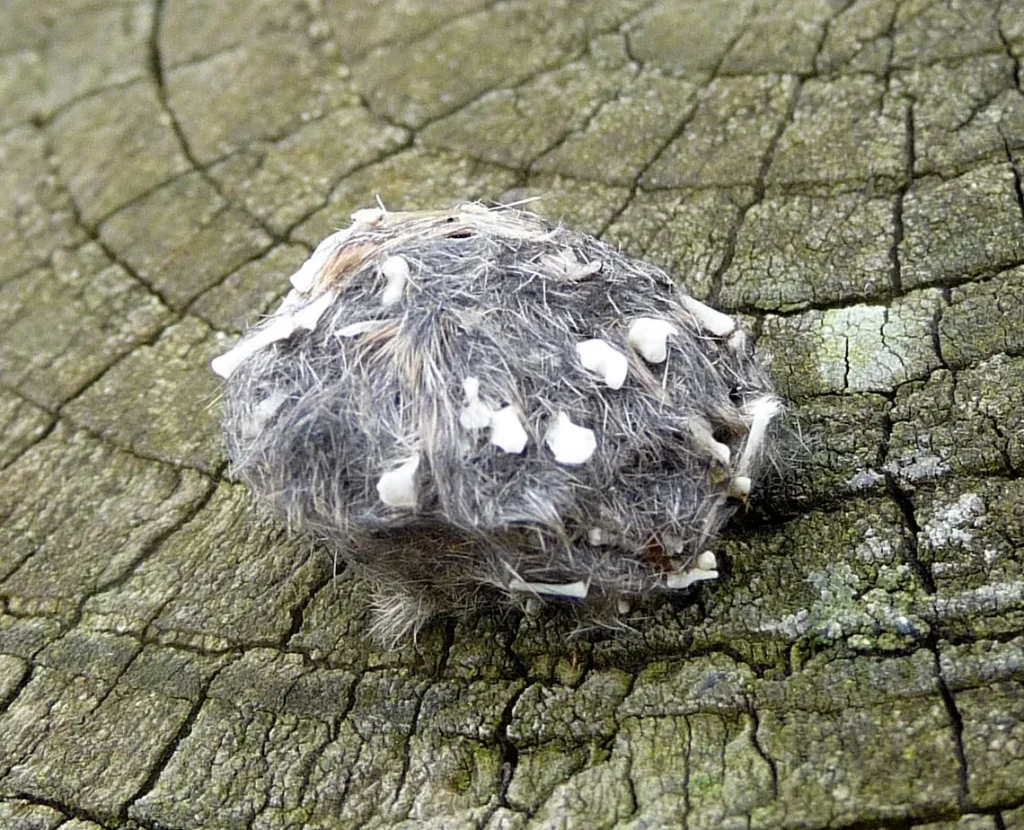
Matted fur and small pale fragments are visible on the surface of an owl pellet.
How does an owl make a pellet?
Owls often swallow small prey whole. In the stomach, soft tissues are digested and hard or fibrous parts collect in the muscular chamber called the gizzard. The gizzard compresses those remains into a pellet. Several hours after eating, the owl can bring the pellet up through its beak, often while resting at a roost. Audubon
What is inside an owl pellet?
Fur often holds the bundle together. Inside, you might find ribs, leg bones, jawbones, or a nearly intact skull. Pellets can also contain feathers or insect fragments, depending on what the owl ate. Teeth are especially useful for identifying prey. Large, curved front teeth point to a rodent, while the tiny, reddish-tipped teeth of a common shrew offer a different clue. Audubon
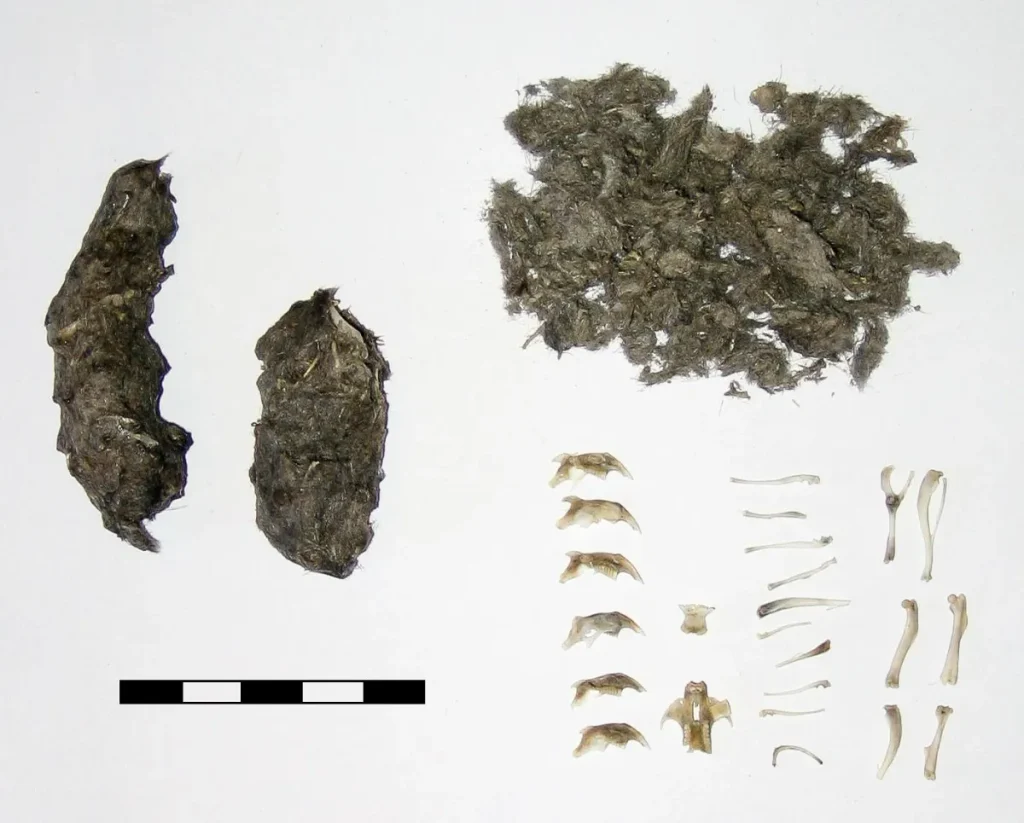
Intact long-eared owl pellets sit beside separated fur and bones.
Where are owl pellets usually found?
Start by looking at the ground beneath a tree or ledge that an owl uses as a regular perch. Barn owls may also leave pellets under beams in quiet farm buildings. Several pellets in one spot can be a sign that a bird has used the same roost repeatedly. The site and the shape of a pellet offer clues about which bird left it, since hawks and several other birds produce pellets too. Audubon

Bones and pellet material at a barn owl site on California’s Carrizo Plain.
What can pellets tell us about local wildlife?
Pellets can reveal small mammals that people rarely see alive. From 2023 to 2025, volunteers in Britain’s Searching for Shrews project identified remains of the greater white-toothed shrew in owl pellets from multiple sites, particularly around Sunderland and Bilsthorpe. A set of pellets records the prey an owl caught, so it gives researchers evidence that a species was present in the owl’s hunting area. static1.squarespace.com
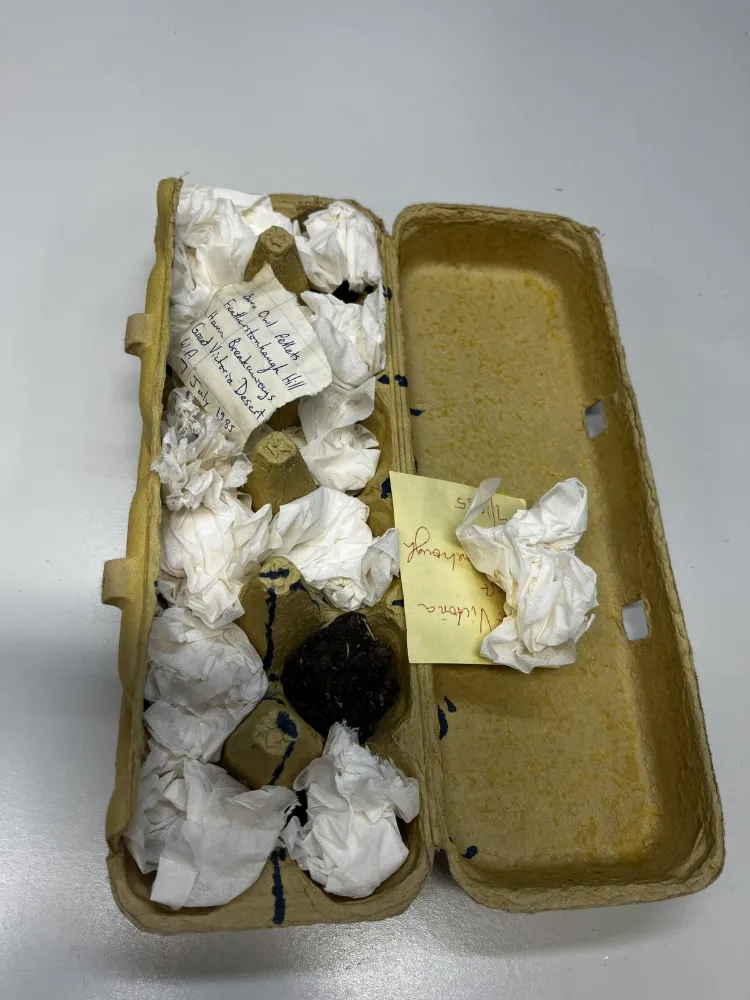
Owl pellets stored in an egg carton at the South Australian Museum.
Related reading · Long-Eared Owl Identification
Sources
- Cornell Lab of Ornithology. What Are Owl Pellets?
- National Audubon Society. Owl Pellets Explained
- The Barn Owl Trust. Barn Owl Pellet Analysis and Dissection
- Mammal Society. Searching for Shrews