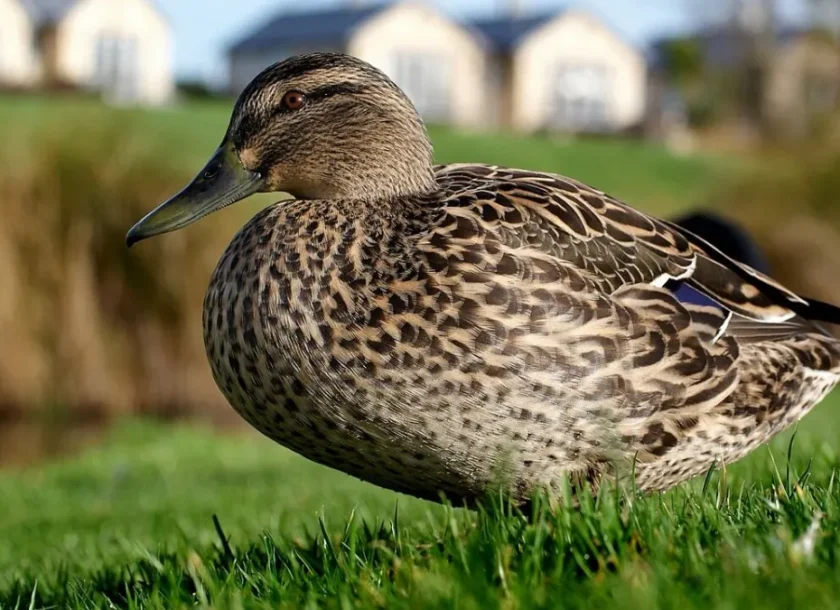
Most ducks do not mate for life. Mallards, the familiar green-headed ducks of park ponds, usually form a pair for one breeding season and choose a mate again the following year. Some ducks do form lifelong bonds, including the Black-bellied Whistling-Duck.
When do mallards pair up?
Mallards often begin pairing in fall or early winter, months before the female lays eggs. A typical pair bond lasts about six to eight months. That’s why you can see a male and female keeping close on a pond in December even though there are no nests nearby.
Watch for head-pumping. A male and female may face each other and bob their heads in rhythm. It’s one of the clearest courtship displays you can spot from the bank. Two ducks simply swimming next to each other tell you less. Watch mallard courtship displays at Cornell Bird Academy.
Why is the mother mallard usually alone with her ducklings?
The female incubates the eggs. The male typically leaves while she is still sitting on the nest. After the eggs hatch, she leads the ducklings to water and stays with them as they forage and grow. That’s why a brood crossing a pond usually has one adult mallard in attendance.
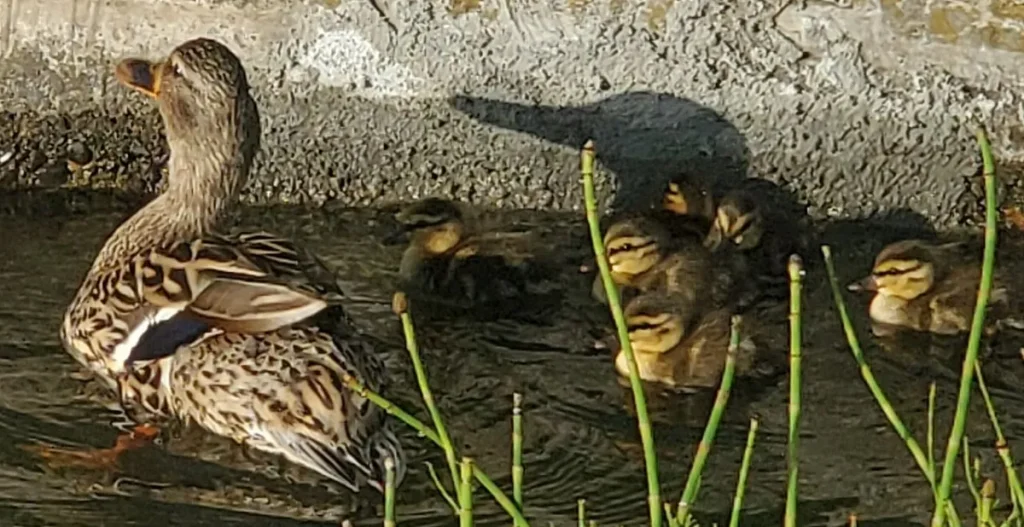
A female mallard swims with her ducklings in a canal in Washington State.
Which ducks do mate for life?
The Black-bellied Whistling-Duck forms lifelong pair bonds. Both adults take turns incubating the eggs, and both tend the ducklings after they hatch. Look for a bright pink bill, long pink legs, and a dark belly to recognize an adult.
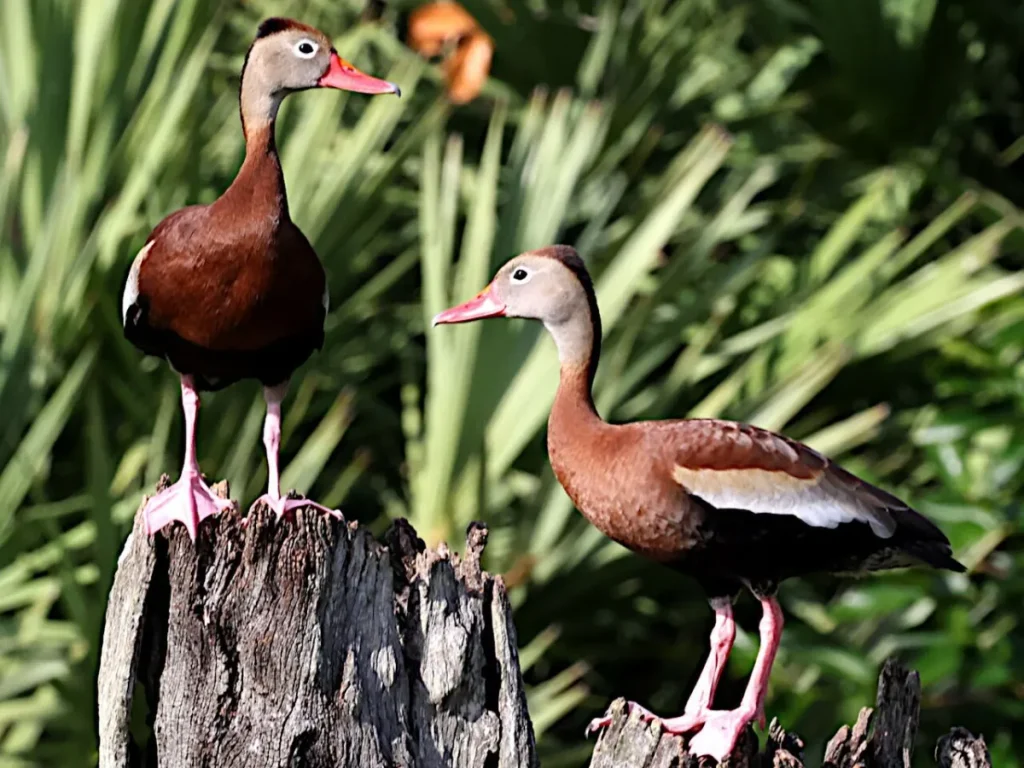
Two Black-bellied Whistling-Ducks at Wakodahatchee Wetlands in Florida.
Many geese and swans also form long-term pair bonds. If you’re wondering whether ducks stay together the way geese often do, the answer depends on the species. A mallard pair usually lasts one breeding season. A Black-bellied Whistling-Duck pair can stay together for life.
Related reading · Where Do Ducks Go in Winter?
Sources
- Ducks Unlimited · Mallard pair formation, nesting, and brood care. Ducks Unlimited
- Cornell Bird Academy · Mallard head-pumping and other duck courtship displays. Bird Academy • The Cornell Lab
- Cornell Lab of Ornithology and Audubon · Whistling-duck pair bonds and parental care. allaboutbirds.org
- U.S. Fish and Wildlife Service · Pair bonds in ducks, geese, and swans.