A hedgehog may spend the winter in a leaf nest under a hedge. A groundhog goes underground, a little brown bat may hang from a cave wall, and an Australian mountain pygmy-possum shelters among rocks beneath the snow. Where each animal goes depends on what kind of shelter it can find and how cold it gets there.
During hibernation, an animal uses less energy. Its metabolism slows, and its heart rate, breathing, and body temperature usually fall. Many small mammals cycle between deep torpor and brief periods when their bodies warm up again. The winter shelter helps them get through those long stretches when food is scarce.
Where do animals hibernate?
| Animal | Where it spends the winter | Region |
|---|---|---|
| European hedgehog | A nest of dry leaves or grass under a hedge, shrub, or other cover | Europe |
| Hazel dormouse | A woven nest at ground level, often under leaves or moss | Europe |
| Groundhog | An underground chamber in a burrow | North America |
| Arctic ground squirrel | A nesting chamber in an underground burrow | Arctic and subarctic North America |
| Little brown bat | A sheltered part of a cave or abandoned mine | North America |
| American black bear | A den in a tree cavity, rock crevice, or other sheltered spot | North America |
| Mountain pygmy-possum | A nest among rocks beneath the snow | Southeastern Australia |
1. European hedgehog

A European hedgehog resting in a nest beneath a shrub.
The European hedgehog (Erinaceus europaeus) builds a winter nest from dry leaves, grass, and other plant material. A hedge base, a dense shrub, or a sheltered space beneath a pile of branches can hold the nest in place and protect it from the weather.
In Britain, hedgehogs generally hibernate during the colder months, with timing influenced by the weather and the individual animal. They can wake and move between nests. A sheltered pile of leaves may be occupied even if you’ve seen no hedgehog activity around it.
2. Hazel dormouse
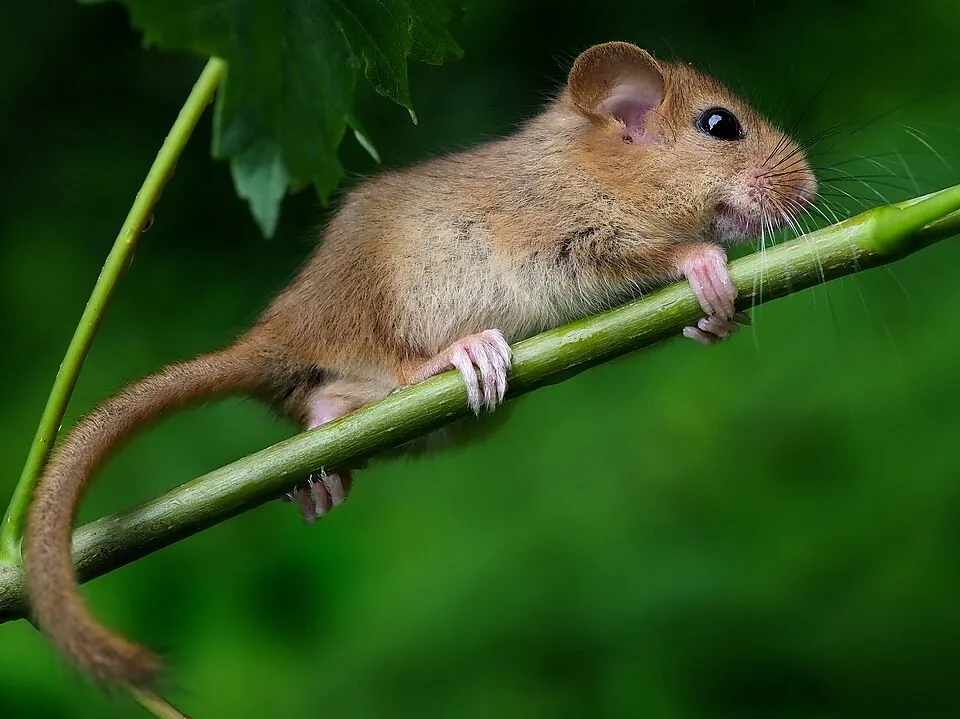
A hazel dormouse on a stem during its active season. Its winter nest is usually at ground level.
The hazel dormouse (Muscardinus avellanarius) spends much of its active season climbing through shrubs and trees. When it’s time to hibernate, it comes down and makes a small woven nest close to the ground.
Researchers have found winter nests under moss, among fallen leaves, and at the bases of thick hedges. That change in height is the easiest way to picture its two seasons. In summer, look to the branches. In winter, its shelter may be right down among the leaves.
3. Groundhog
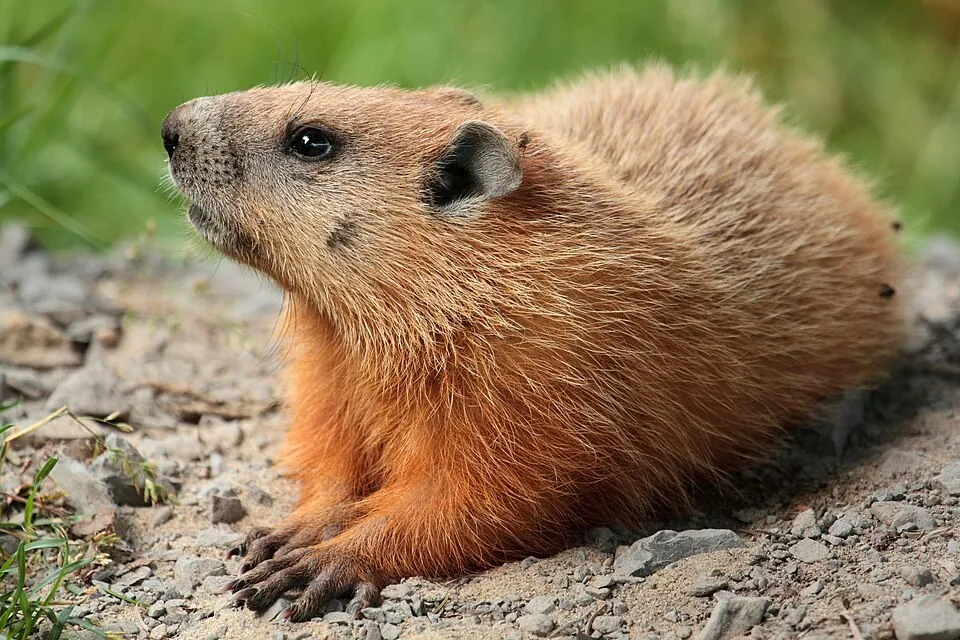
A groundhog, also known as a woodchuck.
The groundhog (Marmota monax) hibernates in an underground chamber. It puts on weight before winter, then lives on stored body fat while its metabolism slows. The burrow shelters it from weather above ground.
Groundhogs can dig and use more than one burrow. An entrance you notice in summer may be part of a different burrow system from the one the animal uses in winter.
4. Arctic ground squirrel
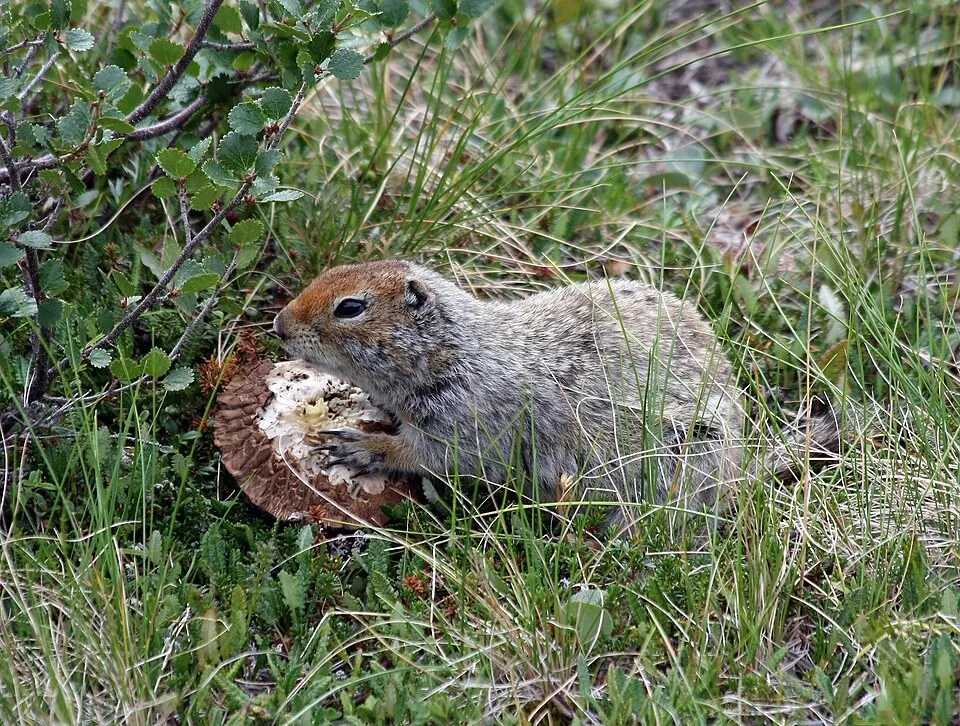
An Arctic ground squirrel feeding above ground during the active season.
The Arctic ground squirrel (Urocitellus parryii) spends much of the cold season in an underground burrow. During deep torpor, its body temperature can drop to around −3°C (27°F) while its body fluids stay unfrozen.
It periodically warms itself again, using energy to bring its body temperature back up before cooling down. When the first squirrels emerge in spring, they may have to dig through snow to reach the surface.
5. Little brown bat
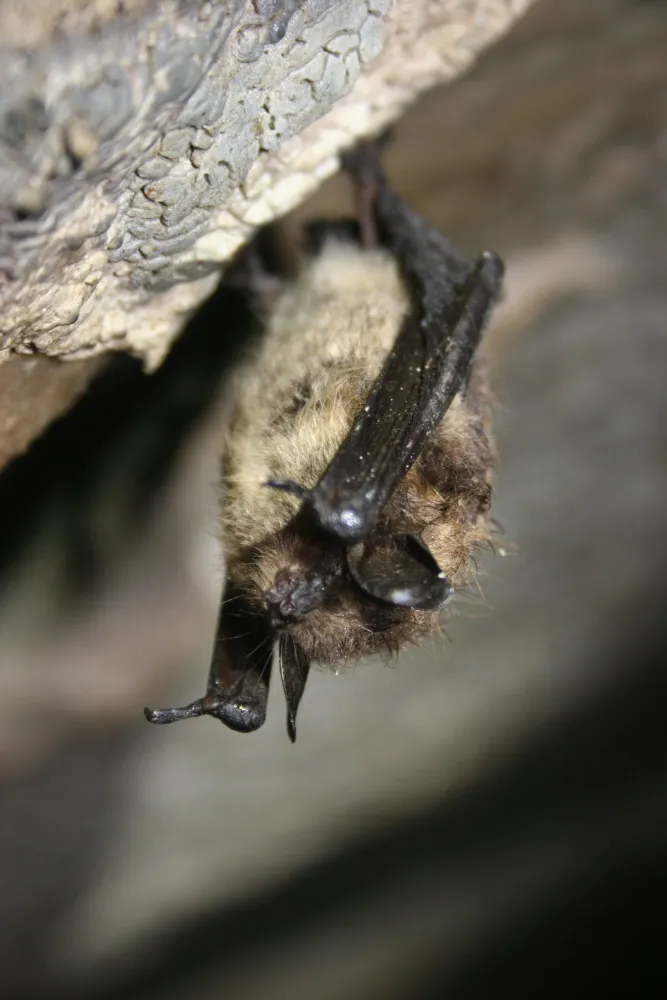
A little brown bat clinging to the wall of Mount Aeolus Cave in Vermont.
The little brown bat (Myotis lucifugus) often spends winter in a cave or abandoned mine. Even within one cave, bats may use only certain sections where the temperature and humidity suit them. Scientists call a winter shelter used for hibernation a hibernaculum.
A bat’s winter fat reserves have to last until insects are available again. Warming up takes energy, so repeated disturbance can make the winter harder for hibernating bats.
6. American black bear
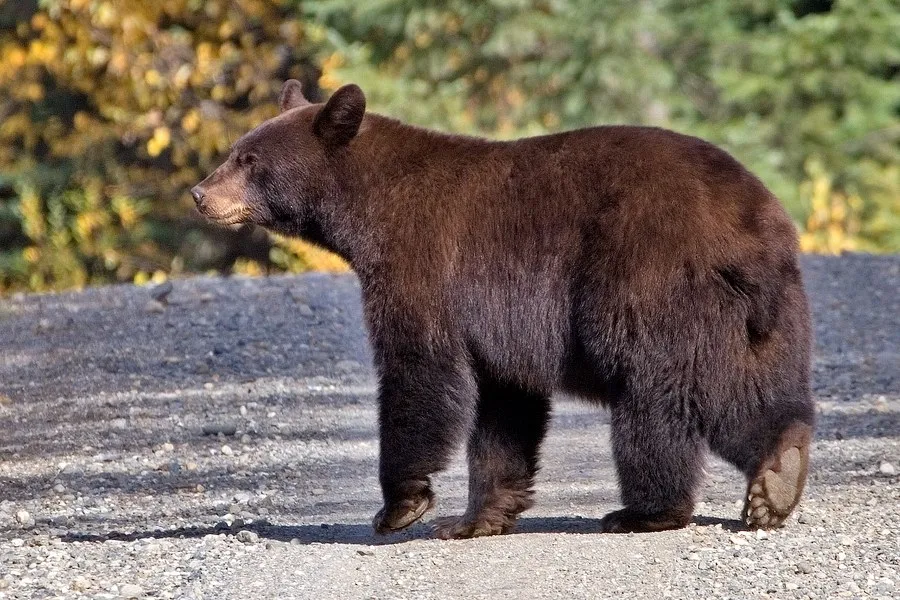
An American black bear above ground before or after the denning season.
The American black bear (Ursus americanus) spends the cold season in a den. Depending on the area, that may be a hollow tree, a rock crevice, or another sheltered space. Some black bears in the Great Smoky Mountains even den inside standing hollow trees above ground.
Black bears show why hibernation can look different from one animal to another. In a study of Alaskan black bears, metabolism dropped to about one-quarter of normal resting levels, even though body temperature fell much less dramatically than it does in an Arctic ground squirrel. Denning patterns also vary with the local climate.
7. Mountain pygmy-possum

A mountain pygmy-possum photographed at the Australian Reptile Park in New South Wales.
The mountain pygmy-possum (Burramys parvus) lives high in the mountains of southeastern Australia. It hibernates among rocks beneath the snow, sometimes for up to seven months.
Snow cover helps insulate the spaces between the rocks, keeping the animal’s shelter from experiencing the same temperature swings as the exposed surface. For this tiny marsupial, a layer of snow is part of what makes the winter shelter work.
Do hibernating animals wake up in winter?
Yes. Many small hibernators alternate between long bouts of torpor and short periods of warming. A hedgehog may also wake and move to a different nest. What you see depends on the animal, the temperature, and the kind of shelter it uses.
If you come across a possible winter nest while gardening or walking, observe it from outside. Leaves, moss, or a dark opening can hide an animal that is difficult to see without disturbing it.
Related guide
Frogs use different winter shelters, from pond bottoms to spaces under leaf litter. Where Do Frogs Go in the Winter?
Sources
- Natural History Museum, London. Where do animals go during the long, cold, dark winter? Natural History Museum
- Woodland Trust and People’s Trust for Endangered Species. When do hedgehogs hibernate? · Hazel dormouse hibernation nests Woodland Trust
- Massachusetts Division of Fisheries and Wildlife and Alaska Department of Fish and Game. Woodchucks · Arctic ground squirrel Mass.gov
- Environment and Climate Change Canada. Little brown myotis recovery strategy Canada.ca
- U.S. National Park Service and Tøien et al., Science. Black bears · Hibernation in black bears Bears (U.S. National Park Service)
- Australian Museum and NSW National Parks. Mountain pygmy-possum · Mountain pygmy-possum conservation project