An antlion larva waits at the bottom of a sand pit. A caddisfly larva anchors a silk net in a stream and lets the current bring food to it. An Australian ballista spider builds a snare that springs when an ant bites one of its threads.
These animals all build something that changes what happens when prey comes close. A pit sends it sliding toward the hunter. A net intercepts it. A spring-loaded web can move before the prey has time to escape.
8 Animals That Build Traps at a Glance
| Animal | What it builds | How the trap works |
|---|---|---|
| Antlion larva | A steep funnel in loose sand | Insects lose their footing and slide toward the bottom. |
| Wormlion larva | A small pit in fine, loose material | Small invertebrates slip down the sides into reach. |
| European garden spider | A circular web with a sticky spiral | Flying insects strike the web and stick to it. |
| Net-casting spider | A small silk net held between its legs | The spider stretches the net over passing prey. |
| Triangle weaver | A triangular web held under tension | The spider releases the tension to tangle an insect. |
| Bolas spider | A short silk line with a sticky droplet | The spider swings the droplet at an approaching moth. |
| Net-spinning caddisfly larva | A fixed underwater silk net | The current carries small organisms into the mesh. |
| Australian ballista spider | A spring-loaded silk snare | A green tree ant’s defensive bite triggers the snare. |
1. Antlion Larva (Family Myrmeleontidae)
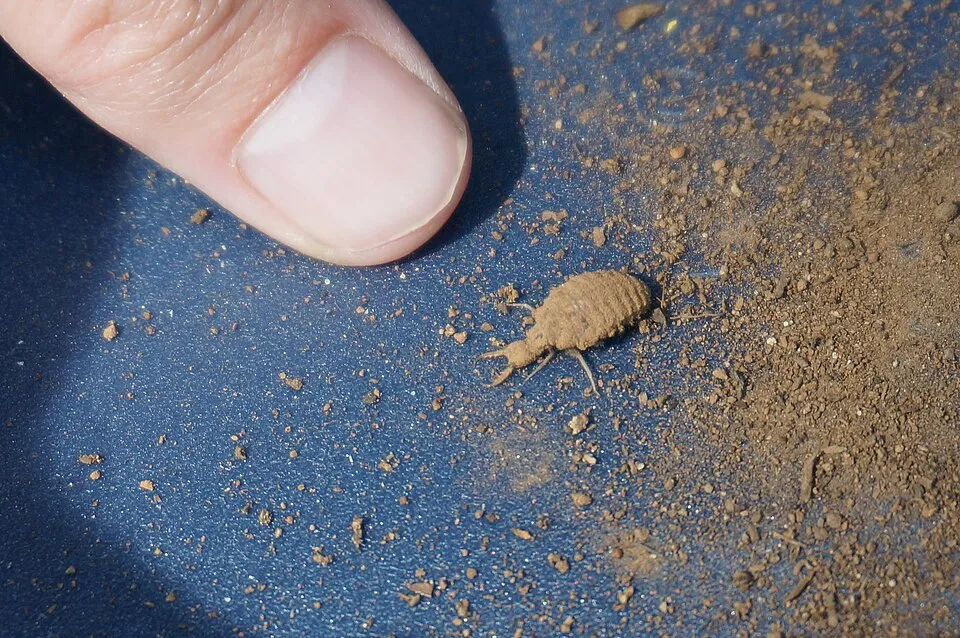
Some antlion larvae dig funnel-shaped pits in loose sand and bury themselves at the bottom, with their jaws ready. When an ant steps onto the steep slope, the grains shift under its feet and it can slide toward the center.
If an insect tries to climb out, the larva can flick sand up the wall. The moving grains can sweep the insect downslope again. The trap depends on the sand giving way beneath the prey.
2. Wormlion Larva (Family Vermileonidae)

A wormlion can build a pit that looks much like an antlion’s. The animal at the bottom belongs to a different group. A wormlion is a fly larva, while an antlion grows into a lacewing relative.
Both use loose material to funnel small prey toward the bottom. That makes a sand funnel a clue to how its builder hunts, while identifying the builder takes a closer look at the larva.
3. European Garden Spider (Araneus diadematus)

The European garden spider builds the familiar wheel-shaped web found between shrubs and across garden paths. The strands that radiate outward support a spiral of sticky silk that intercepts flying insects.
A struggling insect sends vibrations through the threads. The spider can respond by moving toward the source and wrapping the insect in silk. The web catches the prey and signals where it landed.
4. Net-Casting Spider (Family Deinopidae)
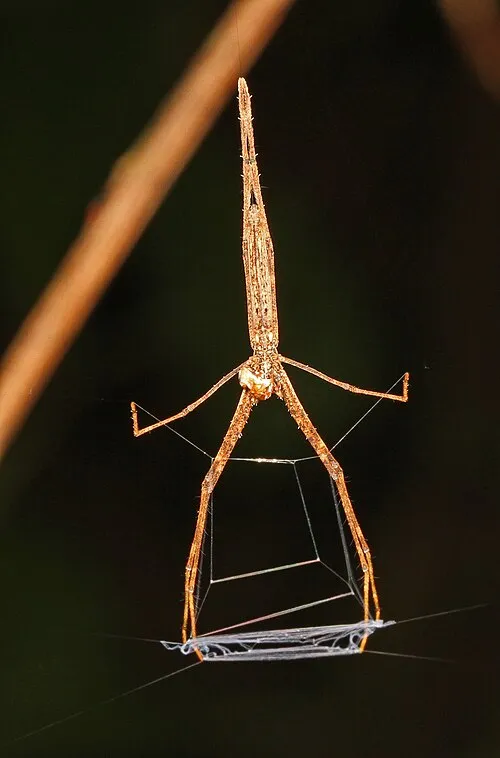
A net-casting spider makes a small silk mesh and holds it open with its front legs. It can hang above a surface where insects are likely to pass, with the net ready beneath it.
When prey comes within reach, the spider stretches the mesh wide and presses it over the insect. The net is small enough to hold and moves with the spider during the strike.
5. Triangle Weaver (Hyptiotes cavatus)

A triangle weaver pulls on an anchor line to tighten its web. The silk stores energy as the spider holds the web under tension. When a fly hits the web, the spider can release the line.
The web jerks forward and strands collapse around the fly. The impact tells the spider when to act, and the stored tension helps the web wrap the prey before it escapes.
6. Bolas Spider (Mastophora hutchinsoni)
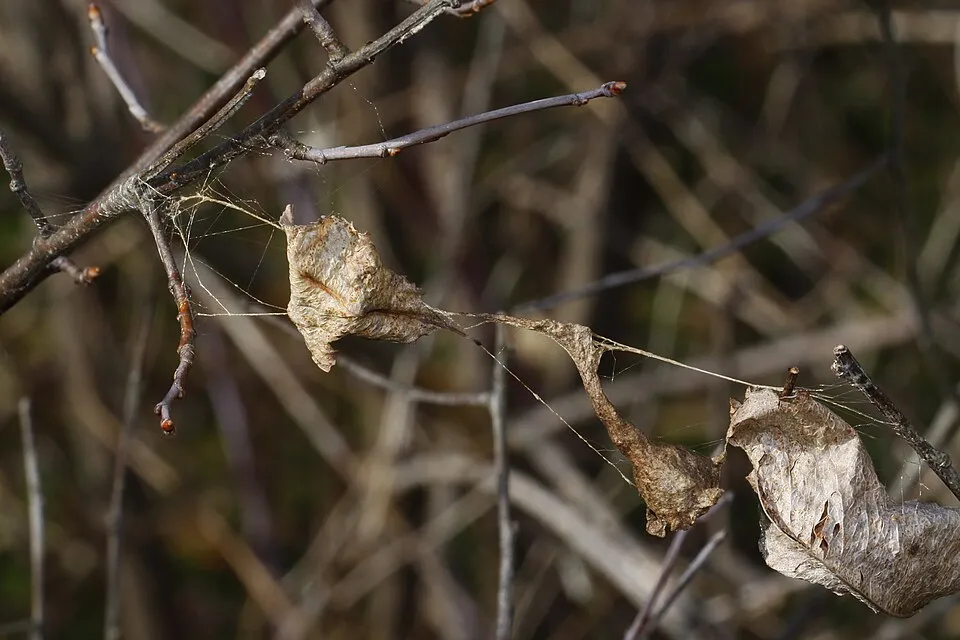
A female bolas spider hunts with a sticky droplet at the end of a short silk thread. She also releases chemicals that mimic the mating signals of certain female moths, drawing males closer.
When a moth comes within range, the spider swings the droplet toward it. A well-placed strike sticks to the moth, and the silk line lets her pull in the catch.
7. Net-Spinning Caddisfly Larva (Family Hydropsychidae)

In a flowing stream, net-spinning caddisfly larvae anchor silk nets to stones or other stable surfaces. Water passes through the mesh while drifting food, including small invertebrates, can get caught.
The current brings food to the trap. Once something catches, the larva can move out from its retreat to collect it, much as a spider crosses its web to reach an insect.
8. Australian Ballista Spider (Propostira sp.)

Researchers documented an Australian ballista spider that builds a spring-loaded silk snare for green tree ants. An ant’s defensive bite can trigger the release, flinging it toward the spider’s web.
The trigger sets this trap apart from the triangle weaver’s. The triangle weaver releases its own anchor line. In the ballista spider’s snare, the ant’s response sets the trap in motion.
Frequently Asked Questions
Is the Mauritian tidal trapdoor spider’s door a hunting trap?
The documented structure is a door that closes the spider’s shelter. The Mauritian tidal trapdoor spider (Idioctis marevallum) occupies holes in coastal rock and seals the entrance with silk, sand, and algae. Its shelter can be submerged at high tide. The published description documents the door and its habitat, while the hunting examples above have a documented role in catching prey.
What animals build traps besides spiders?
Antlion and wormlion larvae dig pits that funnel insects toward the bottom. Net-spinning caddisfly larvae build underwater nets. New Zealand glowworm larvae hang sticky threads and use light to attract flying insects. For more on how they make that light, see 10 Animals That Glow in the Dark.
Sources
- Integrative Zoology, How antlion and wormlion pit traps compare.
- British Arachnological Society and Australian Museum, European garden spiders and net-casting spiders.
- Proceedings of the National Academy of Sciences, How a triangle weaver uses tension to catch prey.
- University of Kentucky, How bolas spiders attract and catch moths.
- U.S. Environmental Protection Agency, Net-spinning caddisfly larvae, Appendix B.
- Current Biology, The Australian ballista spider’s spring-loaded snare.
- Durrell Wildlife Conservation Trust and Arachnology, The Mauritian tidal trapdoor spider and its formal species description.
- Te Ara, How New Zealand glowworms catch food.