A firefly flashes to find a mate. A New Zealand glowworm shines to lure insects into sticky threads. A Hawaiian bobtail squid glows underneath to make its silhouette harder to see from below.
These are all examples of bioluminescence, the production of light through a chemical reaction in a living organism. Some animals produce that light in their own tissues. Others house glowing bacteria in specialized organs and control when or where the light is visible.
10 Animals That Glow in the Dark at a Glance
| Animal | Where the light comes from | What the light does |
|---|---|---|
| Big Dipper Firefly | A lantern near the end of the abdomen | Signals to potential mates |
| New Zealand Glowworm | A light organ near the rear of the larva | Draws flying insects toward sticky threads |
| Firefly Squid | Light organs on the arms, skin, and near the eyes | Produces several distinct patterns of light |
| Hawaiian Bobtail Squid | Glowing bacteria in an organ on the underside | Helps mask its silhouette |
| Vampire Squid | Light organs at the arm tips | Produces a defensive display |
| Black Seadevil | A glowing lure above the female’s mouth | Likely draws prey closer |
| Splitfin Flashlight Fish | Bacteria-filled organs beneath the eyes | Lights up prey in the dark |
| Cookiecutter Shark | Tiny light organs across much of the underside | May help conceal its outline from below |
| Deep-sea Crown Jelly | Flashes that travel around the bell | May disrupt an attack or attract a larger predator |
| Sea Walnut | Light-producing cells along its comb rows | Produces flashes when disturbed |
1. Big Dipper Firefly
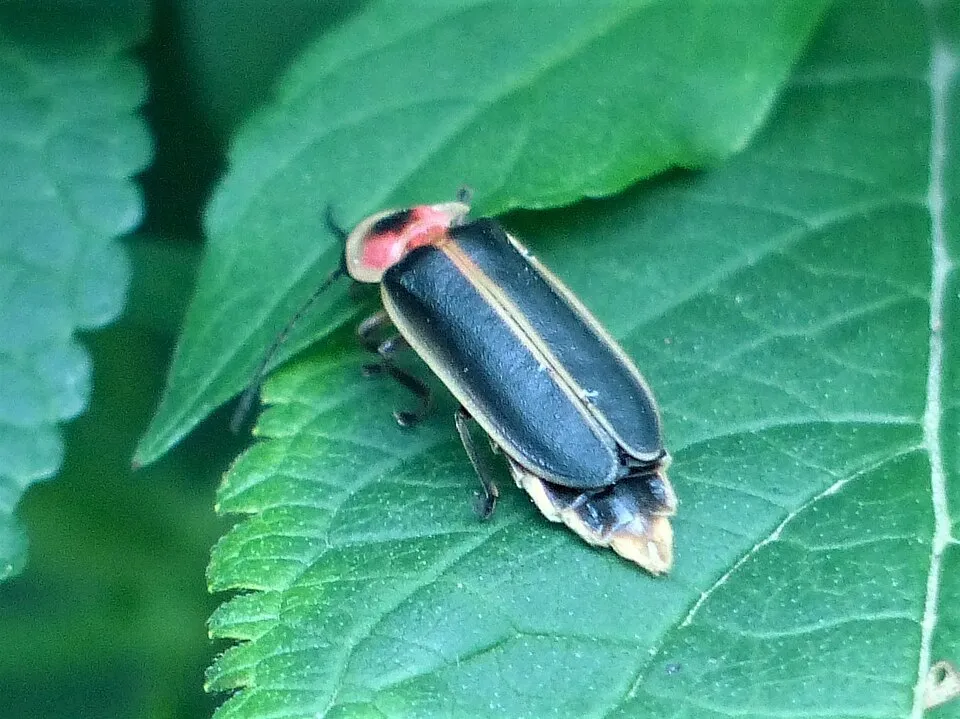
The male big dipper firefly (Photinus pyralis) often flashes as it rises at the end of a short dip. The light traces a small J-shaped path, giving the beetle one of its other names, the J-stroke firefly.
A female perched low in the vegetation can answer with a flash of her own. The timing helps a male pick out a potential mate in an area where other species may be flashing nearby. Watch for the curve of the flash as well as its color.
2. New Zealand Glowworm

The blue-green points on the ceiling of a New Zealand cave can come from the larvae of a fungus gnat (Arachnocampa luminosa). Each larva hangs fine threads dotted with sticky droplets beneath its shelter. A small flying insect drawn toward the light can become tangled in the threads.
The glow marks the upper end of the trap. Once an insect is caught below, the larva can pull up the thread to reach it. The same species also occurs in damp, sheltered places outside caves.
3. Firefly Squid

The firefly squid (Watasenia scintillans) has light-producing organs called photophores. Some of the brightest sit near the tips of one pair of arms. Smaller light organs occur elsewhere on the body, including near the eyes.
The lights differ by location. Researchers have recorded blue light from the arm organs and a slightly greener glow from emitters on the body surface. A close-up of the arm tips shows only one part of the squid’s lighting system.
4. Hawaiian Bobtail Squid

The Hawaiian bobtail squid (Euprymna scolopes) houses glowing bacteria called Vibrio fischeri in a light organ on its underside. At night, an animal looking up from below could otherwise see the squid as a dark shape against the faint light coming through the water.
The squid can adjust the brightness of the bacterial light it lets out. When its underside is closer in brightness to the water above it, the silhouette becomes harder to pick out. This form of camouflage is called counterillumination.
5. Vampire Squid
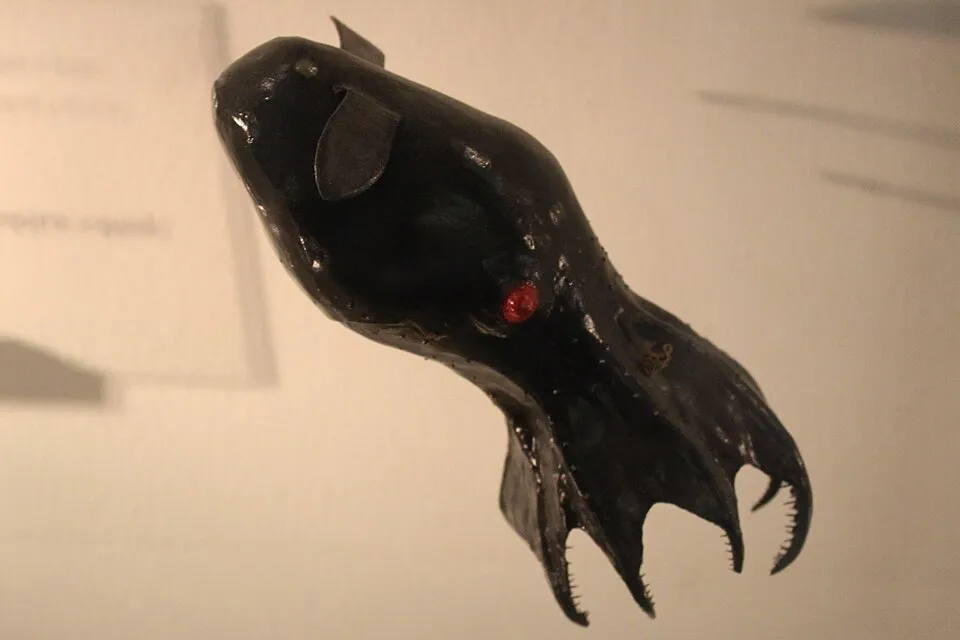
When threatened, the vampire squid (Vampyroteuthis infernalis) can pull its webbed arms over its body and change its outline. If the threat continues, the tips of its eight arms can pulse with blue light.
The lights appear at the ends of moving arms, giving a predator several points to track. The display is part of a sequence that starts with a change in posture and adds light if the danger persists.
6. Black Seadevil

A female black seadevil (Melanocetus johnsonii) carries a light at the end of a stalk that projects above her mouth. Bacteria inside the lure produce the glow. In dark water, that small point can be much more conspicuous than the rest of the fish.
The lure is thought to draw curious prey within reach. Its position is the key detail. An animal investigating the light approaches the area directly in front of the seadevil’s jaws.
7. Splitfin Flashlight Fish

A splitfin flashlight fish (Anomalops katoptron) carries a light organ beneath each eye. Bacteria inside the organs produce the light. The fish can rotate the organs to expose or hide the glow, giving the impression that its lights are blinking on and off.
In feeding experiments, the fish kept the light visible for longer while searching for small prey in the dark. A firefly uses its flash as a signal another animal can see. A flashlight fish can use its light to see another animal.
8. Cookiecutter Shark

Much of the cookiecutter shark’s underside (Isistius brasiliensis) is dotted with tiny photophores. They produce a diffuse glow, while a dark band near the throat emits very little light.
The glow may help the shark blend with faint light from above when viewed from underneath. Scientists have also proposed that the dark band could look like a smaller animal against the luminous underside. That proposed lure effect remains a hypothesis.
9. Deep-sea Crown Jelly
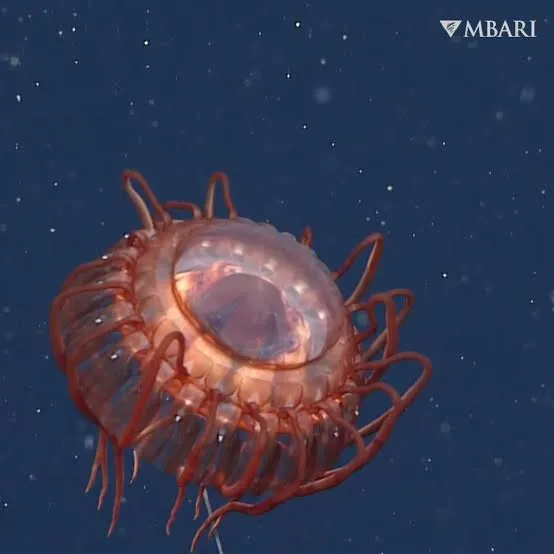
Deep-sea crown jellies in the genus Atolla can send a wave of blue flashes around the edge of the bell when disturbed. From a distance, the light can look like a spinning ring.
One explanation is known as the burglar alarm hypothesis. A bright display could draw a larger predator toward the animal attacking the jelly, giving the jelly a chance to escape. The flashes are documented. Their effect on an attacker can depend on what else is nearby.
10. Sea Walnut
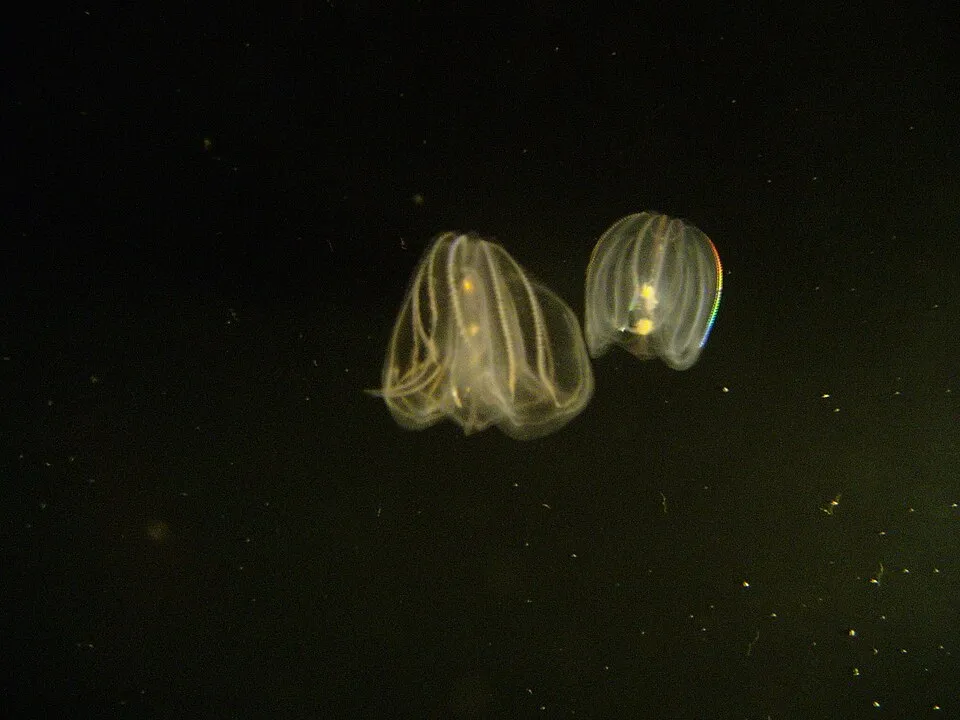
The sea walnut (Mnemiopsis leidyi) is a transparent comb jelly that swims by beating rows of tiny hairs called cilia. Under external light, those rows can shimmer with rainbow colors. The moving cilia scatter the light as the animal swims.
The same animal can also produce its own light. When disturbed in darkness, it can emit blue-green flashes along its comb rows. A brightly lit rainbow photo shows one effect, while a flash recorded in darkness shows the other.
How to Tell Bioluminescence From Other Kinds of Glow
| What you observe | What produces it | Example |
|---|---|---|
| A flash visible in darkness | A chemical reaction in the animal or its bacterial partners | Firefly, glowworm, or flashlight fish |
| A glow that appears under a UV lamp | Fluorescence triggered by incoming light | A scorpion under ultraviolet light |
| Rainbow bands that shift as an animal swims under a light | External light scattered by moving structures | A comb jelly’s beating cilia |
The lighting conditions matter when you look at a photo. A picture of a comb jelly under aquarium lights can show its anatomy beautifully. A picture taken in darkness can show the light the animal actually produces.
Frequently Asked Questions
Do all animals that glow in the dark make their own light?
Some do. A firefly produces light in its own tissues. A Hawaiian bobtail squid or flashlight fish gets its glow from bacteria living inside a specialized organ. The animal can still control how much light is exposed or where it shines.
Do animals glow only in the deep sea?
Bioluminescence occurs on land, in shallow coastal waters, and in the deep ocean. Fireflies flash above vegetation, New Zealand glowworms shine in caves and damp shelters, and the Hawaiian bobtail squid uses bacterial light while active in shallow water at night.
Why would an animal glow to hide?
A predator looking up can see a dark silhouette against faint light coming from above. Light emitted from an animal’s underside can reduce that contrast. The Hawaiian bobtail squid can adjust the brightness of its glow as the light from above changes.
Sources and Further Reading
- NOAA Ocean Exploration — What Is Bioluminescence?
- USA National Phenology Network — Big Dipper Firefly. Te Ara Encyclopedia of New Zealand — New Zealand’s Glowworms.
- Marine Biotechnology — Bioluminescence in the Firefly Squid. Marine Biology — Counterillumination in the Hawaiian Bobtail Squid.
- Monterey Bay Aquarium Research Institute — Vampire Squid, Black Seadevil, and Deep-sea Crown Jelly.
- The ISME Journal — Light-producing Bacteria in Deep-sea Anglerfish.
- PLOS ONE — How Flashlight Fish Use Light to Find Prey. Frontiers in Marine Science — Light Organs of the Cookiecutter Shark.
- Smithsonian Ocean — Jellyfish and Comb Jellies. IUCN MedMIS — Sea Walnut Species Profile.