Wild Mallard ducklings eat many small insects in their first weeks, including midges and their larvae. They pick up food themselves soon after hatching, usually while staying close to their mother. As they grow, they begin to eat more plant foods, including seeds and parts of aquatic plants.
What are a wild duckling’s first foods?
Young Mallards pick up small insects from the water’s surface and find insect larvae and other tiny animals in shallow water. Field observations have also recorded them eating small aquatic snails. The exact mix varies with what they can reach at the pond.
If you’re watching from the bank, look for quick little pecks at the surface or around plants. The food can be small enough that you see the peck without seeing what the duckling swallowed.
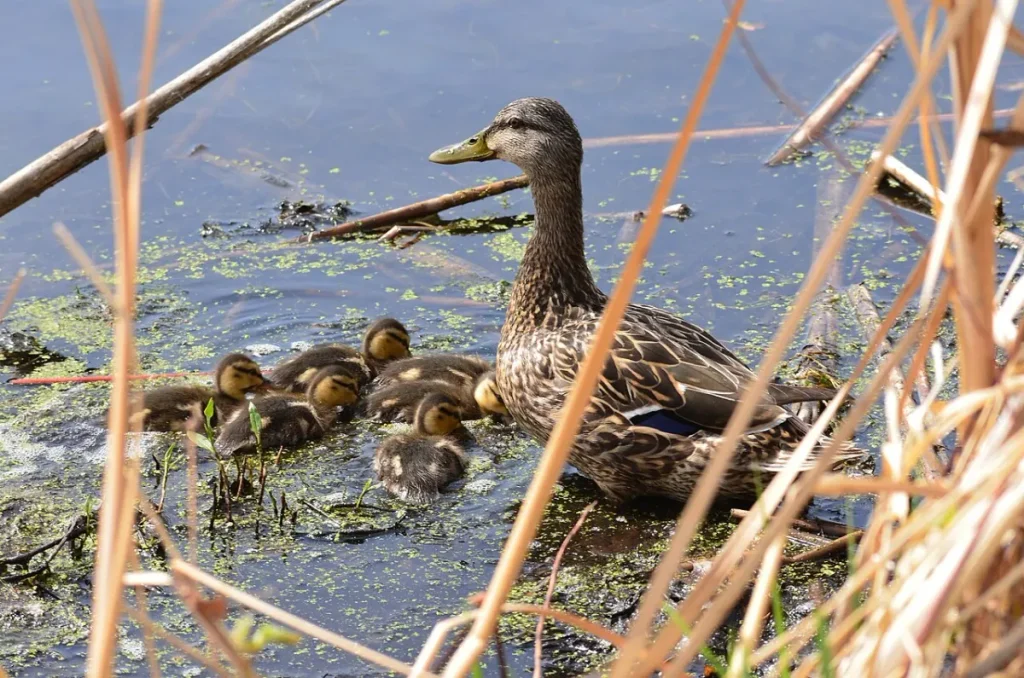
Six Mallard ducklings feed beside their mother in shallow water.
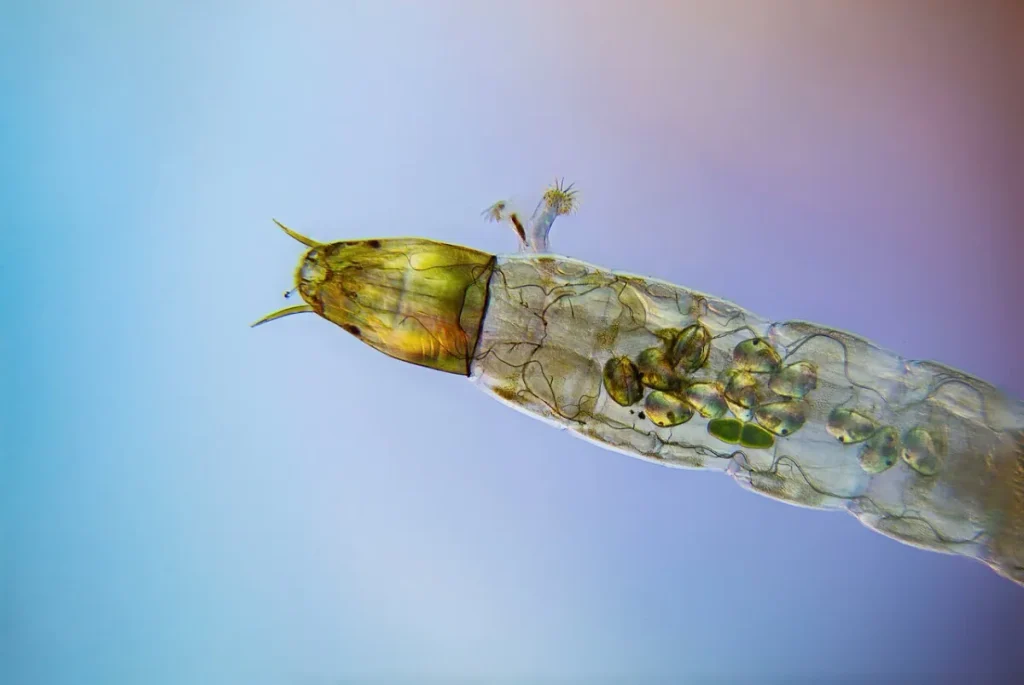
A microscope photograph of a midge larva, one kind of aquatic insect young Mallards can eat.
Does the mother feed her ducklings?
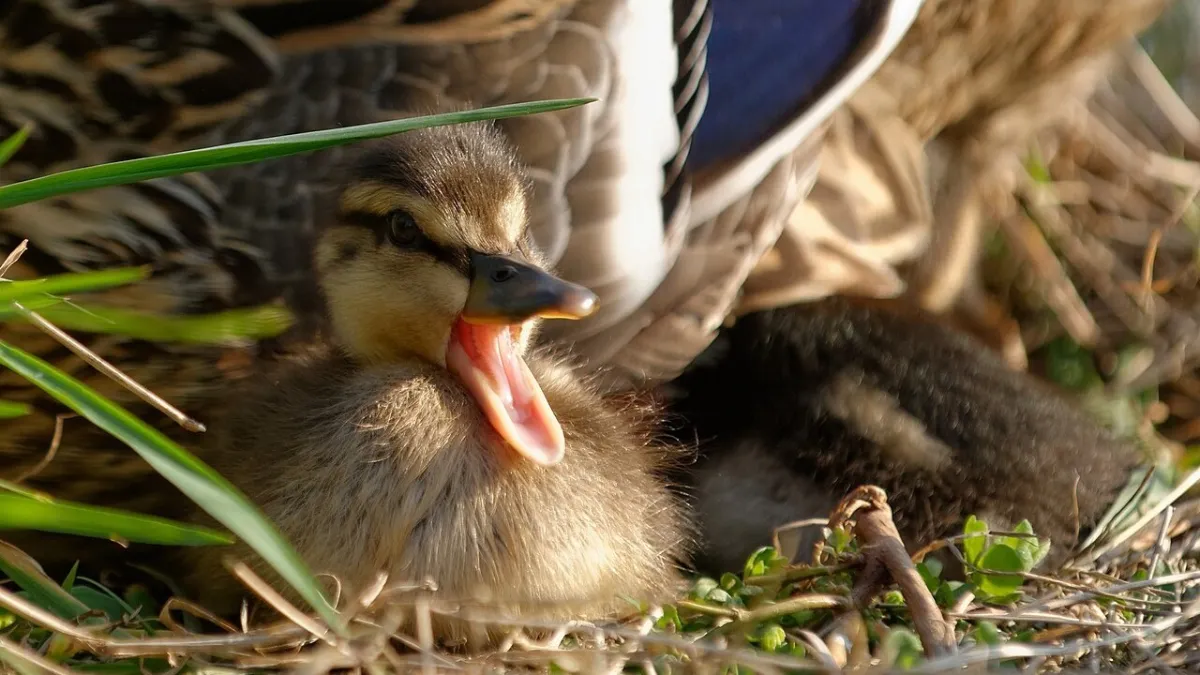
Mallard ducklings can walk, swim, and pick up food soon after hatching. Their mother leads the brood to places to feed and helps keep them warm and safe. A duckling pecking at the water a short distance from its mother is doing something normal.
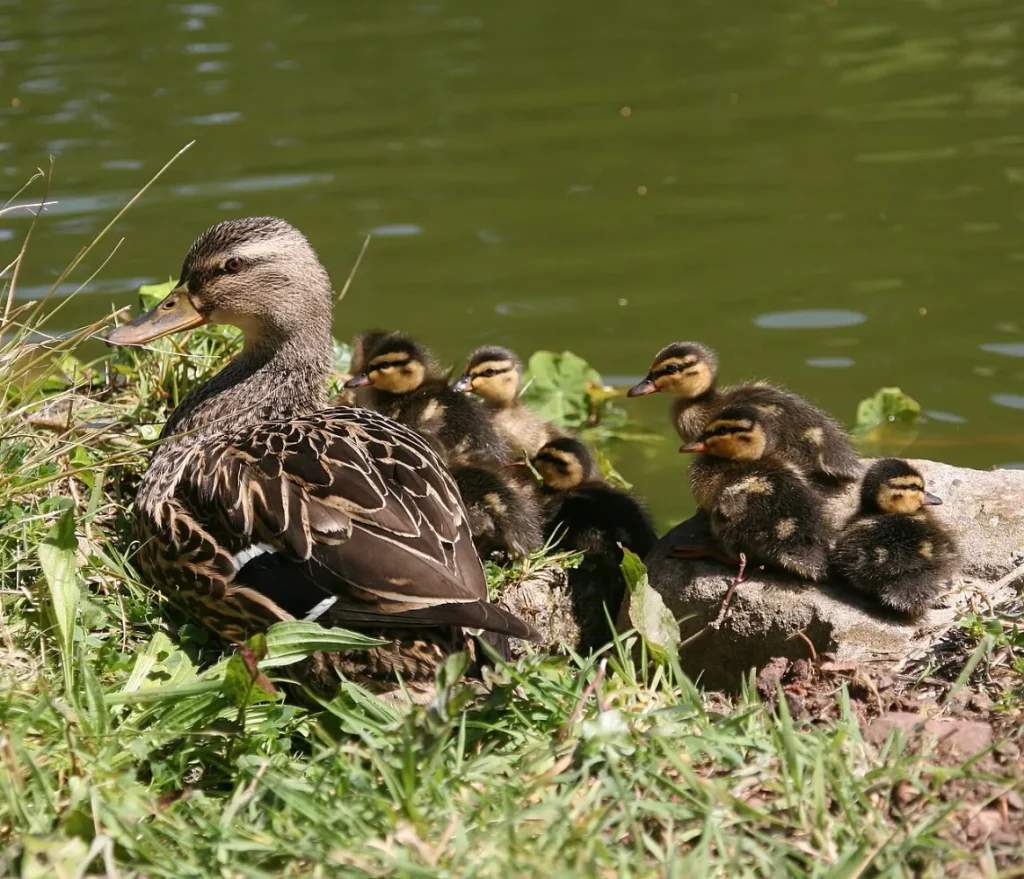
Mallard ducklings rest beside their mother at the water’s edge.
What should you do if you find a duckling alone?
Look for the mother and other ducklings from a distance. What you see can help you decide what to do next.
| What you see | What to do |
|---|---|
| An active duckling with its mother or brood nearby | Give the family space and watch from a distance. |
| A duckling remains alone and you can’t find the mother | Contact a local wildlife rehabilitator for advice. |
| A duckling is visibly injured, can’t stand, or has been caught by a cat | Contact a wildlife rehabilitator right away, even if a cat bite left no visible mark. |
If a duckling may need rescue, ask the rehabilitator what to do about food and water while you wait. Never force water into its bill.
Sources
- National Audubon Society. Mallard Field Guide. Audubon Field Guide
- Street, M. (1978). The Role of Insects in the Diet of Mallard Ducklings. Wildfowl, 29, 93–100. wildfowl.wwt.org.uk
- Sheehan, P. J., et al. (1987). The Impact of Pesticides on the Ecology of Prairie Nesting Ducks. Canadian Wildlife Service, Technical Report Series No. 19. publications.gc.ca
- Toronto Wildlife Centre. I Found a Baby Goose or Duck. Toronto Wildlife Centre
- RSPCA. Found a Baby Duck, Goose or Swan?