The Great Gray Owl, also spelled Great Grey Owl, gives a low, hollow series of hoots. Its breeding song can continue for several seconds before a long pause. Young Great Gray Owls make a very different sound when they beg for food, a harsh, nasal cry that can carry through the woods.
What does a Great Gray Owl’s hoot sound like?
Listen for a string of soft, deep notes that gradually fade. The recording below captures one series of hoots. In North America, the breeding song often lasts about six to eight seconds. Both sexes give this song, and the male’s voice is generally lower.
A Great Gray Owl gives a low series of hoots in Sweden.
Adults also make a softer double hoot in situations such as territorial encounters or food delivery. If you hear only two notes, listen for the next call before trying to identify the bird.
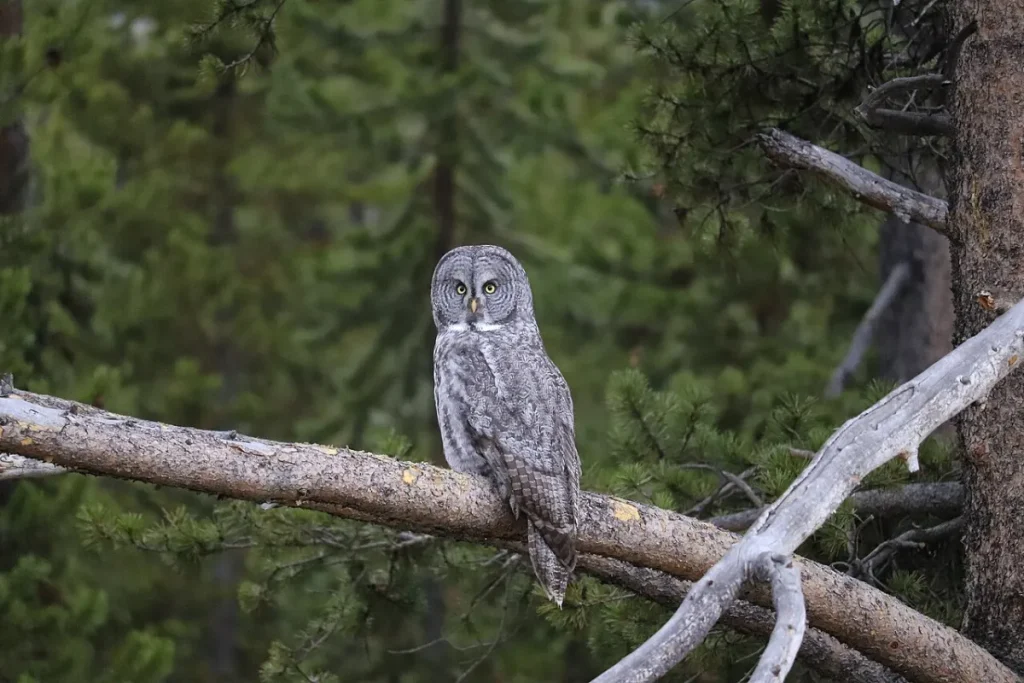
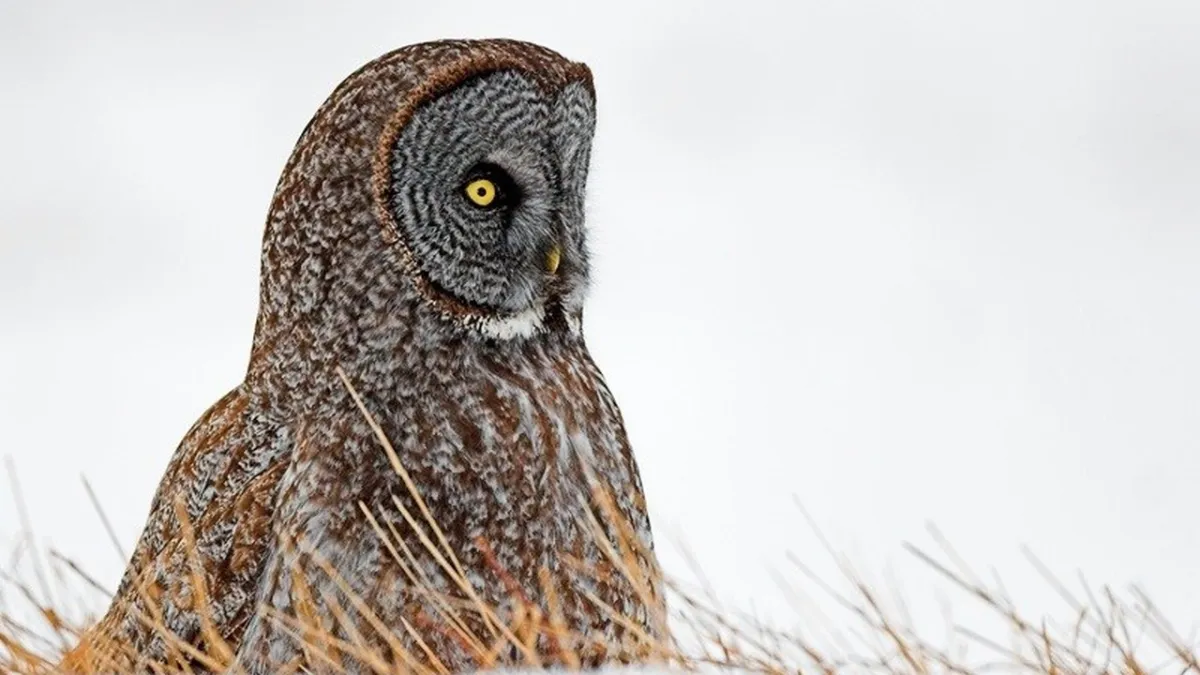
A Great Gray Owl watches from a branch in Yellowstone National Park.
Great Gray Owl vs. Great Horned Owl sounds
Both species have low voices. Listen to how the notes are grouped. The Great Gray Owl’s song often sounds like a sustained run of similar hoots. A Great Horned Owl usually gives a shorter phrase with a more uneven rhythm. In the recording below, listen for the closely spaced notes near the beginning of each phrase.
A Great Horned Owl repeats its grouped hoots in Anderson Township, Ohio.
Hear more examples in Great Horned Owl Sounds.
What do young Great Gray Owls sound like?
Young Great Gray Owls beg with a repeated, raspy cry that can rise into a sharper note. They can keep calling for food after they’ve left the nest. Young Great Horned Owls can also make harsh begging calls, so use the location and any adult calls you hear as additional clues.
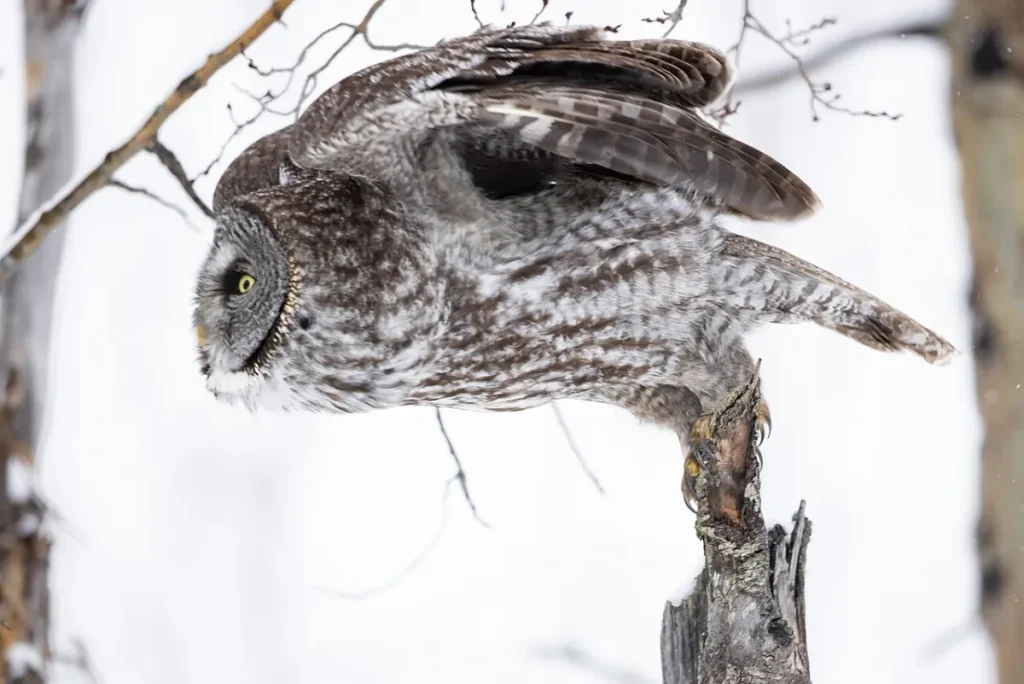
A Great Gray Owl takes off in Kenai National Wildlife Refuge, Alaska.
For a field recording, look for the tracks labeled Juvenile calls in the Cornell Lab’s Great Gray Owl sound library.
Sources
- Cornell Lab of Ornithology. Great Gray Owl Sounds. allaboutbirds.org
- California Department of Fish and Wildlife. Survey Protocol for the Great Gray Owl. nrm.dfg.ca.gov
- Cornell Lab of Ornithology. Great Horned Owl Sounds.