A barn owl has a pale, heart-shaped face. A barred owl has a rounder face and brown markings that run across its upper chest and down its belly. Both have dark eyes, so start with the outline of the face. If all you have is a sound, listen for a harsh scream from the American barn owl or a rhythmic series of hoots from the barred owl. allaboutbirds.org
1. Look at the shape of the face
An American barn owl’s pale facial feathers form a heart, with a point below the beak and a dip above it. The barred owl’s facial disc is rounder and gray-brown. In a dim photo, trace the outline around the eyes and beak. The shape can still be visible when the colors are hard to see. allaboutbirds.org

An American barn owl with a pale, heart-shaped face and dark eyes.
2. Check which way the chest markings run
A barred owl has two patterns on its underside. The upper chest has horizontal brown bars, and the belly has vertical brown streaks. An American barn owl’s underside is usually pale, with small dark spots that vary in number and visibility. If the head is turned away, the chest and belly can still help you identify the bird. allaboutbirds.org
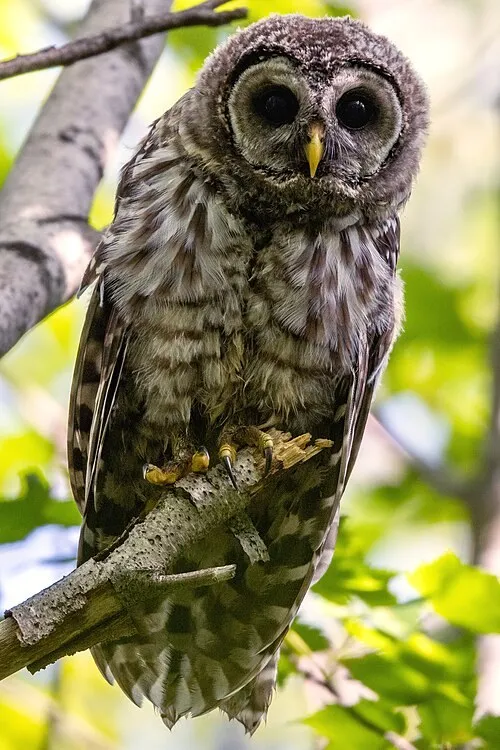
A barred owl in Acadia National Park, Maine. Horizontal bars cross the upper chest, and vertical streaks run down the belly.
3. Use size and flight shape as supporting clues
American barn owls measure about 12.6–15.8 inches (32–40 cm) from head to tail. Barred owls are larger at about 16.9–19.7 inches (43–50 cm) and look stockier when perched. In flight, an American barn owl has long, rounded wings and a short tail. Its pale underside can stand out as it flies past in low light. allaboutbirds.org

An American barn owl in flight over Carrizo Plain National Monument in California.
4. Notice where you saw the owl
American barn owls often hunt over open ground, including pastures, marshes, and farmland. Barred owls are commonly found in mature woodland, often near streams or swamps. A marsh edged by woodland can offer habitat for both, so use the face, plumage, or call to confirm your identification. Audubon Field Guide
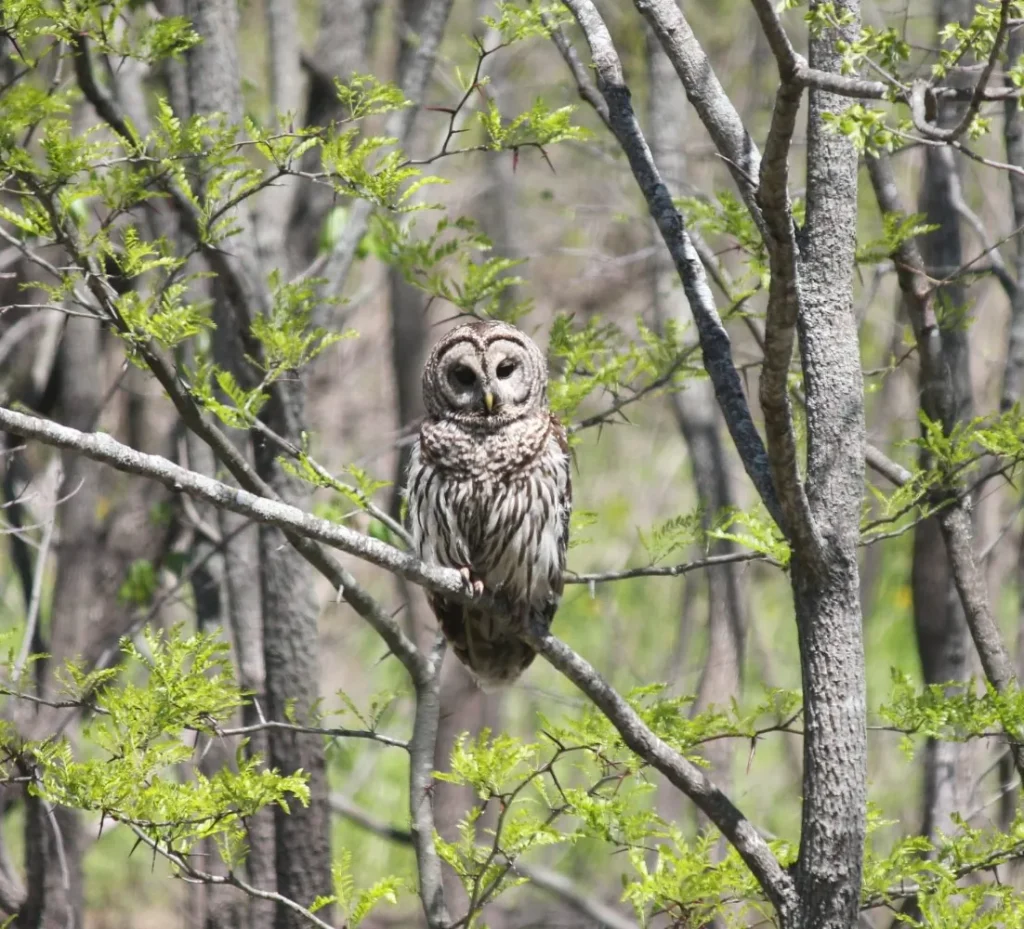
A barred owl perched among trees at a national wildlife refuge in Missouri.
5. Listen for a scream or a series of hoots
The American barn owl’s familiar call is a harsh, drawn-out scream that lasts around two seconds. The barred owl has a rhythmic hoot often remembered as “Who cooks for you? Who cooks for you-all?” Hear the difference in Cornell’s recordings. allaboutbirds.org
Related reading · Long-Eared Owl Identification
Sources
- Cornell Lab of Ornithology. American Barn Owl Identification
- Cornell Lab of Ornithology. Barred Owl Identification
- Cornell Lab of Ornithology. Barred Owl Life History
- National Audubon Society. American Barn Owl Field Guide