
If you’re trying to identify a wild duck, start with the shape of its bill, the markings on its head, and how it feeds. A broad, spoon-shaped bill points to a Northern Shoveler. A small duck that repeatedly disappears underwater could be a Bufflehead. And a glossy green head can belong to several species, so check the bill before calling it a Mallard.
These seven ducks occur in North America. Which ones you see will depend on your location and the season.
7 wild ducks at a glance
| If you notice… | Look more closely at… |
|---|---|
| A broad bill and a mottled brown body | Mallard if the bill is orange and dark, Northern Shoveler if it flares into a spoon |
| A white mark trailing behind the eye | Wood Duck, especially a female along a wooded shore |
| A short, pale bill and a rounded head | American Wigeon |
| A peaked head and a pale band near the bill tip | Ring-necked Duck |
| A small diver with a rounded head and a white head patch | Bufflehead |
| A slender bill and a crest that changes shape | Hooded Merganser |
1. Mallard
A breeding male has a glossy green head, a yellow bill, and a thin white neck ring. A female is mottled brown, usually with orange and dark markings on the bill. Both sexes have a blue wing patch bordered by white, often easiest to see when the bird stretches a wing or takes flight.
Look for: A broad bill that stays fairly even in width. A bill that flares noticeably toward the tip points to a shoveler.

A female Mallard swims behind a green-headed male.
2. Wood Duck
A male Wood Duck has a swept-back crest, a red eye, and thin white lines across the face and neck. A female has a gray-brown head with a white eye-ring that widens behind the eye. That teardrop shape is one of the quickest ways to pick her out among brown ducks.
Look for: The eye marking and a short crest. Scan shaded pond edges and wooded waterways as well as open water.
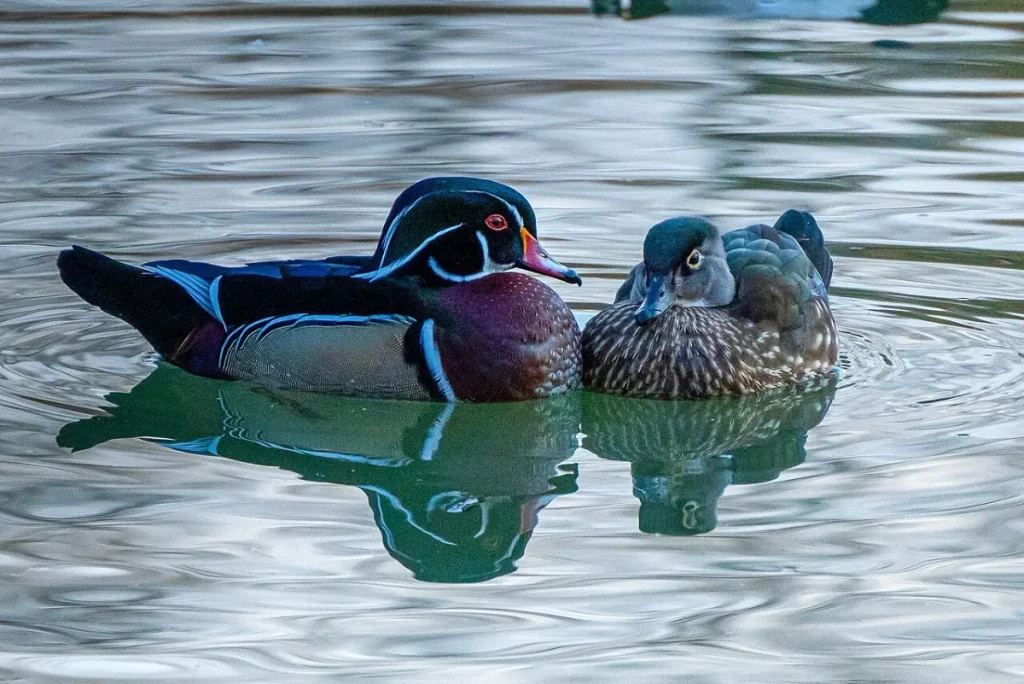
A male Wood Duck on the left and a female on the right. Notice the pale marking around the female’s eye.
3. Northern Shoveler
The oversized bill is the giveaway. It widens toward the tip on both males and females. A breeding male has a green head, white chest, and rusty sides. A female can look much like a brown Mallard until you see the bill in profile.
Look for: A duck sweeping its wide bill from side to side at the surface as it strains small food particles from the water.
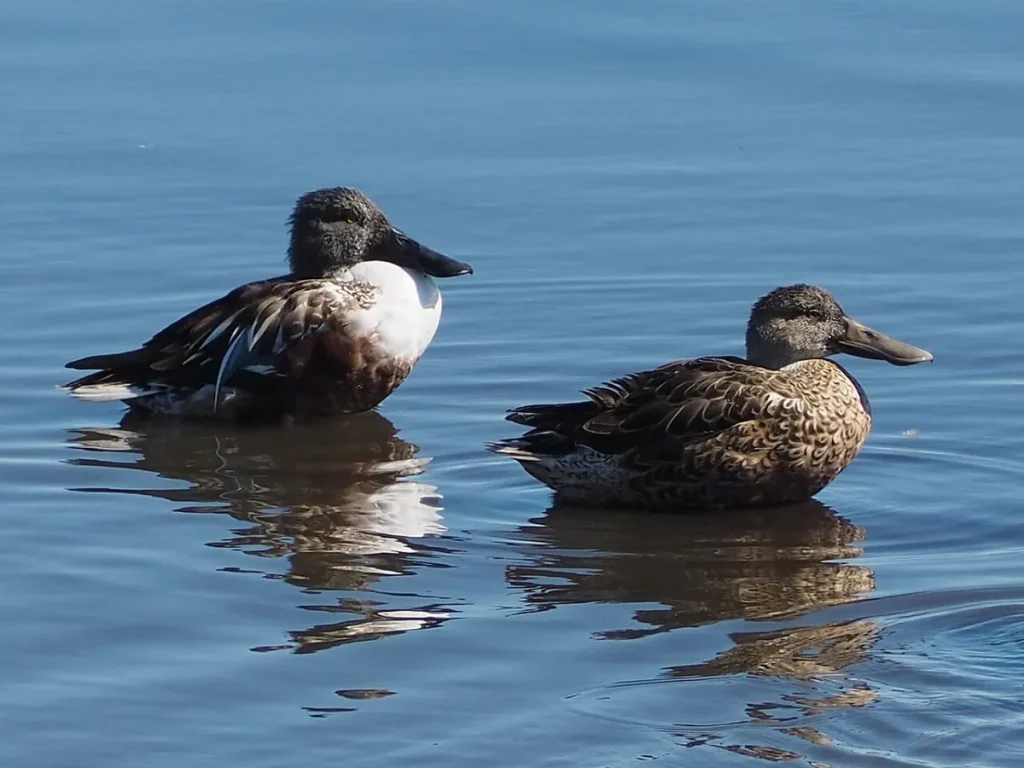
Two Northern Shovelers on the water. Their broad bills remain useful for identification when plumage colors are muted.
4. American Wigeon
An American Wigeon has a compact head and a short, pale bill. A breeding male usually shows a pale crown and a green stripe behind the eye. A female has a warm brown body and a grayer head, often with a darker shadow around the eye.
Look for: The short bill and rounded head. Wigeons also graze on grass, so check the ground around the pond.
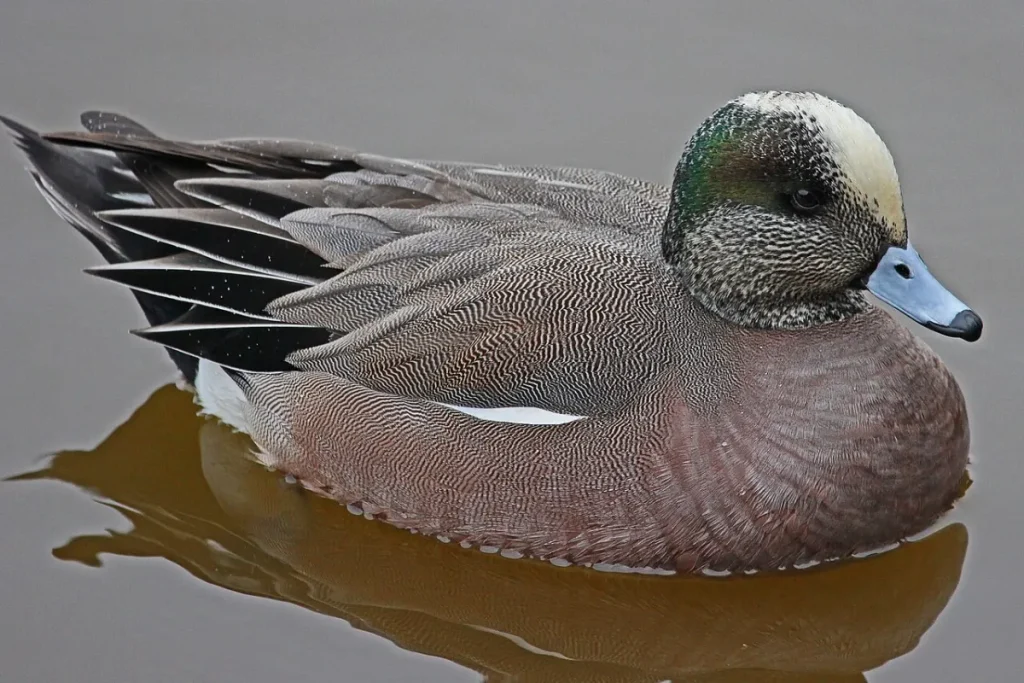
A male American Wigeon with a pale crown and short, pale bill.
5. Ring-necked Duck
Start with the bill. A pale band near its black tip is usually easier to see than the subtle ring around the neck. A breeding male also has a peaked head, gray sides, and a white wedge in front of the flanks. A female is browner, with a pale eye-ring and a peaked head.
Look for: The bill band when the bird surfaces and turns sideways after a dive.
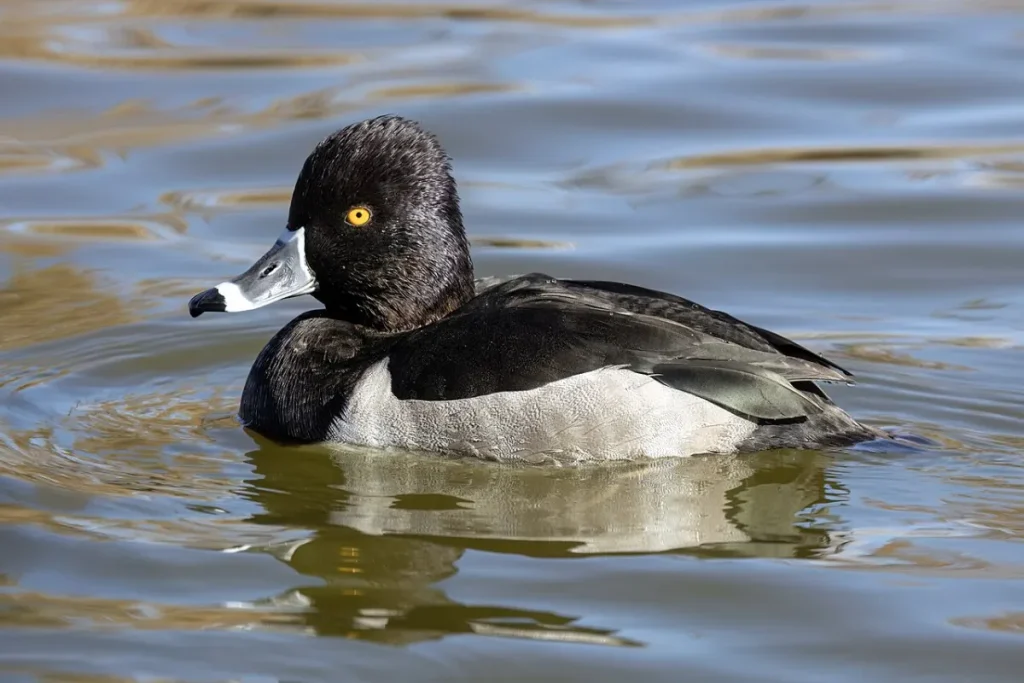
A male Ring-necked Duck showing the pale bill band and the white wedge near the front of its flank.
6. Bufflehead
Buffleheads are small diving ducks with short bills and rounded heads. An adult male has a large white patch across the back of the head. A female is gray-brown with a much smaller white patch on the cheek.
Look for: A compact bird that repeatedly slips beneath the surface. If the bill looks long and thin and the head has a fan-shaped crest, check for a Hooded Merganser.
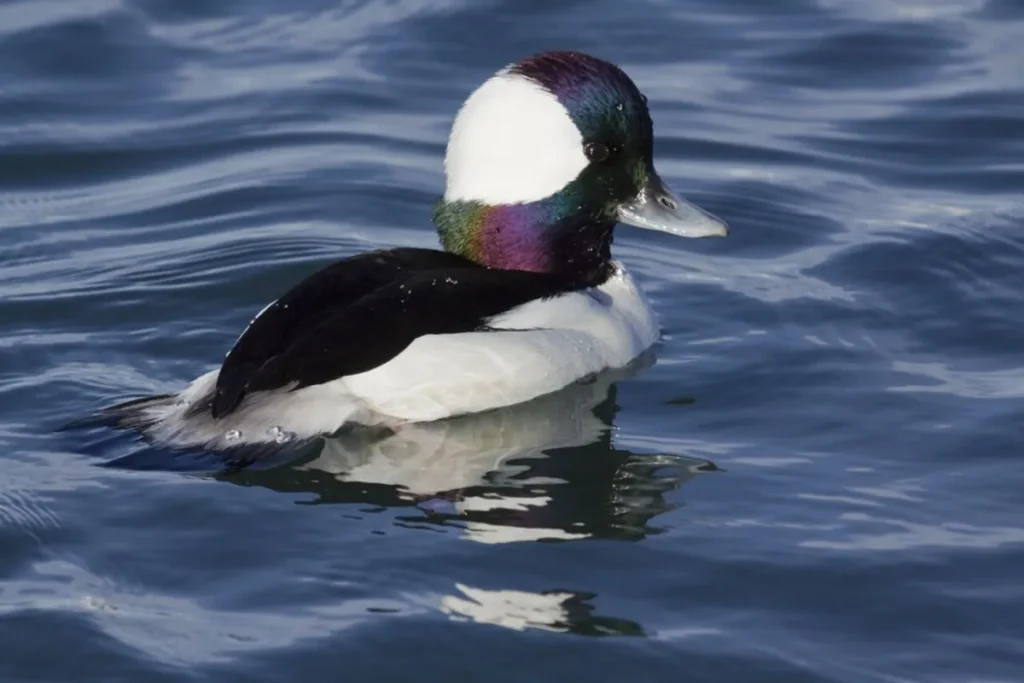
A male Bufflehead with a large white patch across the back of its head.
7. Hooded Merganser
A male can raise his crest into a rounded fan with a broad white center. When he lowers it, the same patch looks narrower. A female has a warm brown crest. Both have a slim bill that stands out from the broader bills of many pond ducks.
Look for: The thin bill first, then the crest. This also helps separate a female Hooded Merganser from a female Bufflehead.
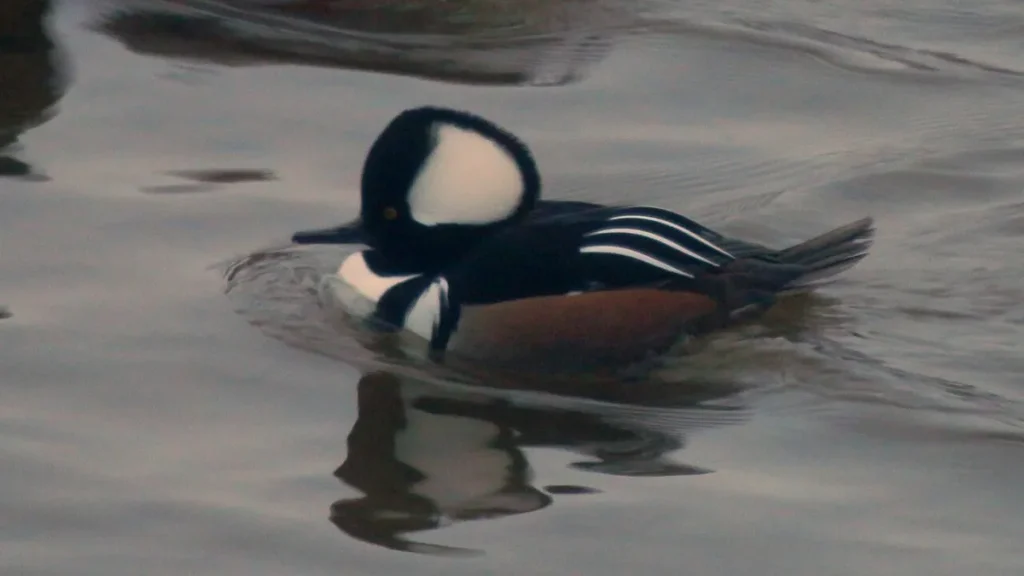
A male Hooded Merganser swimming with its white crest raised.
Dabbling or diving? Watch the next feeding move
Mallards, Wood Ducks, shovelers, and wigeons usually feed at or near the surface. They may dip their heads or tip forward with their tails in the air. Ring-necked Ducks, Buffleheads, and Hooded Mergansers often go completely underwater to feed. If the bird is too far away for you to see its bill clearly, watch where it surfaces and try for a side-on photo.
Related reading · Where Do Ducks Go in Winter?
Sources
- Cornell Lab of Ornithology · Mallard identification and Wood Duck identification. allaboutbirds.org
- Cornell Lab of Ornithology · Northern Shoveler identification and American Wigeon identification. allaboutbirds.org
- Cornell Lab of Ornithology · Ring-necked Duck identification, Bufflehead identification, and Hooded Merganser identification.


