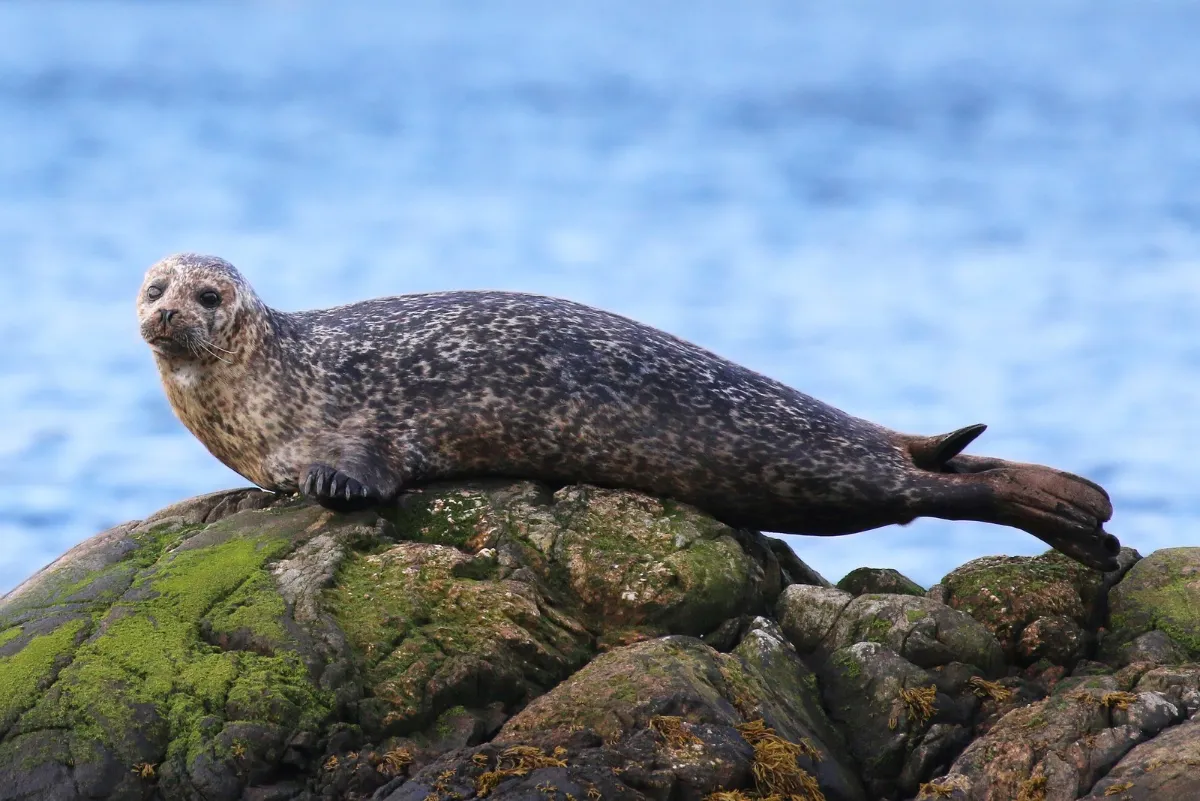
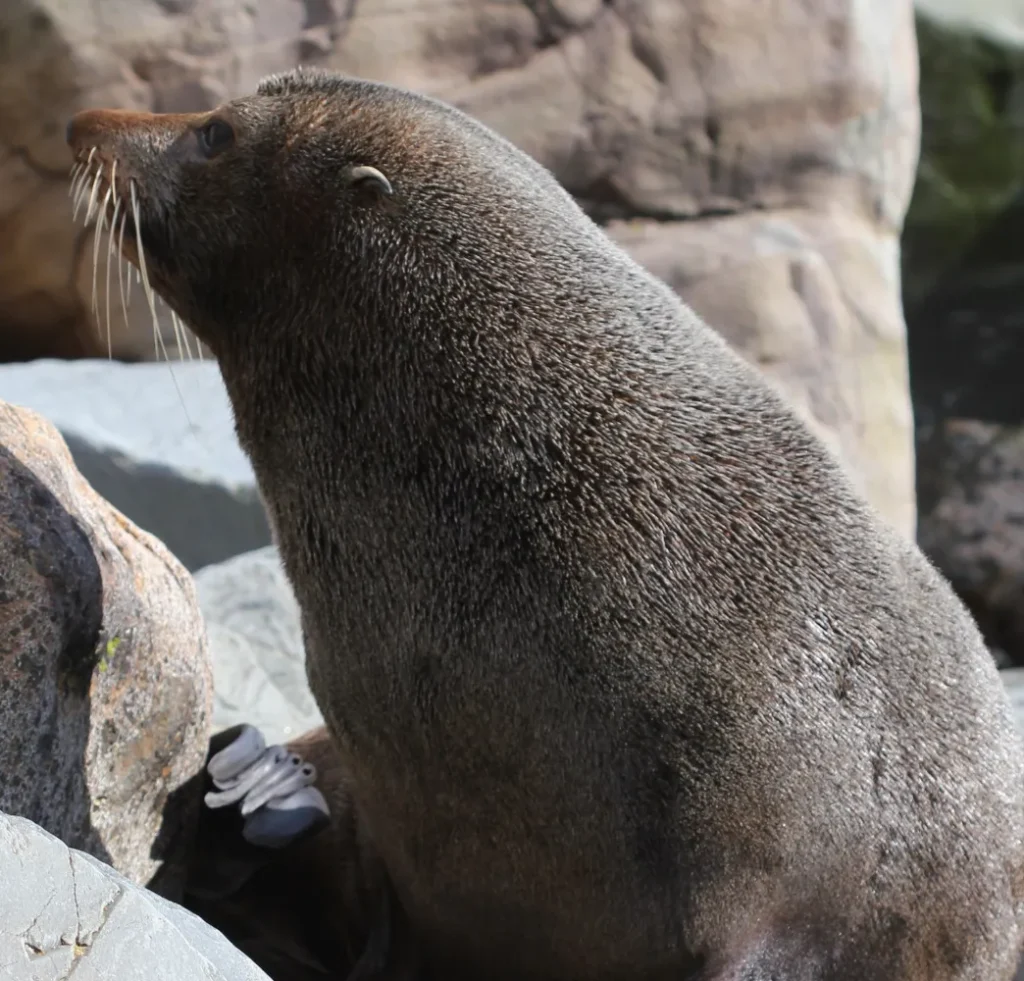
The quickest way to tell a true seal from a sea lion in a clear photo is to look just behind the eye. A true seal has a small ear opening that sits flush with its head. A sea lion has a short flap that sticks out. Fur seals also have ear flaps, so a visible flap narrows the identification to a sea lion or a fur seal.

If the head is out of focus, look for a photo or video of the animal moving on land. Sea lions and fur seals can bring their hind flippers forward under their bodies. True seals usually move with their bellies close to the ground and their hind flippers trailing behind.
| What you can see | What it tells you |
|---|---|
| A small ear opening flush with the head | Look for a true seal, such as a harbor seal. |
| A small flap sticking out behind the eye | Look for a sea lion or a fur seal. |
| Hind flippers turning forward under the body as the animal moves | This supports sea lion or fur seal. |
| The head is blurred and the animal is lying still | Look for another angle or keep the identification open. |
1. Zoom In Just Behind the Eye
In the harbor seal photo, look for the small dark opening behind the eye. The skin around it follows the side of the head. In the California sea lion photo, look in roughly the same place. You can see a small flap projecting from the head, like a short tab.
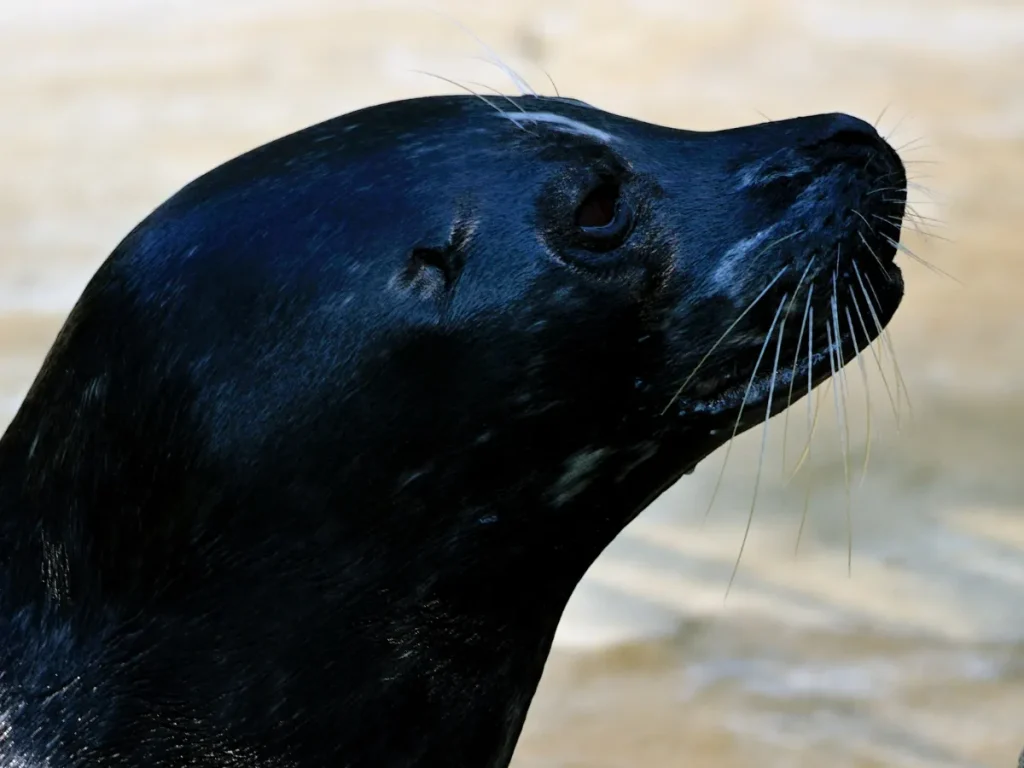

A side view is best. Wet fur, shadow, or a head turned away can hide a sea lion’s ear flap. If that part of the head is blurry, try the flippers next.
2. If the Ears Are Hidden, Watch the Hind Flippers
When a sea lion gets up and moves, it can rotate its rear flippers forward and use them to support its body. Fur seals can do this too. A true seal’s rear flippers point backward, so it moves along the ground in a series of body ripples, sometimes with help from the front flippers.
A resting sea lion can lie flat, too. If all you have is a photo of an animal stretched out on a rock, use a clear view of the head or wait for it to move. Watch from a distance and use binoculars or your camera zoom to see the details.
3. If It Has Ear Flaps, Could It Be a Fur Seal?
Yes. The New Zealand fur seal in the photo below has a small external ear flap. Notice its pointed muzzle and long whiskers. In New Zealand, those features help distinguish it from the local sea lion, which usually has a broader, blunter muzzle and shorter whiskers. Location helps you decide which species to compare, especially if you’re looking at a young animal and size is hard to judge.
What If I Only Saw It in the Water?
A brief glimpse of a head at the surface may give you too little to go on. If you have a clear side view, check behind the eye. Otherwise, wait for a wider view, a haul-out onto shore, or another angle. Brown or gray fur alone won’t settle the identification.
Read our photo guide to animals you can find in Pacific Coast tide pools.


