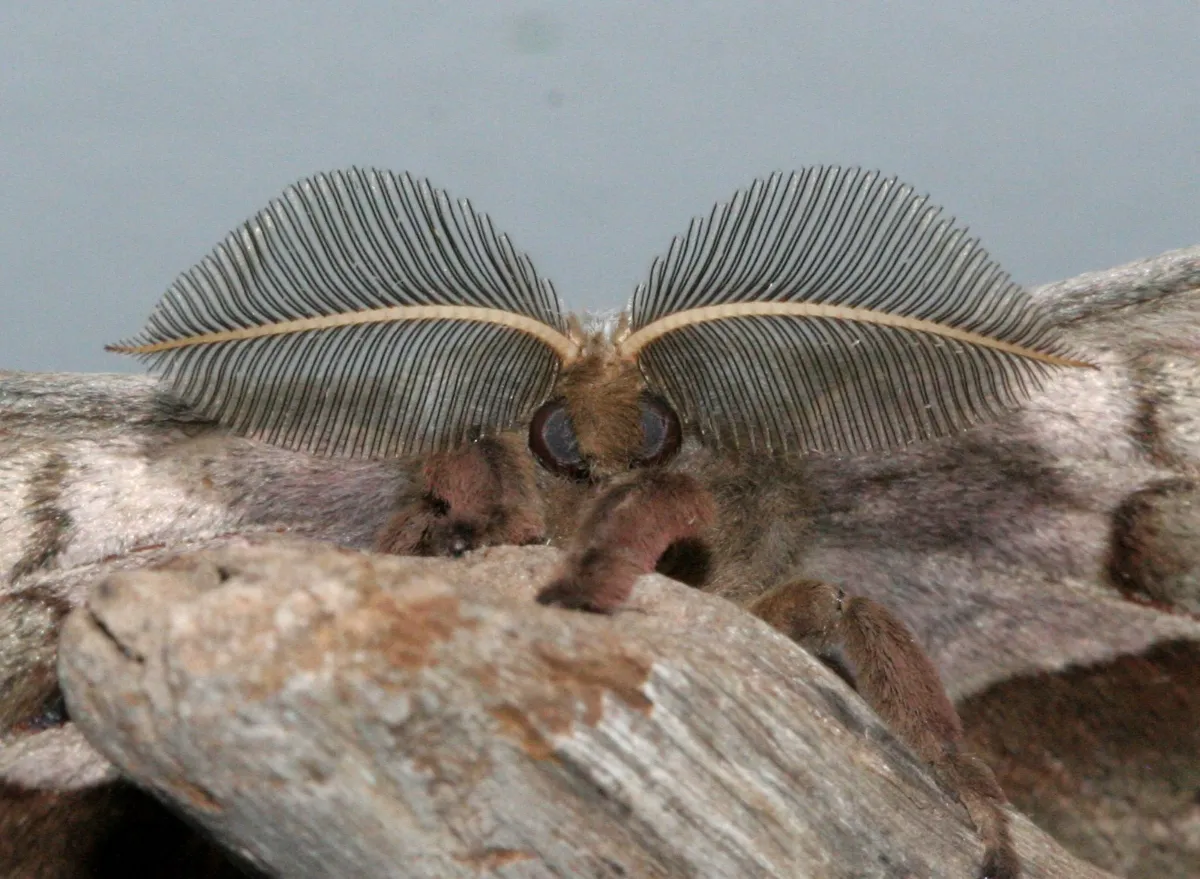
If you’re trying to tell a moth from a butterfly in a photo, zoom in on the tips of its antennae. Most butterflies have thin antennae that end in a small, thickened club. Many moths have plain, threadlike antennae, and some have broad, featherlike ones.
A feathery antenna is a strong clue that you’re looking at a moth. A clubbed tip usually points to a butterfly, though some day-flying moths have thickened tips too. The photos below show what those differences look like up close.
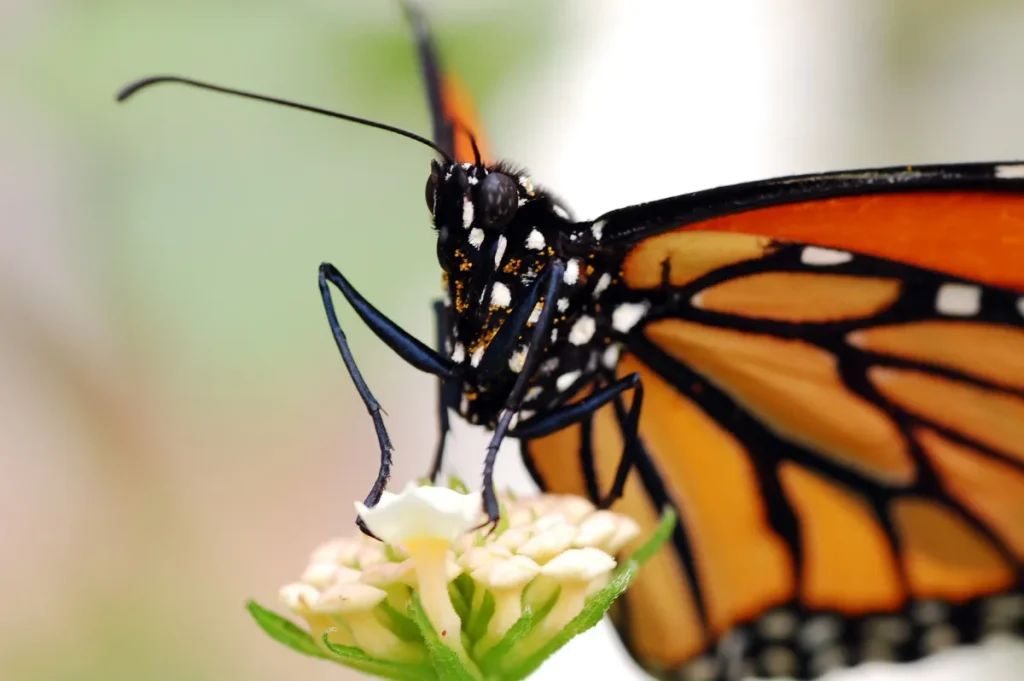
Monarch butterfly. Follow the thin antenna to the rounded club at its tip.
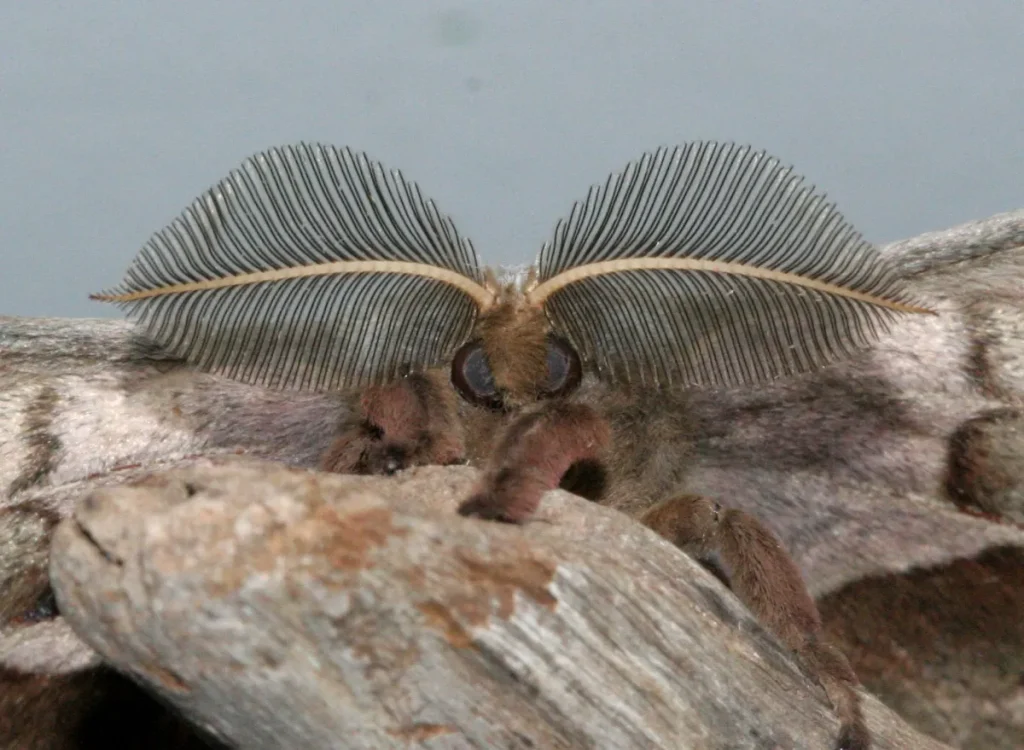
Male Polyphemus moth. Each antenna has two rows of fine branches, giving it a featherlike outline.
What to look for in your photo
| What you can see | What it suggests |
|---|---|
| A thin antenna with a small, rounded club at the end | Usually a butterfly. Some moths also have thickened tips. |
| A thickened tip that bends into a small hook | A clue to a skipper, a type of butterfly. |
| Fine branches along both sides of the antenna | A strong clue that it’s a moth. |
| A plain, threadlike antenna with a visible tip and no club | Usually a moth. |
| A blurry tip, or one cut off by the edge of the photo | Look for another angle before making a call. |
Check that the line you’re following starts near the top or front of the head. A butterfly feeding on a flower may also have a long, tube-like proboscis extending down into the flower. In a side view, that feeding tube can look like an extra antenna.
Two insects that are easy to mix up
A moth that flies during the day
The six-spot burnet (Zygaena filipendulae) is a day-flying moth. You can see it visiting flowers in daylight, and its antenna tips are noticeably thicker than the rest of the antenna. Both features can make it look like a butterfly at first glance.
Look at the wings as well. On a clear specimen, you can see six red spots on each dark forewing. That pattern gives you another clue when the antenna shape alone leaves you unsure.
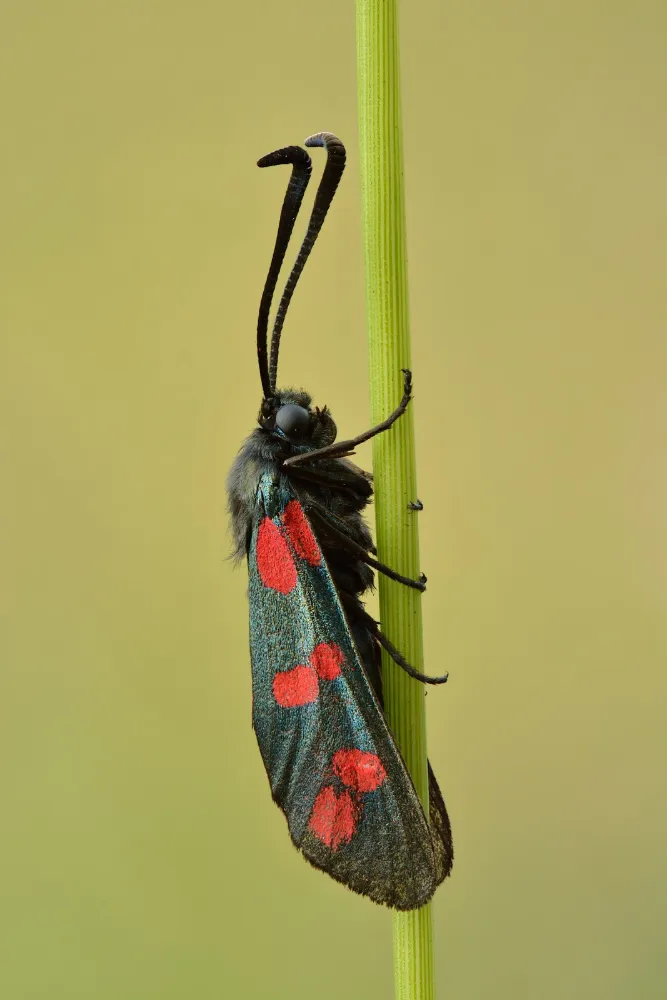
A six-spot burnet moth with thickened antenna tips and red spots on its dark forewing.
A butterfly that looks like a moth
The large skipper (Ochlodes sylvanus) has a stocky, furry-looking body and relatively short wings. Zoom in on the antenna pointing toward the upper left of the photo. The end thickens and then bends into a small hook. Many skippers have hooked antenna tips, which can help you recognize them even when their body shape seems mothlike.

A large skipper butterfly. The tip of the upper antenna bends into a small hook.
Can you tell from the wings alone?
Wing position gives you a supporting clue. A butterfly may rest with its wings closed upright over its back. Many moths rest with their wings spread or folded over the body. Both groups have exceptions, and the same insect may hold its wings differently while basking, feeding, or resting.
Color is even less dependable. The six-spot burnet shows how boldly marked a moth can be, while many butterflies have brown or muted wings. If your photo shows only the wings, their markings and your location may be more useful for identifying the species than the angle of the wings.
Take two photos if you see it again
- Photograph the head from the side. Keep the full length of the antennae in frame. You want the tips sharp enough to see a club, a hook, or fine branches.
- Photograph the whole insect. A second view showing the wing shape and markings will help you compare it with a regional field guide. Save the date and location with the photos.
If all you have is one blurry picture, start with the features you can actually see. A photo can sometimes narrow the possibilities to a few insects, even when the antenna tips are too soft to settle the identification.
Related guide
Follow a black, fuzzy caterpillar from its red bands to the adult giant leopard moth. Black Fuzzy Caterpillar With Red Bands
Sources
- Australian Museum. What are the differences between butterflies and moths? The Australian Museum
- The Wildlife Trusts. Six-spot burnet moth The Wildlife Trusts
- Butterfly Conservation. Life cycles of small and large skippers


