A mangrove jellyfish can look like a flower growing on the bottom of a lagoon. The branching parts you see are its oral arms, which help it feed. Its round bell sits underneath them, usually against the sand or mud. This position gives the tiny algae living inside the jellyfish more exposure to sunlight. Monterey Bay Aquarium
1. The Best Clue Is the Bell Beneath the Branching Arms
The pale, branching oral arms of an upside-down jellyfish.
Look at the base of the branching cluster. An upside-down jelly has a broad, saucer-shaped bell with a rounded edge. The oral arms rise from the center and divide into smaller branches. If you watch for a moment, you may see the edge of the bell contract and relax. Upside-Down Jelly
“Upside-down jellyfish” is used for several species in the genus Cassiopea. The mangrove jellyfish often featured in Florida and Caribbean guides is Cassiopea xamachana. Researchers have found both C. xamachana and C. andromeda in the Florida Keys, sometimes at the same sites. The resting posture is a good clue for recognizing the group, while a photo alone may leave the exact species uncertain. Lamar University
2. It Rests on the Bottom and Keeps Pulsing
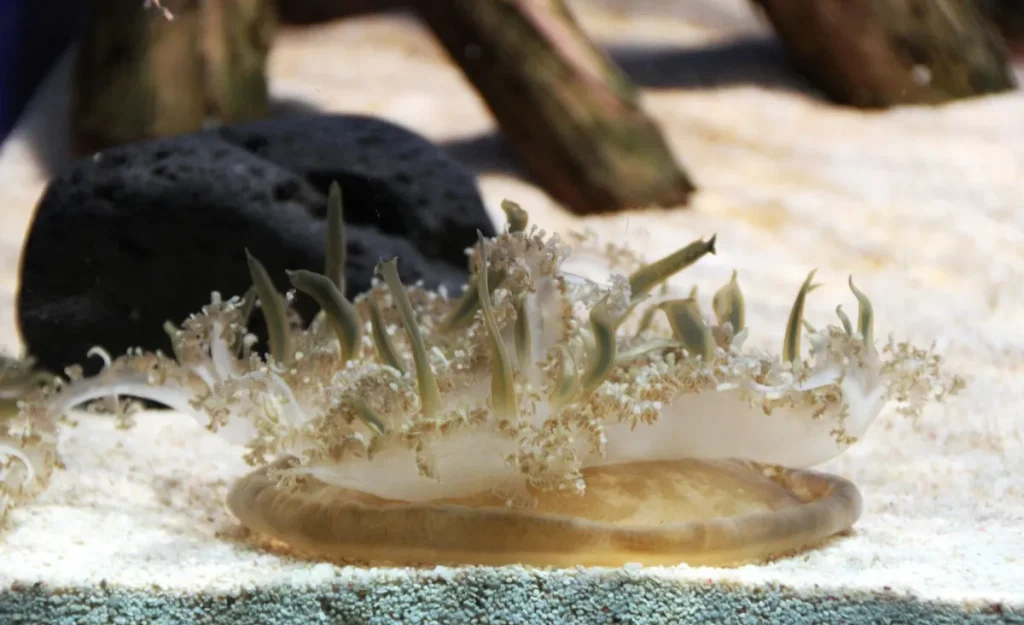
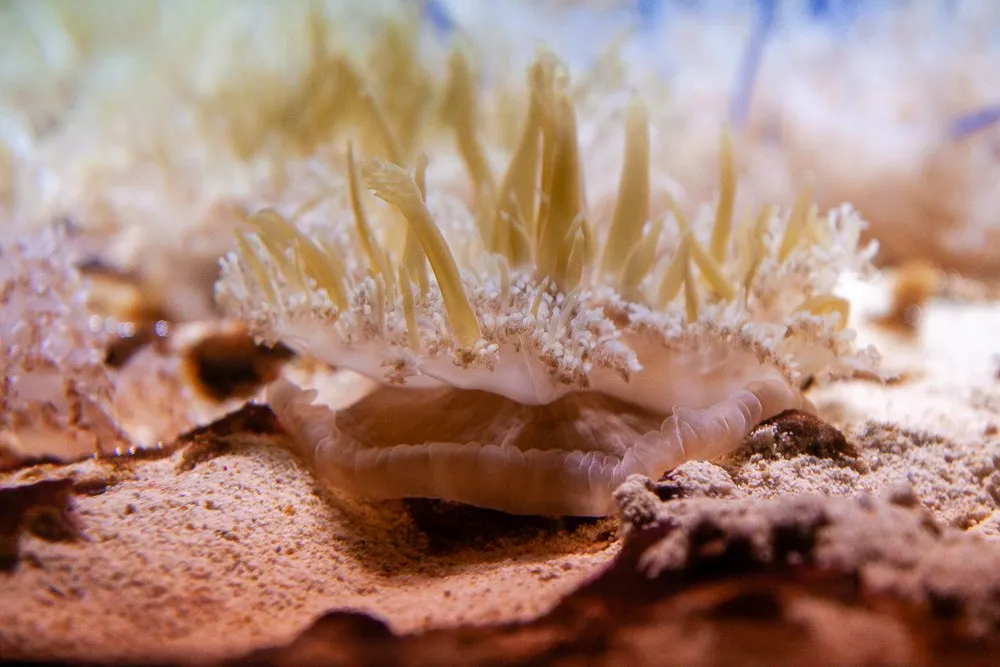
A side view at Loro Parque shows the bell on the sand and the oral arms rising above it.
From the side, the animal’s position is easy to see. The bell rests against the bottom and the feeding surface faces up. Even when the jellyfish stays in one spot, small contractions of the bell move water around and through its oral arms. Those currents help bring tiny prey close enough to capture. pmc.ncbi.nlm.nih.gov
3. It Gets Food From Both Algae and Prey
Microscopic algae live inside the jellyfish’s tissues. With the oral arms facing upward in shallow water, the algae receive sunlight and make sugars through photosynthesis. Some of that food helps nourish the jellyfish. Monterey Bay Aquarium
The jellyfish also catches tiny animals in the water, including zooplankton. Instead of a single large feeding opening at the center, it has many small openings along the oral arms. Those flower-like branches are part of its feeding system. Lamar University
4. It Lives in Shallow Water Near Mangroves and Seagrass
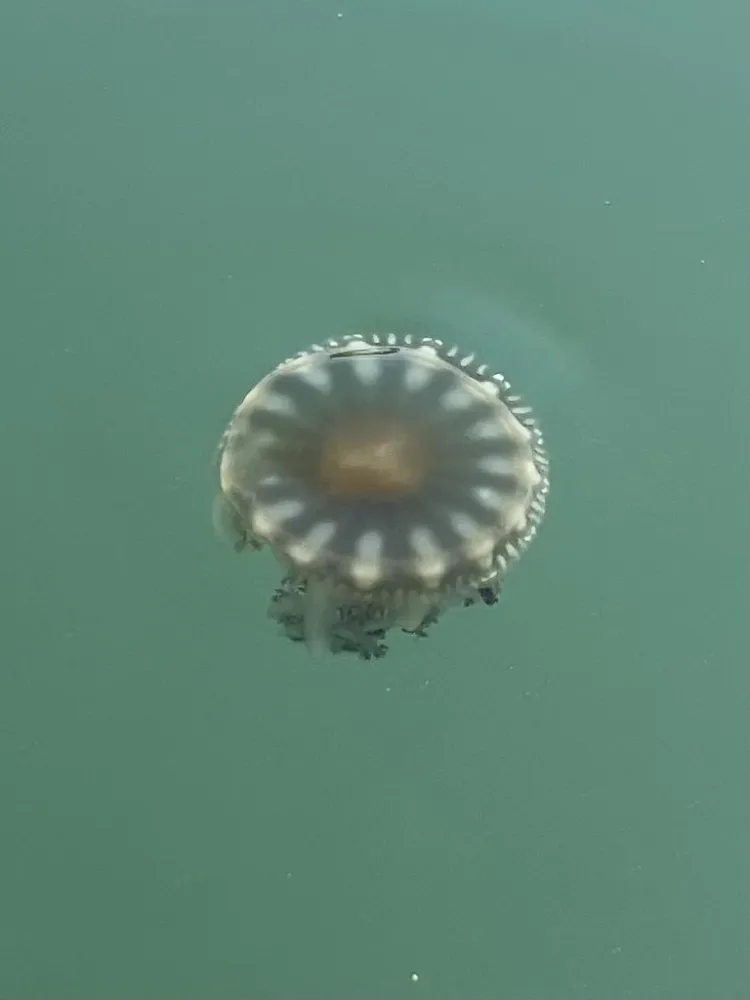
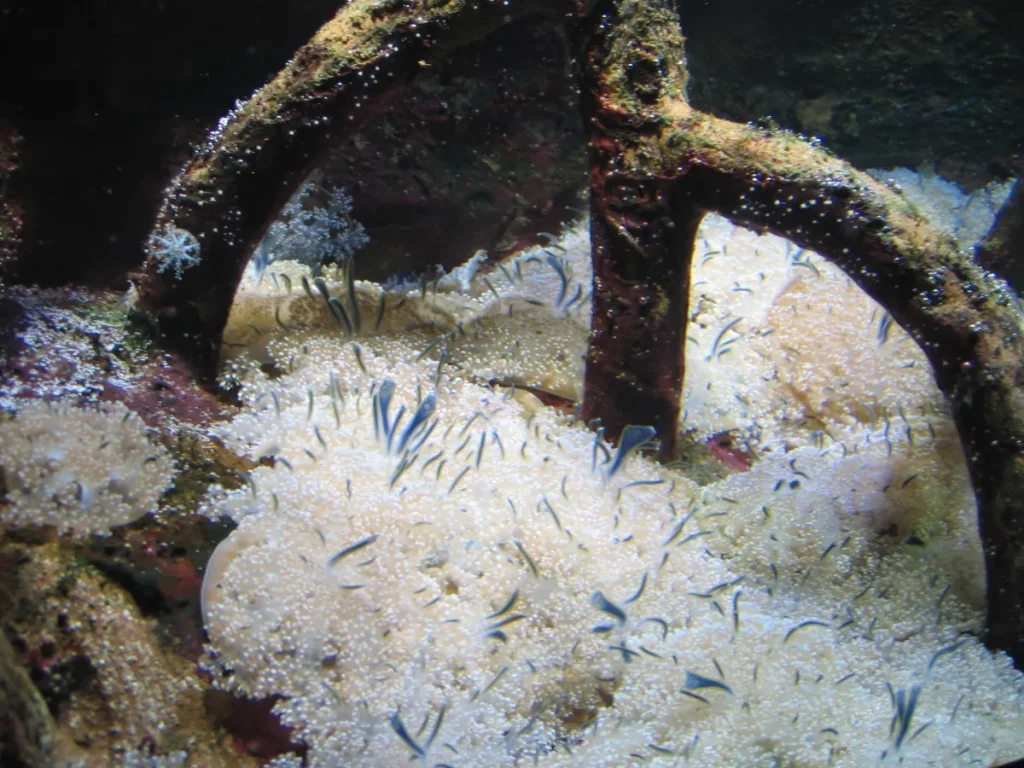
An upside-down jelly photographed in the water in Guantánamo Bay, Cuba.
Mangrove jellyfish occur in sheltered, shallow coastal habitats, including mangrove lagoons and seagrass beds. A soft bottom gives the adult jelly a place to rest, while shallow water allows sunlight to reach the algae inside it. Monterey Bay Aquarium
Mangroves can also influence an earlier stage of its life. Experiments have found that decaying red mangrove leaves can encourage C. xamachana larvae to settle and develop into polyps, a small stage that lives attached to a surface. The familiar saucer-shaped jelly appears later in the life cycle. frontiersin.org
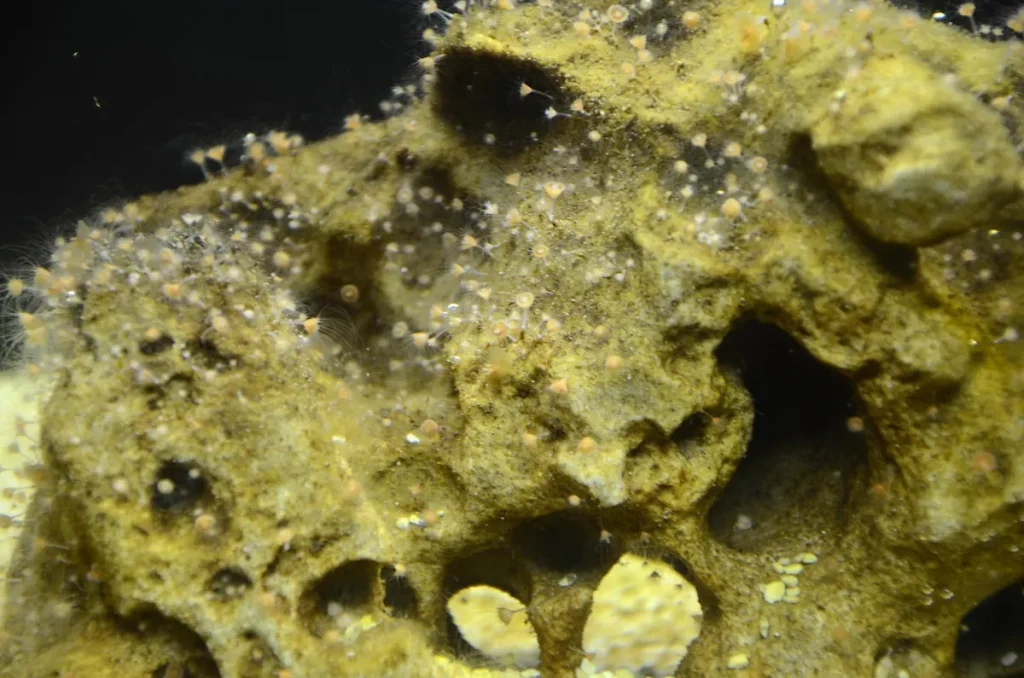
Small attached polyps of Cassiopea xamachana.
5. It Can Sting Without Direct Contact
Researchers studying Cassiopea xamachana found tiny packets of stinging cells in the mucus it releases. They named the packets cassiosomes. The packets can be suspended in the surrounding water and account for the phenomenon sometimes called stinging water. This explains how someone can feel a sting near an upside-down jellyfish without touching its body. nature.com
Sources
- Monterey Bay Aquarium — Upside-Down Jelly
- National Aquarium — Upside-Down Jelly
- Muffett and Miglietta, PLOS ONE — Cassiopea Species in the Florida Keys
- Journal of Experimental Biology — Feeding and Exchange Currents in Cassiopea
- Frontiers in Ecology and Evolution — Review of the Cassiopea xamachana Life Cycle
- Ames and colleagues, Communications Biology — Cassiosomes in the Upside-Down Jellyfish