Found a tiny brown bug that looks like a tick? Zoom in on the front of its body first. Two true antennae point to an insect, such as a spider beetle, bed bug, or weevil. Two pincers point to a pseudoscorpion. A clover mite can look as though it has antennae, but those long front appendages are actually its first pair of legs.
Use the leg count as a second check. Adult and nymphal ticks have eight legs, while tick larvae have six. Ticks have no antennae at any stage. If some legs are hidden or the photo is blurry, leave the identification open until you can see more.
What does a real tick look like?
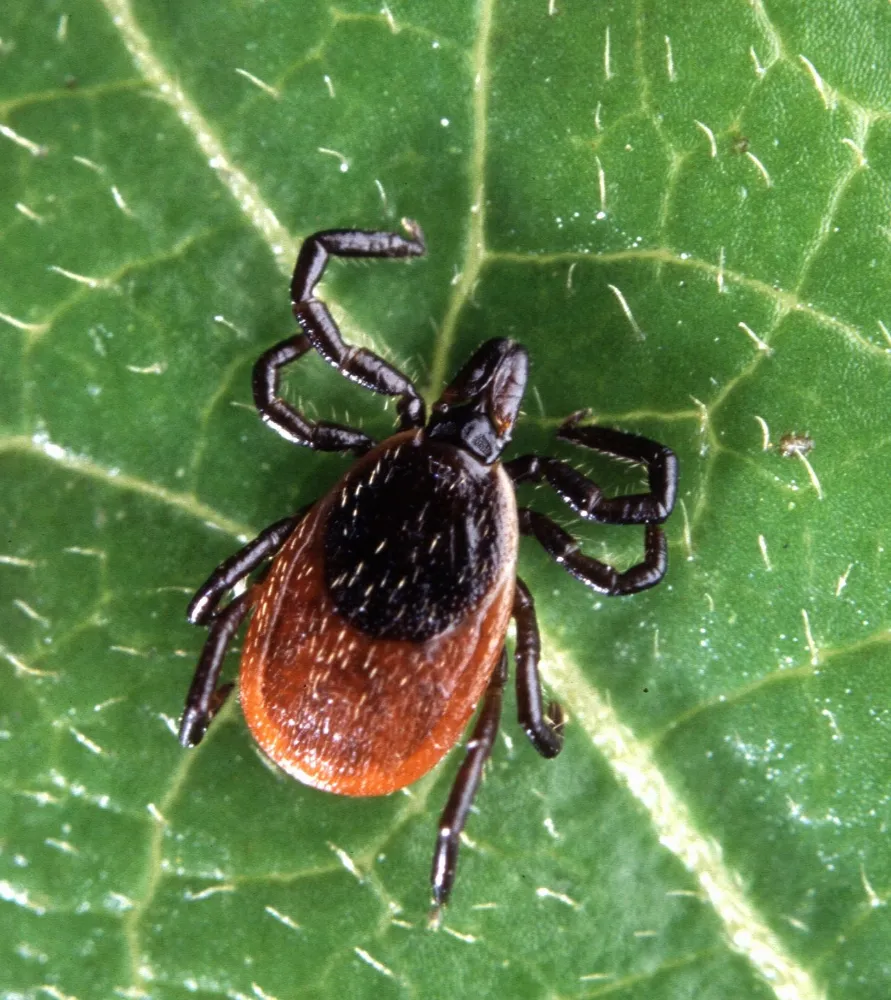
Adult female blacklegged tick on a leaf. Look for the mouthparts at the front and the legs grouped around the front half of the body.
This blacklegged tick is an example of a hard tick. From above, you can see its mouthparts projecting forward and a dark shield on the front of its back. A tick’s color and outline can change as it feeds, so check the front of the body before judging it by size, color, or roundness.
Five tick look-alikes at a glance
| What you see in your photo | What to compare |
|---|---|
| Shiny, rounded back and two long antennae | Spider beetle |
| Tiny reddish speck with an extra-long first pair of legs | Clover mite |
| Flat, oval body with bands across the abdomen and short antennae | Bed bug |
| Two pincers stretched out in front of an oval body | Pseudoscorpion |
| A projecting snout with elbowed antennae | Weevil |
1. Spider beetle
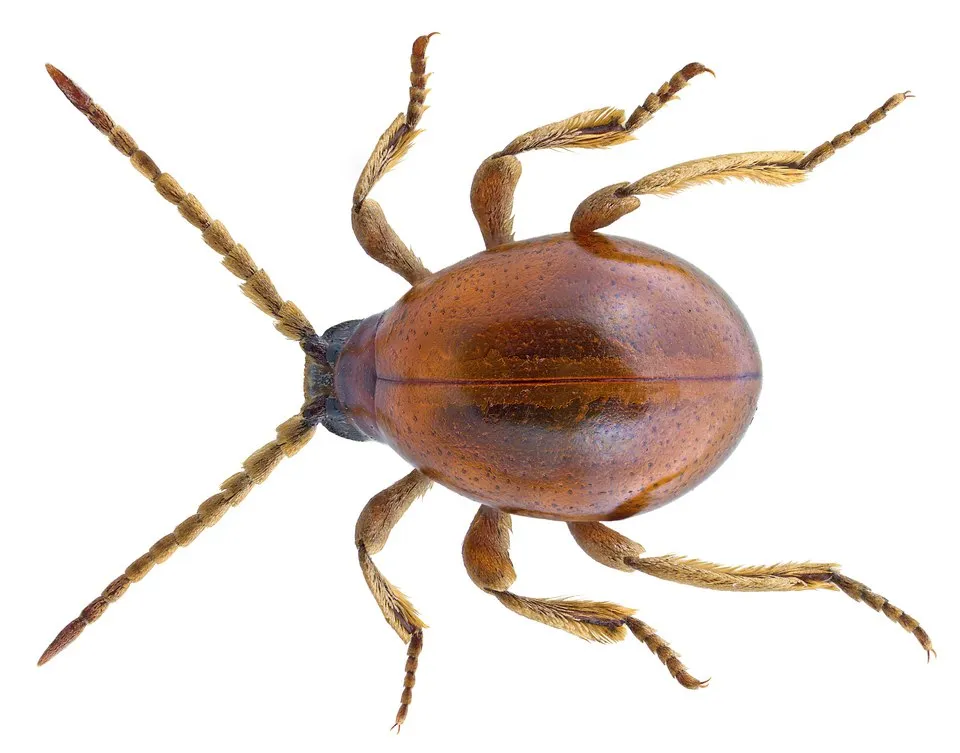
Smooth spider beetle with a shiny, rounded back and two long antennae.
A spider beetle can look like a tick that has swollen after feeding. Its back is rounded and shiny, and the small head can be hard to see from above. Follow the two slender antennae back to the head, then check for three legs on each side.
The photo shows a smooth spider beetle, Gibbium psylloides. If the specimen is crawling near stored dry food, that’s another reason to compare it with a spider beetle. Confirm the antennae before using the location to make a call.
2. Clover mite
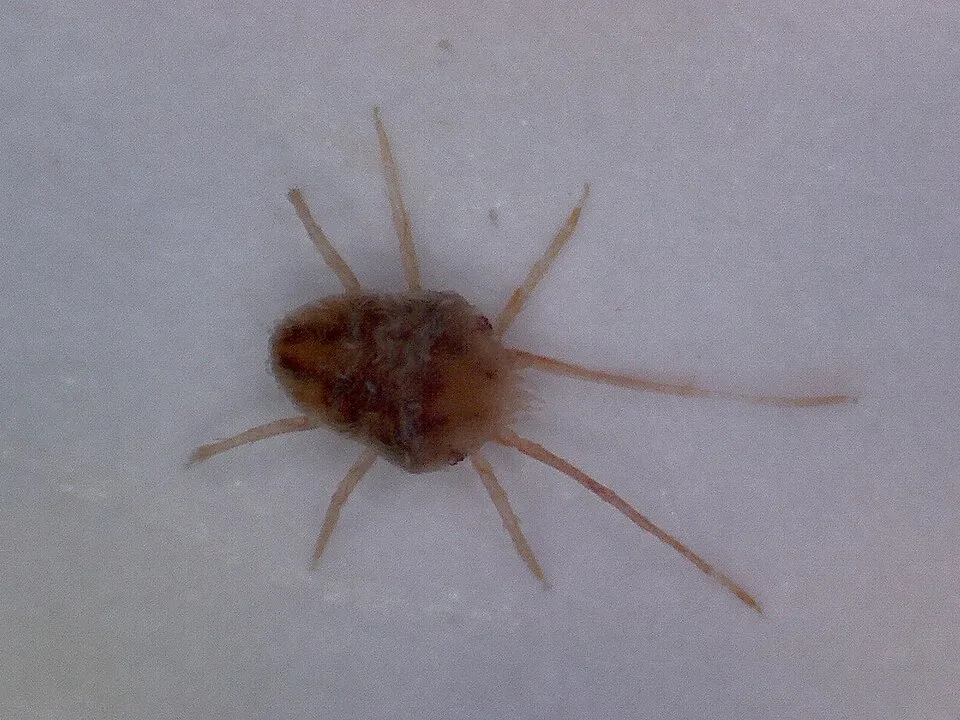
Clover mite under magnification. The first pair of legs extends much farther forward than the other legs.
A clover mite (Bryobia praetiosa) often looks like a moving reddish-brown speck on a sunny windowsill or wall. Under magnification, the first pair of legs is much longer than the other three pairs. Those long front legs can be mistaken for antennae in a quick photo.
If you filmed it crawling, pause the video when the front legs are spread apart. A clear view of all four pairs helps you see how those long appendages fit into the leg count.
3. Bed bug

Common bed bug with two antennae, six legs and visible bands across the abdomen.
An unfed adult bed bug (Cimex lectularius) has a broad, flat outline and can look ticklike at first glance. Zoom in on the abdomen. A bed bug has visible transverse divisions that look like bands across its back. It also has six legs and two antennae on a distinct head.
A recently fed bed bug can look plumper. If the outline seems ambiguous, rely on the antennae and abdominal bands. A specimen found near a mattress seam is worth comparing with a bed bug, though the location alone won’t identify it.
4. Pseudoscorpion
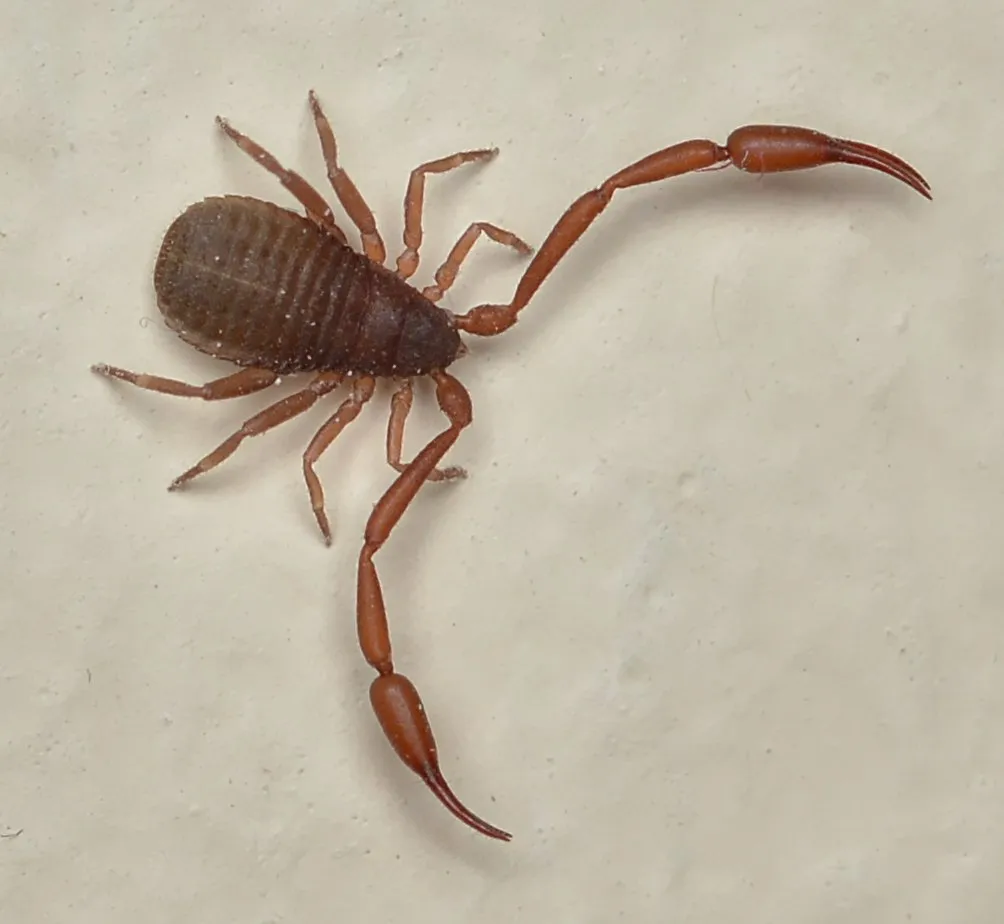
Pseudoscorpion with two pincers extended in front of its small, oval body.
A pseudoscorpion has eight walking legs and a small, flattened body, so a leg count alone won’t separate it from a tick. Its easiest feature to recognize is the pair of pincers out in front. Each ends in a tiny claw.
You might find one in leaf litter, under bark, or in a sheltered corner indoors. If the pincers are folded close to the body in your first photo, try a second view from the front.
5. Weevil
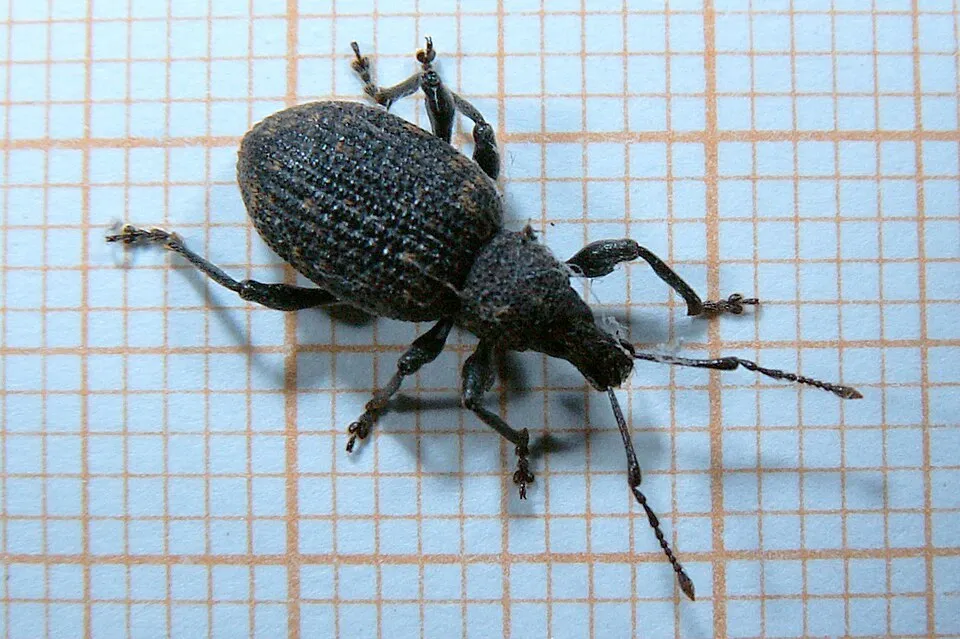
Black vine weevil showing its projecting snout, elbowed antennae and textured back.
Some weevils have rounded, dark bodies that are easy to mistake for ticks. Start with the head. The black vine weevil (Otiorhynchus sulcatus) has a projecting snout with a pair of antennae that bend like elbows. Its back also has a rough, ridged texture.
If you find one near a potted plant, take a side photo. That angle makes it easier to see the snout and where the antennae attach.
What to photograph when you’re unsure
For a specimen that is already loose, take one photo from directly above and another from the side. Keep the front of the body sharp and include a ruler or coin for scale if you can. Save where you found it, such as on clothing, a window frame, or near a potted plant.
If it is attached to your skin, follow local tick-bite guidance promptly. US CDC · UK NHS · Public Health Agency of Canada · Australia’s Healthdirect
Related guide
Get another example of how antennae can help identify an insect from a close-up. Moth vs. Butterfly: How to Tell From a Photo
Sources
- University of Rhode Island TickEncounter and the U.S. CDC. Bugs that look like ticks and Tick lifecycles. TickEncounter
- University of California, Riverside. Urban Entomology, Chapter 7. Department of Entomology
- University of Minnesota Extension. Clover mite and Pseudoscorpions. apps.extension.umn.edu
- U.S. Environmental Protection Agency. Bed bugs appearance and life cycle. epa.gov
- Natural History Museum, London. Vine weevil identification guide and Ticks and tick identification.


