
A snake rolls onto its back and lets its tongue hang out. A fish swells until its spines stand upright. On a forest leaf, a caterpillar looks back at a hungry bird with two large eyespots.
These defenses work at different moments. Some help an animal escape notice. Others make it harder to grab, swallow, or hold on to once an attack has started. Here are 15 animals with unusual defense mechanisms and what each one gains from its particular trick.
Defenses That Interrupt an Attack
1. Texas Horned Lizard — Squirting Blood From Near Its Eyes
Scientific name — Phrynosoma cornutum

Texas horned lizard resting on bare soil with the pointed horns on its head visible.
The Texas horned lizard has a mottled body that blends with the ground and a crown of pointed scales that makes it harder to swallow. It can also squirt a small stream of blood from near its eyes when under severe threat.
The blood is especially distasteful to canine predators. A predator that pauses or backs away gives the lizard a chance to escape. Horned lizard species differ in their defenses, and this behavior has been documented in the Texas horned lizard.
2. Bombardier Beetle — A Hot Spray Released in Pulses
Animal group — Bombardier beetles in the tribe Brachinini
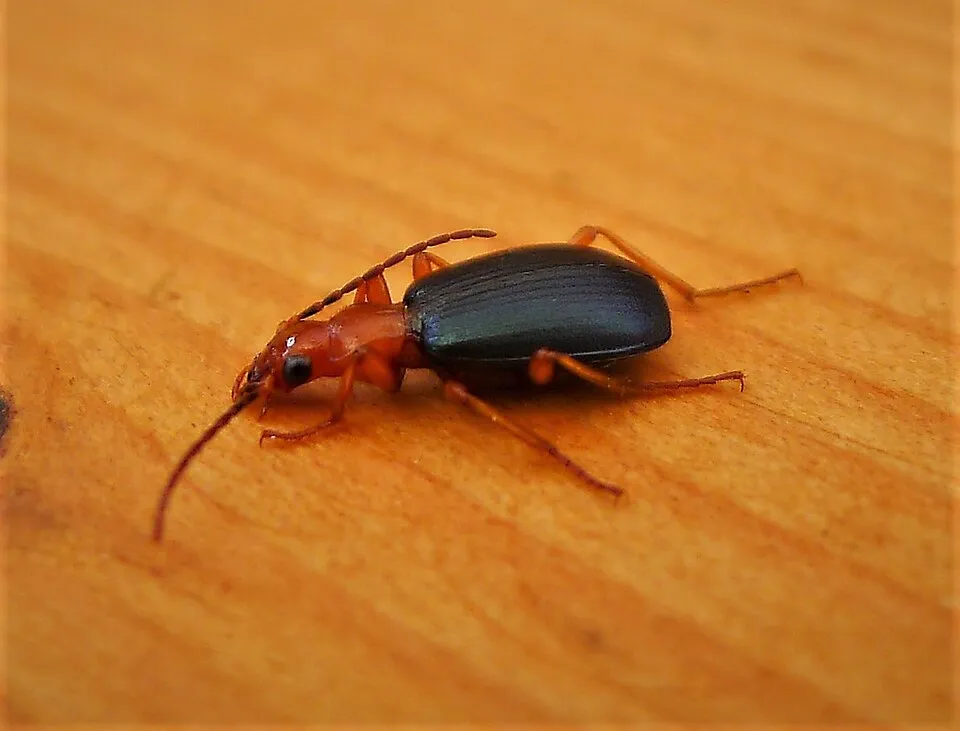
Bombardier beetle seen from above, showing its wing covers and segmented antennae.
When attacked, a bombardier beetle can release a hot, irritating spray from the tip of its abdomen. Researchers used high-speed X-ray imaging to watch the process inside living beetles and found that the spray comes out in a rapid series of pulses.
The pulses happen so quickly that the discharge can look continuous. For a small beetle caught at close range, a sudden burst can give it the opening it needs to get away.
3. Pacific Hagfish — A Cloud of Slime
Scientific name — Eptatretus stoutii

Pacific hagfish with an elongated body and short barbels around its mouth.
When a hagfish is grabbed, it can release material that expands into a mass of slime as it mixes with seawater. Fine protein threads help hold the mass together.
Underwater footage of hagfish attacks has shown fish predators releasing their prey and struggling to clear slime from their mouths and gills. A predator may manage to land the first bite and still lose its meal.
4. Striped Skunk — Warning Before Spraying
Scientific name — Mephitis mephitis
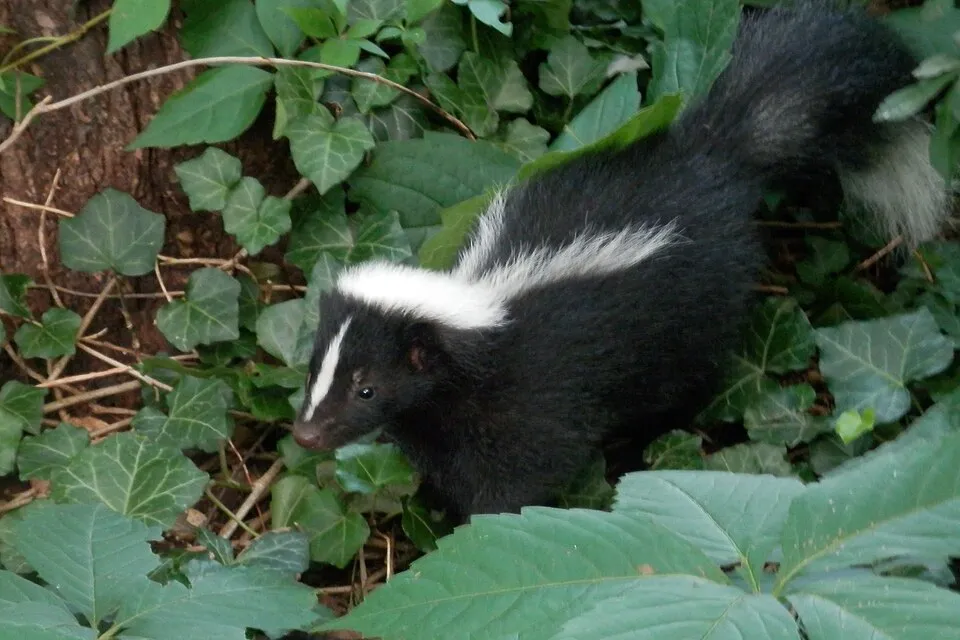
Striped skunk with white stripes running along its black back.
A striped skunk typically gives a warning before it sprays. It can stamp its feet, arch its back, and raise its tail. These movements make the animal conspicuous and give a nearby predator time to retreat.
If the warning fails, the skunk can spray a strong-smelling secretion. The display and the spray work together. A predator that has already encountered a skunk may learn to leave when it sees the warning.
5. California Sea Hare — Purple Ink and a Sticky Secretion
Scientific name — Aplysia californica

California sea hare crawling along a rocky seafloor.
This marine snail can release a cloud of purple ink when threatened. It also produces a sticky secretion called opaline. In experiments with spiny lobsters, opaline coated sensory appendages and reduced the lobsters’ responses to food odors.
The purple cloud is the most visible part of the defense. The experiments show how the sticky secretion can interfere with a predator’s ability to detect food.
6. Black Sea Cucumber — Sticky Threads That Can Grow Back
Scientific name — Holothuria forskali

Black sea cucumber with a dark, elongated body on the seafloor.
When disturbed, this sea cucumber can release pale threads called Cuvierian tubules. The threads lengthen in seawater and become sticky. They can entangle an animal that comes into contact with them.
The sea cucumber can regenerate the lost tubules. That ability allows it to use the defense again after the structures have grown back.
Defenses That Make Prey Harder to Handle
7. Iberian Ribbed Newt — Ribs That Become Spikes
Scientific name — Pleurodeles waltl
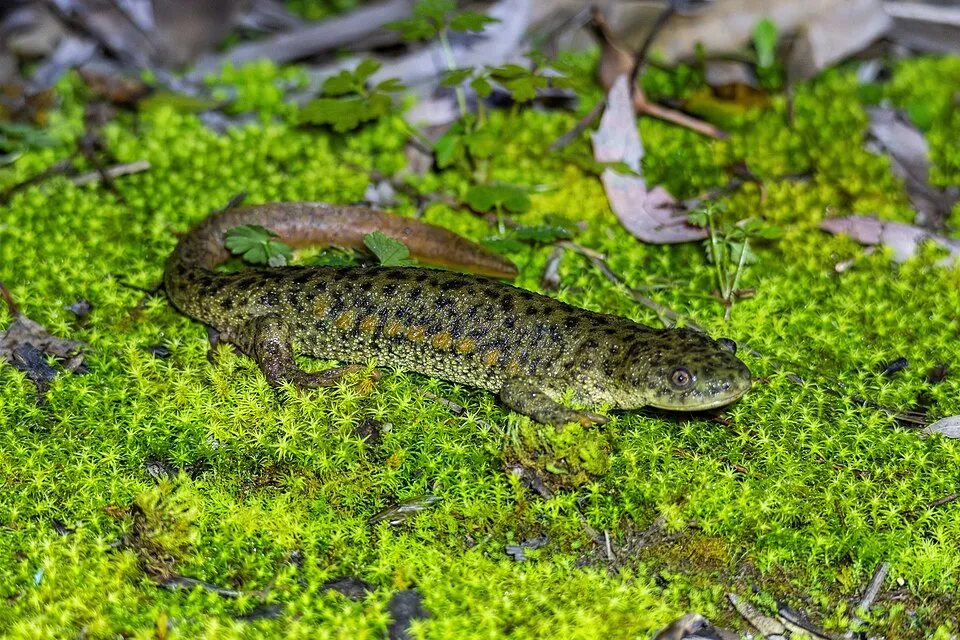
Iberian ribbed newt seen from the side, with a row of orange bumps along its body.
The orange bumps along this newt’s sides mark where an unusual defense takes place. When threatened, the newt can rotate its pointed ribs forward until the tips pierce its skin and project outward.
The exposed ribs come into contact with defensive skin secretions. A predator trying to swallow the newt must contend with sharp projections and irritating chemicals at the same time.
8. Longspine Porcupinefish — Inflating Into a Spiny Ball
Scientific name — Diodon holocanthus

Longspine porcupinefish showing the long spines that cover its body.
A swimming porcupinefish usually keeps its spines folded back. When threatened underwater, it can gulp water and inflate. The expanding body raises the spines and makes the fish much wider.
A predator that could swallow the fish at its usual size now has to deal with a large, prickly mouthful. Inflation changes both the size and the shape of the prey in a single move.
9. North American Porcupine — Quills That Detach on Contact
Scientific name — Erethizon dorsatum

North American porcupine with pale quills visible through its dark fur.
A porcupine’s quills are modified hairs. When danger approaches, the animal can raise them and turn its back or tail toward the threat. If a predator makes contact, quills can detach and lodge in its skin.
Contact is the important detail. A porcupine cannot shoot its quills across a gap. Its defense is most effective against a predator close enough to bite or grab it.
Defenses That Change What a Predator Sees
10. Eastern Hognose Snake — Playing Dead After a Bluff
Scientific name — Heterodon platirhinos

Eastern hognose snake lying belly-up with its mouth open during a death-feigning display.
An eastern hognose snake may flatten its neck and hiss when threatened. If that display fails, it can roll onto its back, open its mouth, and lie still with its tongue hanging out.
The two displays give a predator very different impressions. The first makes the snake look ready to defend itself. The second makes it look like prey that has already died.
11. Virginia Opossum — Going Limp Under Threat
Scientific name — Didelphis virginiana

Virginia opossum with a pale face, dark ears, and a pointed snout.
A threatened Virginia opossum may hiss, bare its teeth, or try to escape. In a more extreme encounter, it can become limp and still. Its heartbeat slows, and its tongue may hang from its open mouth.
This reaction is the origin of the expression playing possum. The Smithsonian’s National Zoo reports that the display is seen mostly in young opossums. Adults are more likely to hiss, show their teeth, or flee.
12. Decorator Crab — Wearing Pieces of Its Surroundings
Scientific name — Loxorhynchus crispatus

Decorator crab with pieces of algae attached to the upper surface of its shell.
This crab selects pieces of algae and small animals from its surroundings and attaches them to hooked bristles on its shell. On a rocky, algae-covered seafloor, it can look more like part of the habitat than an animal moving through it.
The disguise is especially effective in the habitat where the crab gathered the material. The crab can even transfer some decorations to its new shell after molting.
13. Giant Leaf Insect — Looking and Moving Like a Leaf
Scientific name — Pulchriphyllium giganteum, also listed as Phyllium giganteum

Giant leaf insect with a broad green body and flattened, leaflike legs.
A giant leaf insect has a broad, flattened body and legs with leaflike edges. Even when it moves, the disguise can hold up. It rocks back and forth in a way that resembles foliage shifting in the wind.
A predator scanning branches for insects may overlook the shape entirely. The leaf insect’s movement helps preserve the disguise at the moment an ordinary insect might give itself away.
14. Spicebush Swallowtail Caterpillar — A Face Made of False Eyes
Scientific name — Papilio troilus

Green spicebush swallowtail caterpillar with two large false eyespots near the front of its body.
The green caterpillar of the spicebush swallowtail has two large markings near the front of its body. The markings resemble the eyes of a much larger animal, and its actual head is much smaller than the false face suggests.
A close-up photo makes the illusion easy to see. The eyespots create the impression of a vertebrate looking back at the viewer, which may make a predator hesitate before attacking.
15. Mimic Octopus — Changing Its Pattern, Posture, and Movement
Scientific name — Thaumoctopus mimicus

Mimic octopus with long, banded arms extended over a sandy seabed.
The mimic octopus forages on exposed sandy bottoms. Observations in Indonesia recorded individuals shifting their markings and arranging their arms into postures that resembled other marine animals, including flatfish and sea snakes.
The resemblance depends on movement as well as appearance. In a flatfish-like display, the octopus gathers its arms and swims close to the bottom. The way it moves helps complete the disguise.
Frequently Asked Questions
Which animal squirts blood as a defense?
The Texas horned lizard can squirt blood from near its eyes when under severe threat. The blood is particularly unpleasant to canine predators.
Can porcupines throw their quills?
Quills detach when a predator comes into contact with them. Raising its quills and turning toward a threat helps the porcupine protect itself at close range.
What is the difference between camouflage and mimicry?
Camouflage helps an animal escape notice by blending with its surroundings. Mimicry changes what a predator thinks it is looking at. A decorator crab blends into an algae-covered surface, while a mimic octopus can move and hold its arms in ways that resemble another animal.
Related Reading
The Texas horned lizard also uses its surroundings to stay out of sight. For more ways animals use the ground for protection, explore 15 Animals That Live Underground.
Sources and Further Reading
- Texas Parks and Wildlife Department. Horned lizard defenses.
- Arndt and colleagues, Science. How bombardier beetles produce a pulsed defensive spray.
- Monterey Bay Aquarium. Pacific hagfish. Zintzen and colleagues, Scientific Reports. Hagfish defensive slime observed during attacks.
- Smithsonian’s National Zoo. Striped skunk, Virginia opossum, and North American porcupine.
- Monterey Bay Aquarium. California sea hare. Journal of Experimental Biology. How sea hare secretions affect spiny lobsters.
- VandenSpiegel and colleagues, Biological Bulletin. Defensive tubules and their regeneration in a sea cucumber.
- Freshwater Biology. Rib puncture as a defense in the Iberian ribbed newt.
- Florida Museum. Balloonfish, or longspine porcupinefish.
- Missouri Department of Conservation. Eastern hog-nosed snake.
- Monterey Bay Aquarium. Decorator crab. Oregon Zoo. Giant leaf insect.
- University of Missouri Extension. Spicebush swallowtail caterpillar and its eyespots.
- Norman and colleagues, Proceedings of the Royal Society B. Observations of mimicry in the mimic octopus.


