A snake flattens its body and sails away from a branch. A fish bursts through the ocean surface and spreads its fins. A wingless ant falls from the canopy and steers back toward the trunk.
All three are gliding, but each uses a different part of its body to control the trip. Some animals stretch out a sheet of skin. Others spread their toes, fins, or legs. Here are 10 animals that can glide and how they get from takeoff to landing.
1. Paradise Flying Snake — Its Body Becomes an Airfoil

The paradise flying snake (Chrysopelea paradisi) often launches by hanging part of its body below a branch in a J-shape, then springing outward. Once airborne, it flattens most of its body into a broad cross-section that produces lift as air flows around it.
The snake also sends waves along its body in midair. Researchers at Virginia Tech used motion-capture recordings to model these glides. When they removed the body waves from the simulation, the virtual snake tended to tumble. The movement helps explain how an animal with no limbs can stay stable in the air.
2. Dussumier’s Flying Lizard — A Wing Held Open by Ribs

Dussumier’s flying lizard (Draco dussumieri) carries its gliding surface folded along its sides. After jumping from a tree, it spreads elongated ribs that support a membrane called a patagium.
The lizard then brings its forelimbs to the front edge of the membrane, forming a temporary wing out of parts that serve separate functions on the ground. As it approaches the landing tree, it releases the membrane and reaches forward with its front feet to grip the bark.
3. Wallace’s Flying Frog — Four Webbed Feet Catch the Air
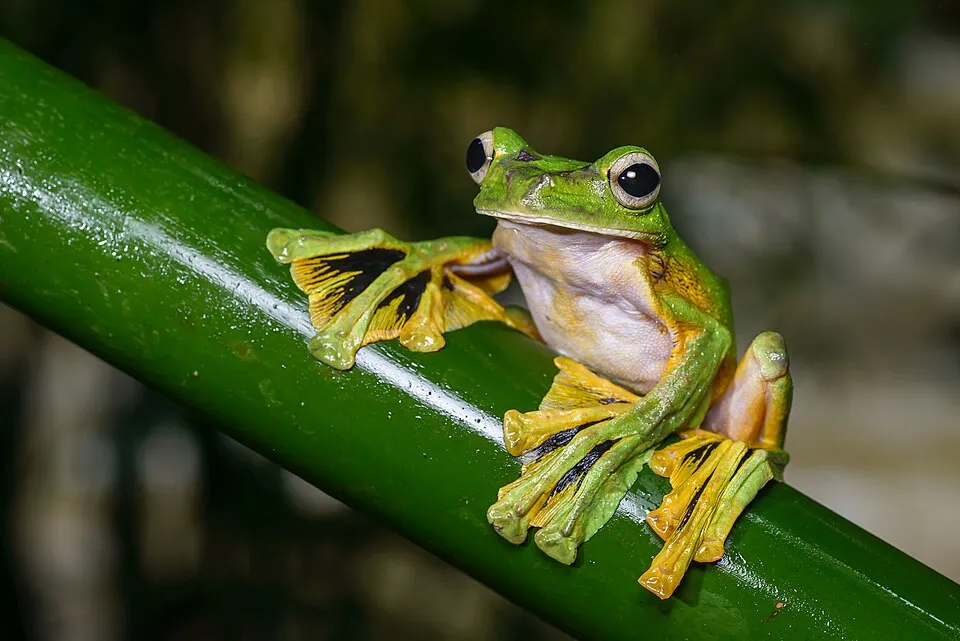
Wallace’s flying frog (Rhacophorus nigropalmatus) can leap from a branch and spread all four feet. The extensive webbing between its toes and loose folds of skin along its sides increase the surface area exposed to the air. That helps slow its descent and carry it sideways toward another perch.
Large toe pads help it grip when it lands. In a photograph of the frog with its toes spread, look for the dark webbing between them. Much of the surface it uses in the air is tucked away when its feet are closed.
4. Sunda Colugo — A Gliding Membrane That Encloses the Tail
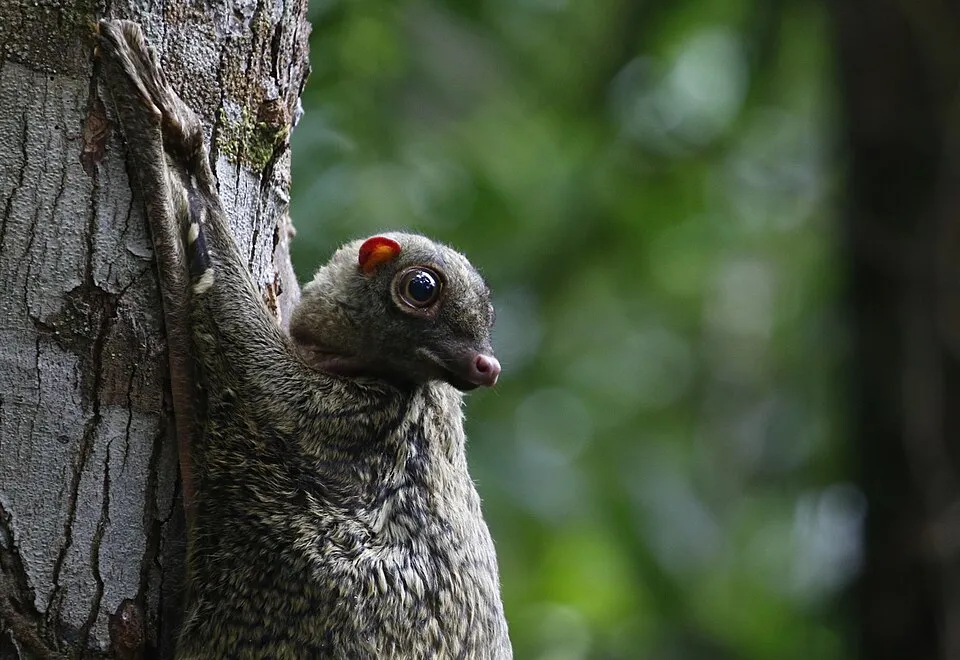
The Sunda colugo (Galeopterus variegatus) clings to trunks in Southeast Asian forests. At rest, its gliding membrane hangs in folds. When it pushes off, spreading its limbs pulls the skin taut.
The membrane extends from the neck along the limbs and encloses the tail. This gives the colugo a broad gliding surface, including behind its hind feet. Its nickname, “flying lemur,” comes from its appearance and movement. Colugos belong to their own mammal group, Dermoptera.
5. Southern Flying Squirrel — From a Tree Hollow to the Night Canopy
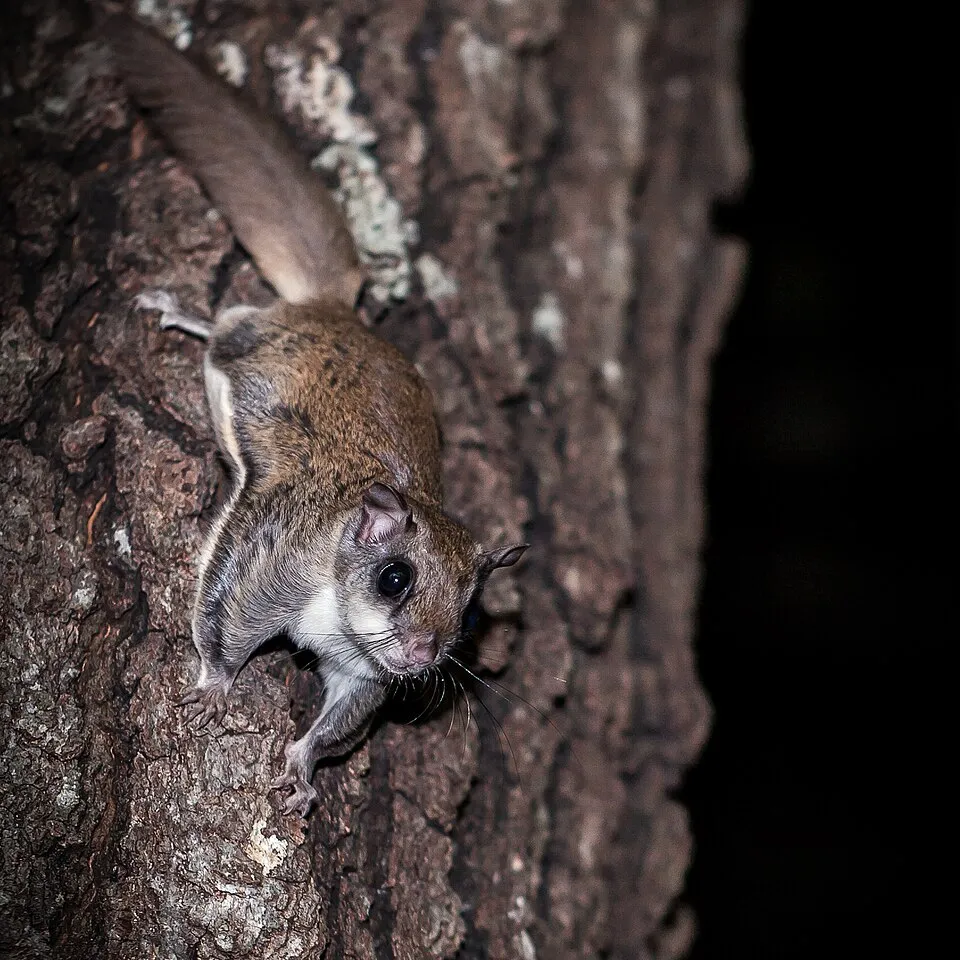
The southern flying squirrel (Glaucomys volans) may spend the day inside an old woodpecker hole and emerge after dark to look for food. It jumps from a high perch and stretches its legs apart to open the membrane between its front and hind limbs.
A glide lets the squirrel cross a gap between trees without climbing all the way down to the ground. It still needs a suitable launch point and a place to land, which makes the arrangement of trunks and branches part of its route through the forest.
6. Sugar Glider — A Membrane From Finger to Ankle

The sugar glider (Petaurus breviceps) is a small nocturnal marsupial from eastern Australia. On each side of its body, a fold of skin stretches from the fifth finger to the ankle. Extending its limbs turns those folds into broad gliding surfaces.
The long tail helps with steering and stability. The sugar glider and the southern flying squirrel arrive at a similar shape in the air, even though one is a marsupial and the other is a rodent.
7. Southern Greater Glider — Braking Before It Reaches the Trunk
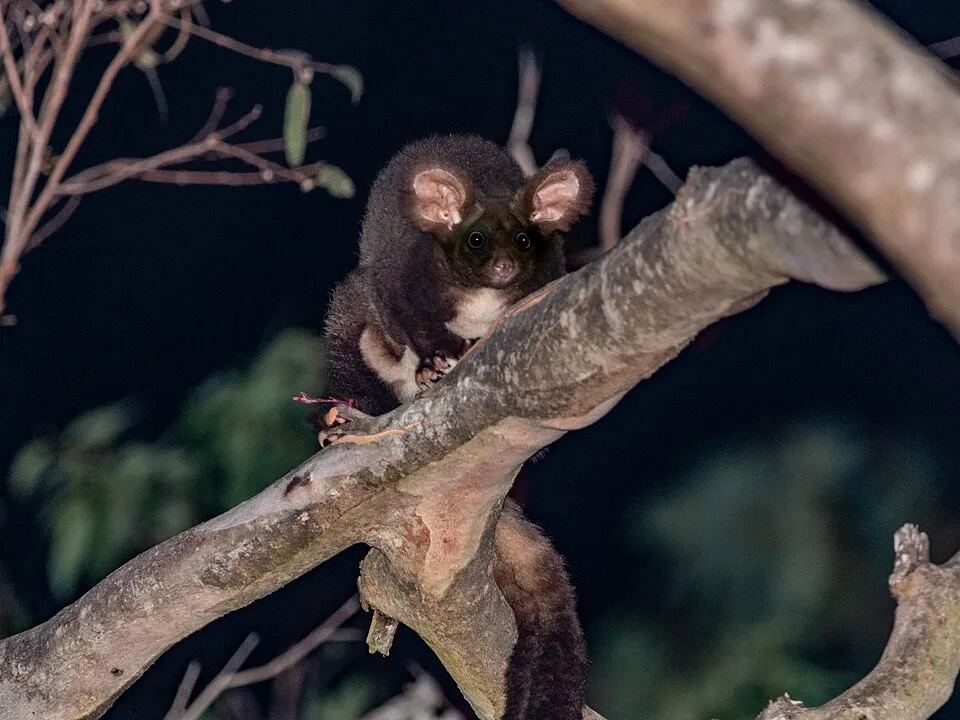
The southern greater glider (Petauroides volans) holds its front paws close to its face during much of a glide. Its membrane stretches from elbow to ankle, so it can spread a broad surface while keeping its forearms bent.
Field observations captured a change just before landing. The glider extended its limbs forward and downward, increasing air resistance and slowing its approach. It typically landed on a tree trunk, then climbed back toward the canopy.
8. Feathertail Glider — Steering With a Fringe of Hair

The feathertail glider (Acrobates pygmaeus) weighs about 12 grams on average, according to the Australian Museum. Its gliding membrane runs from the elbows to the knees, and long, stiff hairs along the sides of the tail give it a featherlike shape.
That fringe helps the tail act as a rudder in the air. At the end of the glide, large toe pads help the animal grip smooth surfaces. The features that help it steer and the features that help it land are easy to see in a good close-up.
9. Tropical Two-Wing Flyingfish — Taking Off From the Sea

The tropical two-wing flyingfish (Exocoetus volitans) builds speed in the water, then bursts through the surface. Its long pectoral fins spread to support the glide. “Two-wing” refers to this prominent pair of fins.
The tail provides the thrust for takeoff. In flyingfish, the tail can also touch the water again and deliver another push while much of the body remains above the surface. A fast sequence can look like continuous flight from a boat, even though the fish is alternating between propulsion in water and gliding through air.
10. Gliding Ant — Steering Back to the Tree Without Wings
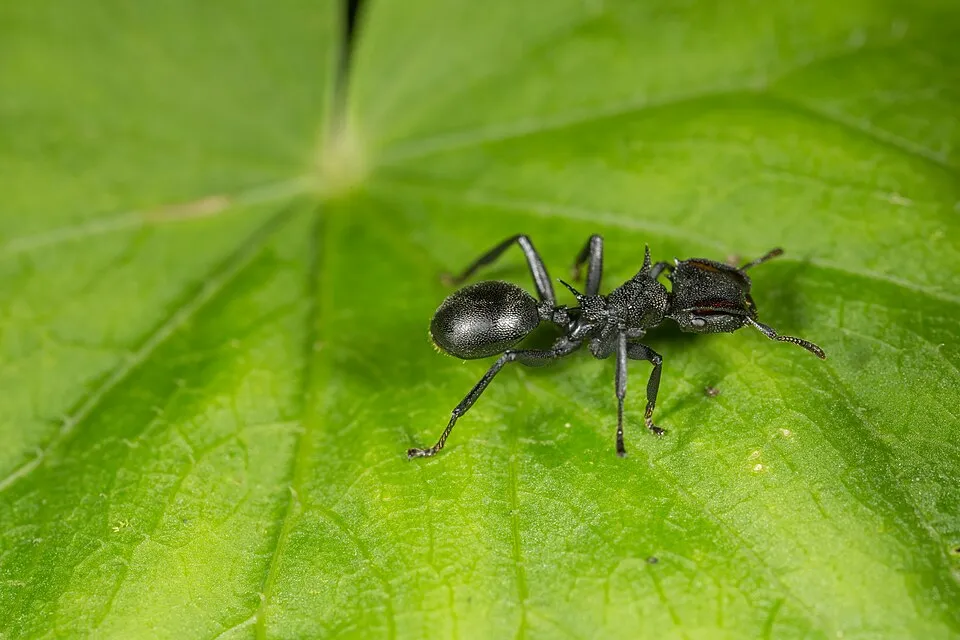
A worker of the tropical canopy ant Cephalotes atratus has no wings. If it falls from a branch, it can turn in the air, spot a tree trunk, and steer toward it. The ant descends abdomen-first, with its legs positioned to help control the trajectory.
In field experiments, more than 80% of dropped workers returned to their home tree trunk. This is a steep, controlled descent. For a worker displaced from the canopy, reaching the trunk is what matters.
What Is the Difference Between Gliding and Flying?
Gliding uses height, takeoff speed, or both to move through the air. A gliding animal can steer and slow down by changing its shape or posture. Powered flight uses repeated movements to generate thrust in the air, as a bat does by beating its wings.
The difference is easy to see in a flyingfish. The tail propels the fish while it is in contact with the water. Once the fish is clear of the surface, the spread fins help it glide.
Frequently Asked Questions
Can flying squirrels and sugar gliders flap their membranes?
They glide by stretching the membrane between their limbs. They can adjust its shape to steer, then climb to regain height before another jump.
Can a snake really glide without wings?
Yes. The paradise flying snake flattens its body after takeoff. Air flowing around that flattened shape generates lift, and body waves help keep the snake stable during the descent.
Which animals glide without a broad skin membrane?
Flyingfish use enlarged fins, Wallace’s flying frog spreads its webbed feet, and the canopy ant Cephalotes atratus uses its body and legs to steer. The paradise flying snake creates an airfoil by flattening its body.
Sources and Further Reading
- Virginia Tech — How body waves stabilize flying snakes.
- J. Maximilian Dehling, PLOS ONE — How flying lizards use their ribs and forelimbs in a glide.
- National Geographic — Wallace’s Flying Frog.
- Singapore National Parks Board — Sunda Colugo.
- Animal Diversity Web — Southern Flying Squirrel.
- Australian Museum — Sugar Glider and Feathertail Glider.
- Australian Mammalogy — Gliding Behaviour of the Southern Greater Glider.
- NOAA — How Flyingfish Launch and Glide. FAO — Tropical Two-Wing Flyingfish Species Profile.
- Yanoviak and colleagues, Nature — Directed Aerial Descent in Canopy Ants.