If you saw a brown animal swimming across a pond and thought it might be a beaver, look for the tail. A beaver has a broad, flat paddle. A muskrat has a narrow tail flattened from side to side. A nutria has a long, round tail and often shows a pale muzzle with white whiskers.
When the tail stays underwater, watch for a side view of the head and body. A long, low body suggests an otter. A much smaller animal with a blunt nose and ears almost hidden in its fur could be a water vole on a British riverbank. Use these photos to compare the features you actually saw.
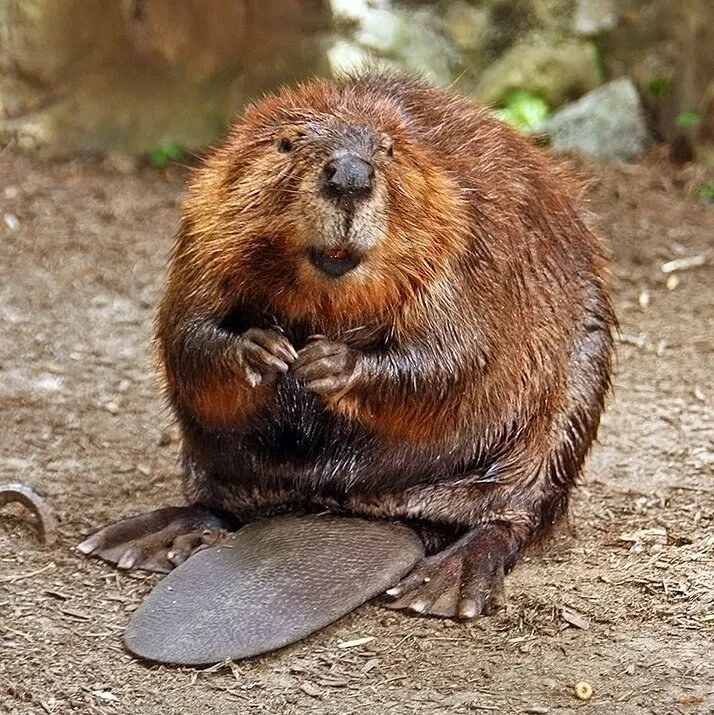
A North American beaver with its broad, flat tail visible between its feet.
Beaver look-alikes at a glance
| Tail or body feature | Animal to compare | Where you might see it |
|---|---|---|
| Broad, flat, paddle-shaped tail | Beaver | North America, Europe, and parts of Asia, depending on the species |
| Narrow, nearly hairless tail flattened from side to side | Muskrat | North American ponds and marshes, and parts of Europe and Asia |
| Long, round tail and a pale muzzle with white whiskers | Nutria, also called coypu | Native to South America and introduced elsewhere |
| Thick, furry tail that tapers, with a long body | North American river otter | Rivers, lakes, and wetlands in North America |
| Slender, furry tail on a small animal with round ears | European water vole | Vegetated banks in Britain and elsewhere in its Eurasian range |
| Rounded rump with no visible external tail | Capybara | Wetlands and riverbanks in South America |
1. Muskrat

A muskrat swimming in Ottawa. Its narrow tail is visible behind it.
The muskrat (Ondatra zibethicus) is much smaller than an adult beaver, but both can look like a rounded lump of brown fur when they swim. Watch the tail when the muskrat turns or crosses shallow water. It is narrow and flattened from side to side, like a blade held upright. A beaver’s tail is flattened from top to bottom.
If you see only the head above water, size can be difficult to judge. A short video may help you catch the thin tail moving side to side behind the animal.
2. Nutria

A nutria on a riverbank in Osaka, showing its pale muzzle and white whiskers.
The nutria (Myocastor coypus), also called a coypu, has a stocky body and a long, round tail. A clear side view usually shows its most useful facial feature: long white whiskers around a pale muzzle.
If the animal is facing you, wait for it to turn. That gives you a better chance to see both the whiskers and the profile of the tail. Orange front teeth by themselves are a weak clue because beavers can have orange incisors too.
3. North American River Otter
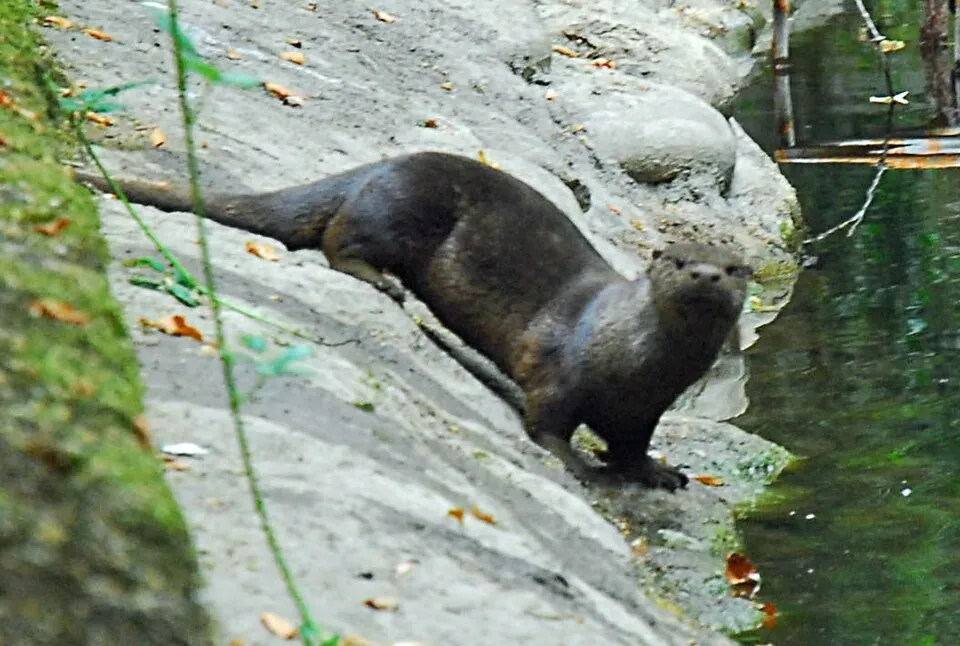
A North American river otter on a creek bank, showing its elongated body and tapering tail.
A North American river otter (Lontra canadensis) has a long body and a strong, furry tail. The tail starts thick at the base and narrows toward the tip. The difference is easiest to see when the animal climbs a bank or stretches out on a log.
An otter can disappear underwater and reappear farther away, but a dive alone gives you little to go on. Look for the long body and tapered tail together.
4. European Water Vole
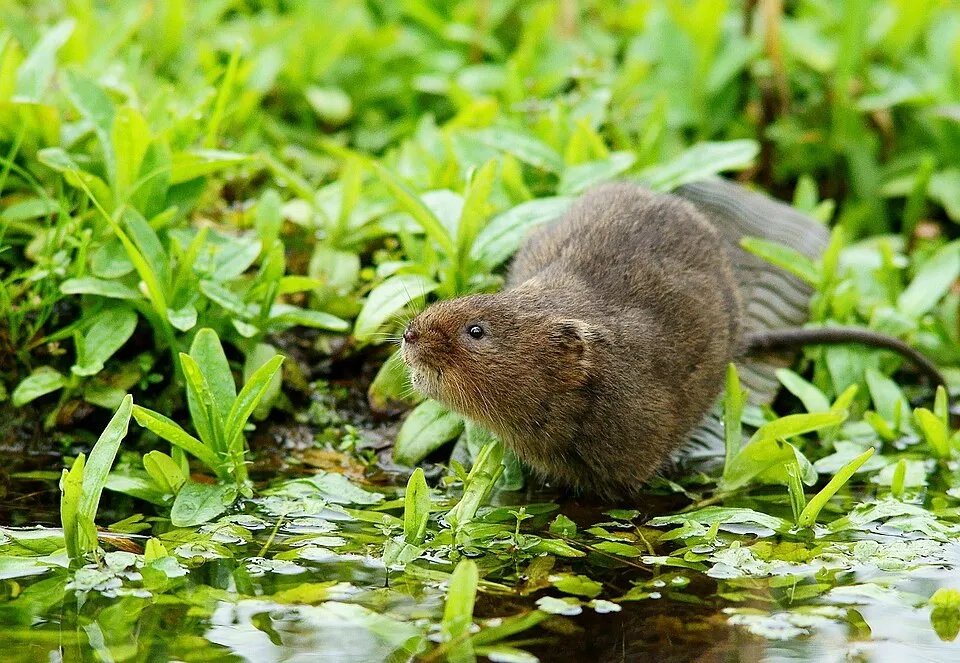
A European water vole at the water’s edge. Look for the blunt nose and small ears.
The European water vole (Arvicola amphibius) is small enough to move among grasses at the edge of a stream. It has a rounded head, a blunt muzzle, and small ears that can almost disappear into its fur. Its slender tail is covered in fur.
In Britain, the water vole is sometimes called a “water rat.” If you’re comparing it with a brown rat, look for the vole’s blunter muzzle and less prominent ears. Reeds or leaves in the same photo can help you judge how small it is.
5. Capybara
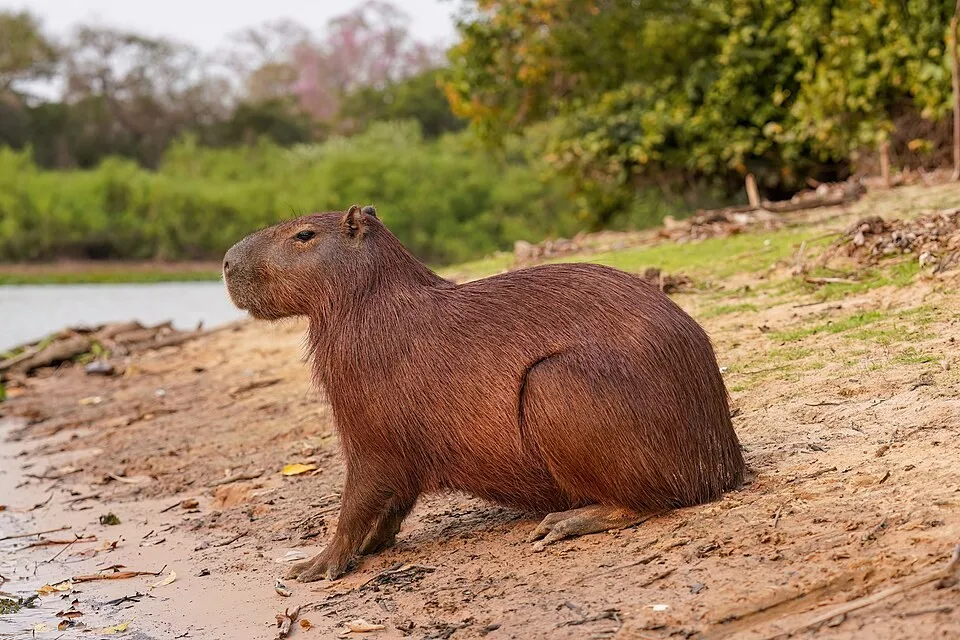
A capybara on a riverbank, showing its blocky head, long legs, and rounded rump.
A capybara (Hydrochoerus hydrochaeris) can look beaver-like when only its large brown head is above water. Once it steps onto land, look for a rounded rump with no visible external tail. Its legs are also more conspicuous beneath the body than a beaver’s.
Native to South America, capybaras often rest or graze beside water. A side view of the whole animal gives you the blocky head, tall body, and rump in one frame.
What if you only saw the head?
If the animal is still swimming, take a short video from the bank. A turn can reveal how much of the back sits above the water, and the moment it climbs out can show the whole tail. For a still photo, try to include the muzzle and the water behind the animal. White whiskers can point you toward nutria even when the tail is out of sight.
Related guide
If you found a pile of sticks or reeds but never saw the animal, compare the materials and shape of its shelter. Beaver Lodge vs. Muskrat Lodge
Sources
- U.S. Fish & Wildlife Service. Beavers, Otters, Muskrats, Minks, Oh My! U.S. Fish & Wildlife Service
- California Department of Fish and Wildlife. California’s Invaders: Nutria wildlife.ca.gov
- Missouri Department of Conservation. North American River Otter Missouri Department of Conservation
- The Mammal Society. Water Vole · Eurasian Beaver Mammal Society
- San Diego Zoo Wildlife Alliance. Capybara


